
Numbers and Counting To 3 Worksheets
These worksheets help children count, match, and recognize numbers with confidence. These free, ready-to-print PDF format resources are perfect for immediate classroom or home use. Students develop number recognition, counting accuracy, and one-to-one correspondence aligned to early learning standards.
About This Collection of Worksheets
This collection is designed to give young learners a strong start with numbers 1, 2, and 3. Each worksheet focuses on helping children connect what they count with the number they see, building an important foundation for all future math learning. By practicing with small groups, children can focus on accuracy and confidence without feeling overwhelmed.
The activities use simple, engaging themes like animals, shapes, food, and everyday objects to keep learning fun and meaningful. Children practice counting, matching, circling, writing, and even drawing, which keeps them active and involved. Repetition across different formats helps reinforce the same skill in new and exciting ways.
These worksheets are easy to use in both classroom and home settings. Teachers can include them in centers, small groups, or independent work time, while parents can use them for extra practice. The goal is to build comfort and confidence so children begin to recognize numbers quickly and accurately.
Paul’s Teacher Tip
When teaching numbers 1 through 3, focus on helping children slow down and count each item carefully. Encourage them to point to each object as they say the number out loud, which builds strong one-to-one correspondence. If your child struggles, go back to real objects like toys or snacks to make the concept more concrete. It also helps to repeat the same skill in different ways, like circling, matching, and drawing. Keep the experience positive and playful so children feel successful as they learn.
Worksheet Collection Skill Spotlights
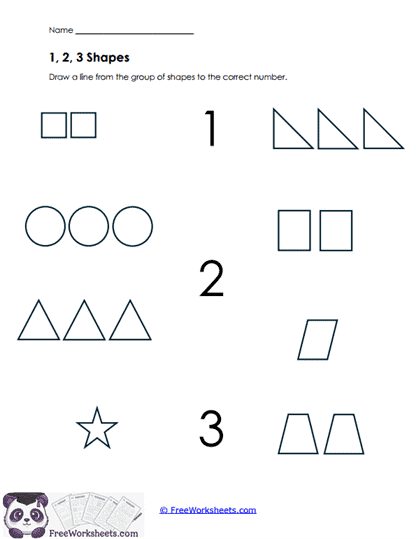
1, 2, 3 Shapes
- What Kids Do:
Children look at small groups of shapes like triangles or circles, count each item carefully, and draw a line to match the group with the correct number. They repeat this process across the page, practicing how to connect what they see to a number in a clear and simple way. - Target Skill:
Students develop early number recognition and counting accuracy by matching quantities to numerals. This supports foundational math standards focused on one-to-one correspondence and understanding that numbers represent specific amounts.
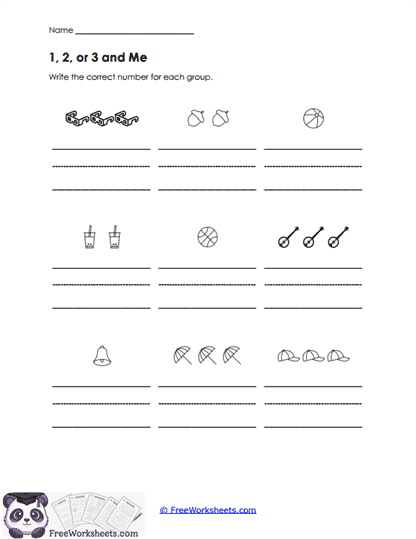
1, 2, or 3 and Me
- What Kids Do:
Children count groups of objects and write the correct number on a line below each group. They take time to observe, count carefully, and record their answers, building both counting confidence and early number writing skills in a structured format. - Target Skill:
Students strengthen number writing and counting skills by connecting quantities to written numerals. This aligns with early learning standards emphasizing number representation and accurate counting of small groups.
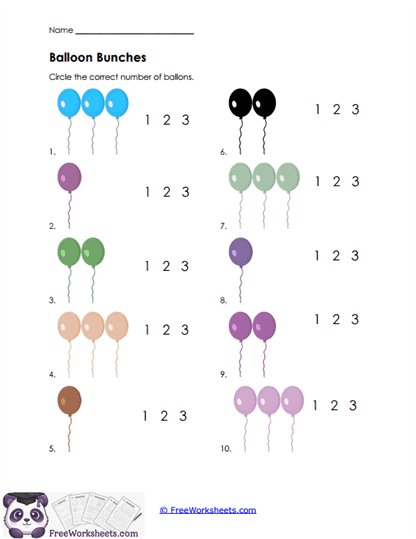
Balloon Bunches
- What Kids Do:
Children count groups of balloons and choose the correct number from 1, 2, or 3 by circling it. As they move through each example, they practice recognizing small groups quickly and confidently while reinforcing careful counting habits. - Target Skill:
Students build number sense by identifying and matching small quantities to numerals. This supports foundational counting skills and helps develop confidence with early number recognition.
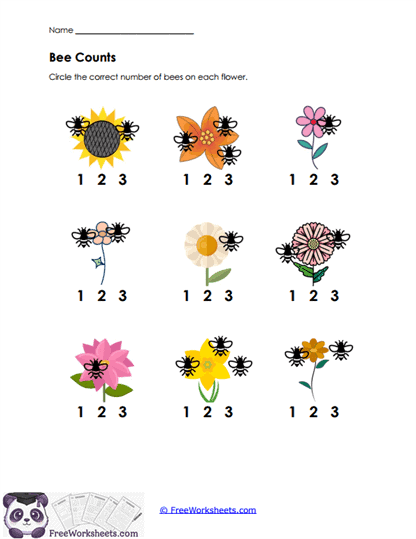
Bee Counts
- What Kids Do:
Children look at flowers with bees, count how many bees they see, and circle the correct number. The repeated practice helps them focus on counting carefully and matching their answer to the correct numeral. - Target Skill:
Students strengthen one-to-one correspondence and number matching skills. This aligns with early math standards focused on counting objects and understanding the relationship between numbers and quantities.
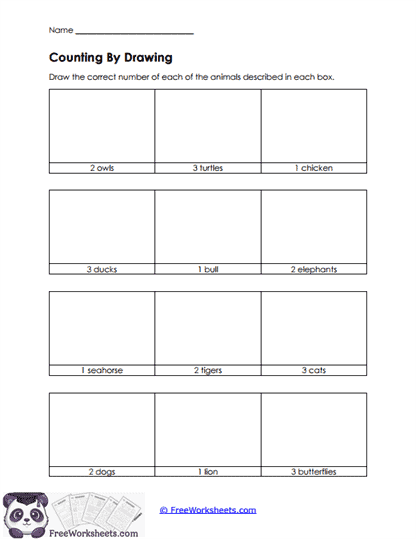
Counting By Drawing
- What Kids Do:
Children are given a number and asked to draw that many objects, such as animals, in a space. They actively create groups to match numbers, helping them think more deeply about what each number represents. - Target Skill:
Students develop a strong understanding of number meaning by creating groups that match numerals. This supports early math learning by connecting counting with physical representation.
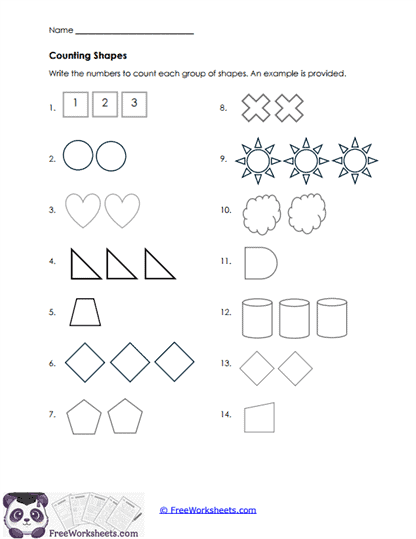
Counting Shapes
- What Kids Do:
Children count groups of shapes and write the correct number in the space provided. They practice both counting and forming numbers, reinforcing their understanding through repetition and hands-on engagement. - Target Skill:
Students improve counting accuracy and number writing skills by linking quantities to written numerals. This aligns with foundational standards for number recognition and representation.
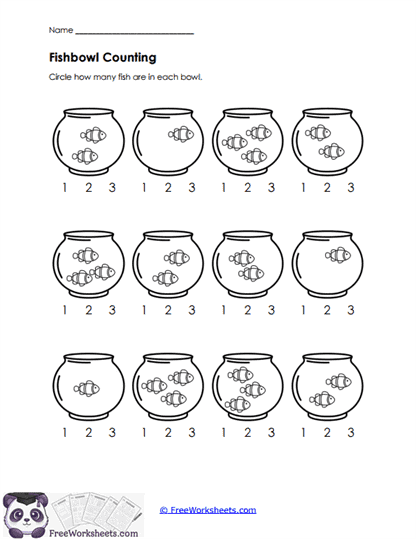
Fishbowl Counting
- What Kids Do:
Children count fish in bowls and circle the number that matches the quantity. Each example encourages them to slow down, point to each item, and make a clear connection between the group and the number. - Target Skill:
Students strengthen early counting skills and number matching by identifying quantities and selecting the correct numeral. This supports one-to-one correspondence and number recognition development.
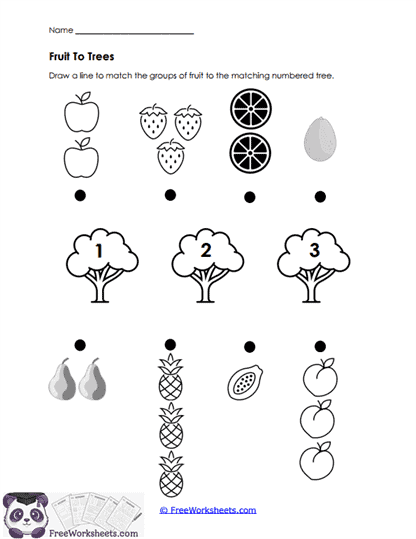
Fruit To Trees
- What Kids Do:
Children count groups of fruit and draw lines to match each group to a tree labeled with the correct number. This interactive activity helps them connect counting with matching in a playful way. - Target Skill:
Students develop matching and counting skills by linking quantities to numerals through hands-on interaction. This supports early math standards focused on number relationships.
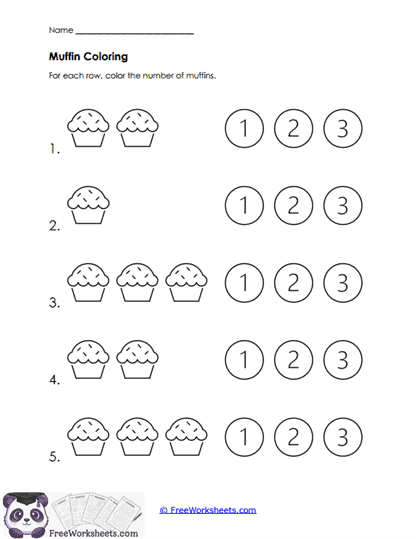
Muffin Coloring
- What Kids Do:
Children count muffins in each row and color the circle that shows the correct number. The combination of counting and coloring keeps them engaged while reinforcing careful observation and number matching. - Target Skill:
Students build number recognition and counting accuracy by identifying correct quantities and matching them to numerals. This aligns with foundational standards for early counting skills.
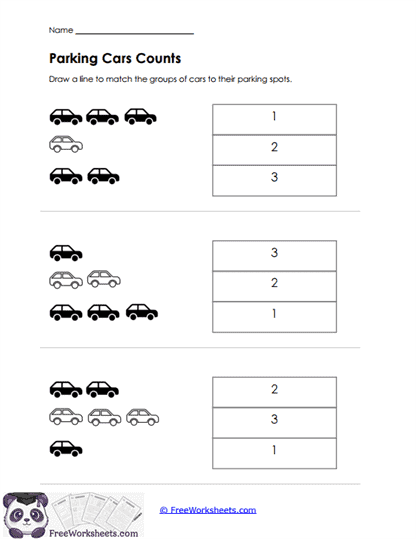
Parking Cars Counts
- What Kids Do:
Children count groups of cars and draw lines to match them with the correct number. This activity adds movement and interaction, helping children stay engaged while practicing counting and matching skills. - Target Skill:
Students strengthen their understanding of number relationships by matching groups to numerals. This supports early learning standards focused on counting and number recognition.
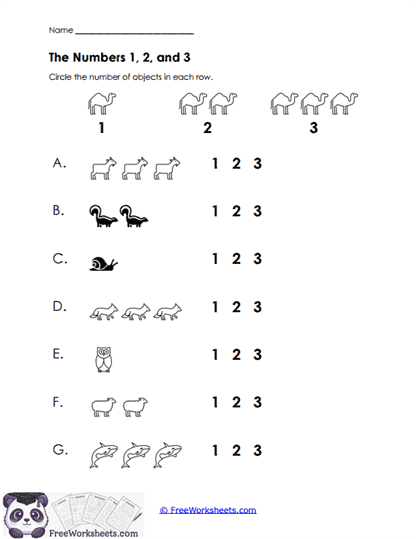
The Numbers 1, 2, and 3
- What Kids Do:
Children count groups of objects and circle the number that matches each group. They repeat this process across multiple rows, building confidence as they connect counting to number recognition. - Target Skill:
Students develop foundational counting and number identification skills. This aligns with early math standards emphasizing one-to-one correspondence and understanding that numbers represent quantities.
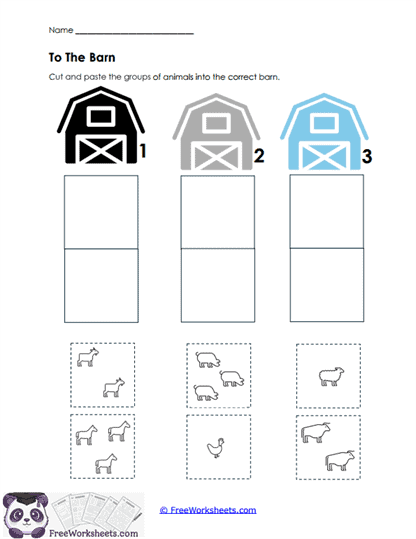
To The Barn
- What Kids Do:
Children cut out groups of animals, count them, and place them into barns labeled 1, 2, or 3. This hands-on activity combines counting, sorting, and movement to make learning active and engaging. - Target Skill:
Students build counting and sorting skills by matching quantities to labeled groups. This supports early math development by reinforcing number recognition and quantity relationships.