
Positions Worksheets
These worksheets help children learn key position words like above, below, next to, and behind. These free, ready-to-print PDF format resources are perfect for classroom or home use. Students build spatial awareness, direction skills, and vocabulary aligned to early learning standards.
About This Collection of Worksheets
This collection is designed to help preschool learners understand where things are in relation to each other. Position words like above, below, next to, and behind are important for everyday communication and early math thinking. These worksheets give children many chances to see, practice, and use these words in simple and meaningful ways.
The activities use familiar scenes like classrooms, animals, and everyday objects to make learning feel real and engaging. Children answer questions, circle correct words, and follow directions based on what they see. This helps them connect language to visual understanding.
These worksheets are easy to use in both classroom and home settings. Teachers can include them in math centers or guided lessons, while parents can use them for extra practice. The goal is to help children feel confident using position words in daily life.
Paul’s Teacher Tip
Position words can be tricky at first, so make learning as hands-on as possible. Use toys or objects to show what “above,” “below,” or “next to” looks like in real life. Encourage your child to move items and describe what they see. Repeating the words out loud while pointing can really help them stick. Keep it simple and fun so your child builds confidence over time.
Worksheet Collection Skill Spotlights
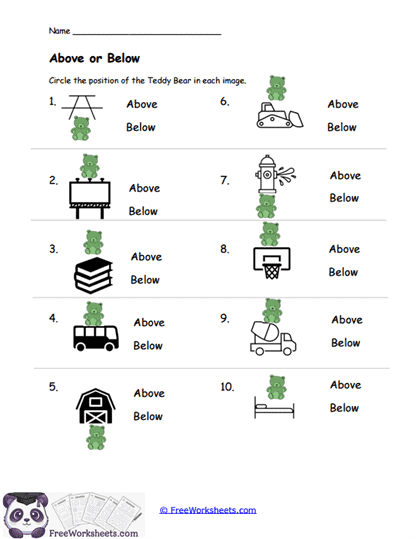
Above or Below
- What Kids Do:
Children look at pictures with a teddy bear and decide if it is above or below another object. They circle the correct word, practicing careful observation and understanding vertical position. - Target Skill:
Students build spatial awareness by identifying vertical relationships between objects. This supports early learning standards focused on describing positions in space.
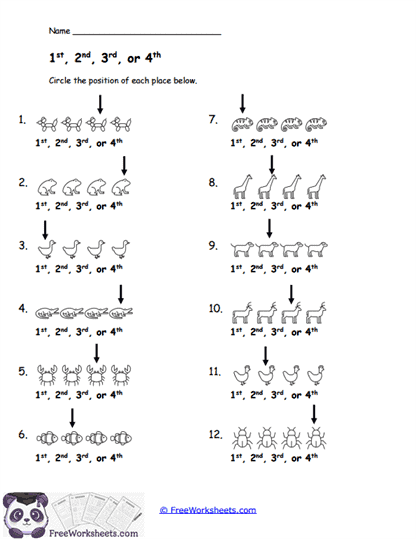
1st, 2nd, 3rd, or 4th
- What Kids Do:
Children look at a row of objects and determine the position of a specific item using order words like first, second, third, or fourth. They circle the correct answer based on where the item appears. - Target Skill:
Students develop sequencing and positional language skills by identifying order in a set. This supports early math standards focused on counting and position.
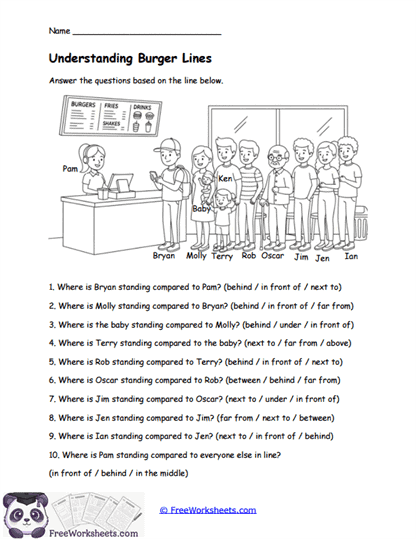
Burger Lines
- What Kids Do:
Children study a line of people waiting and answer questions about who is in front, behind, next to, or between others. This connects position words to real-life situations. - Target Skill:
Students strengthen understanding of relative position by describing relationships between people in a sequence. This aligns with early spatial reasoning standards.
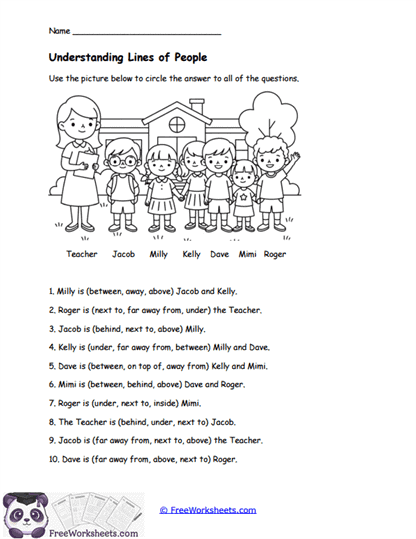
Classroom Positions
- What Kids Do:
Children look at a classroom scene and answer questions about where students and objects are located. They use words like behind, next to, above, and below to describe positions. - Target Skill:
Students build spatial vocabulary and comprehension by applying position words in familiar settings. This supports early math and language development.
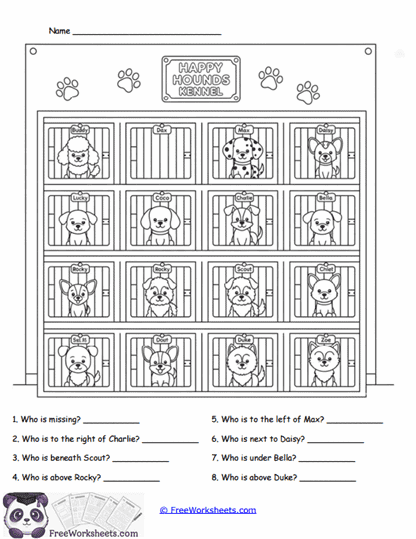
Happy Hounds Kennel
- What Kids Do:
Children explore a grid of puppies and answer questions about where each one is located using words like above, below, left, and right. This activity combines position words with grid thinking. - Target Skill:
Students develop spatial reasoning and directional understanding using grid-based layouts. This aligns with early math standards for describing positions.
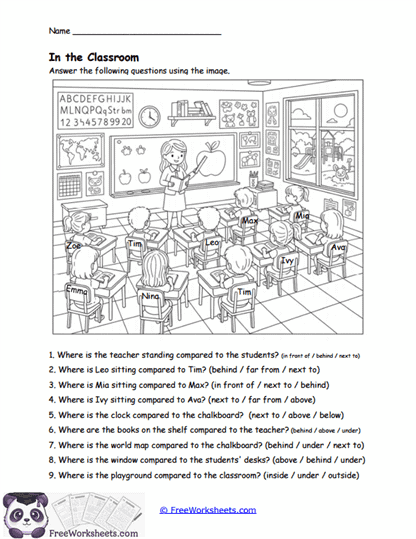
In the Classroom
- What Kids Do:
Children analyze a detailed classroom picture and answer position-based questions. They identify where items and people are located relative to others. - Target Skill:
Students strengthen spatial awareness and descriptive language skills by interpreting complex visual scenes. This supports foundational geometry concepts.
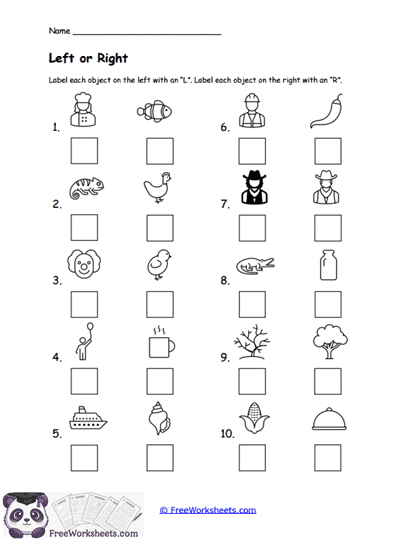
Left or Right
- What Kids Do:
Children look at pairs of objects and label each one as left or right. They practice identifying direction and associating it with correct labels. - Target Skill:
Students build directional awareness by distinguishing between left and right. This aligns with early spatial understanding standards.
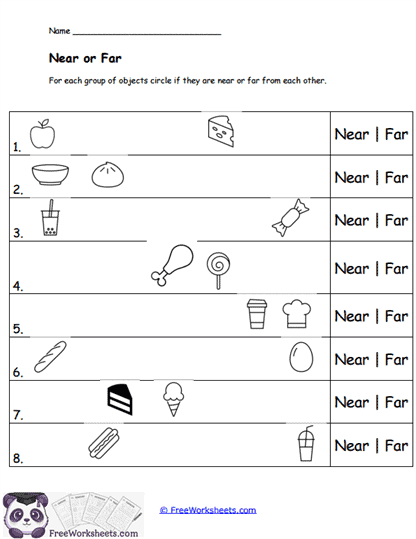
Near or Far
- What Kids Do:
Children examine pairs of objects and decide whether they are near or far from each other. They circle the correct word for each example. - Target Skill:
Students develop understanding of distance and spatial relationships. This supports early learning standards focused on describing positions.
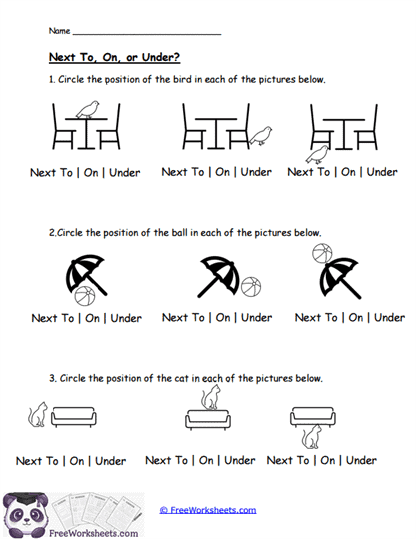
Next To, On, or Under?
- What Kids Do:
Children look at pictures and decide if an object is next to, on, or under another object. They circle the correct position word for each image. - Target Skill:
Students strengthen positional vocabulary by identifying common spatial relationships. This supports early math and language development.
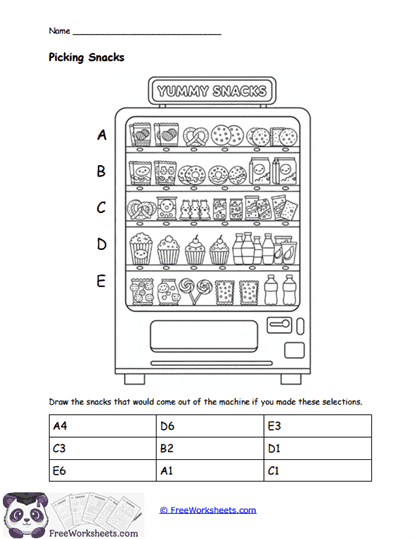
Picking Snacks
- What Kids Do:
Children use a simple grid labeled with letters and numbers to find snacks based on given codes. They follow directions to locate items correctly. - Target Skill:
Students build early mapping and grid navigation skills by identifying positions using coordinates. This aligns with foundational geometry concepts.
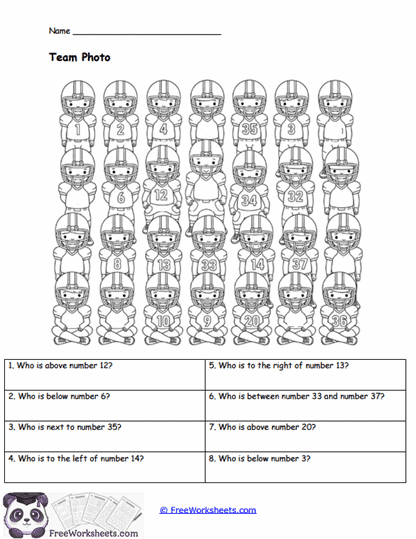
Team Photo
- What Kids Do:
Children look at a group of players and answer questions about their positions using words like above, below, and next to. They practice describing locations in a group. - Target Skill:
Students develop spatial reasoning by identifying positions within structured groups. This supports early geometry and language standards.
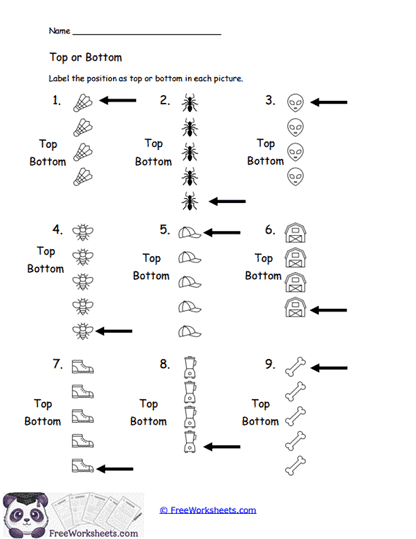
Top or Bottom
- What Kids Do:
Children examine stacked or grouped objects and determine whether a highlighted item is at the top or bottom. They label or select the correct answer. - Target Skill:
Students build understanding of vertical position by identifying top and bottom placement. This aligns with early spatial awareness standards.