
Preschool Reading Comprehension Worksheets
These worksheets help young learners build sequencing, vocabulary, and story understanding through engaging literacy activities. Free, ready-to-print worksheets come in PDF format for immediate classroom use during guided reading, literacy centers, or homeschool learning. Students strengthen comprehension, prediction, retelling, vocabulary recognition, story structure, and oral language skills through hands-on reading practice.
About This Collection of Worksheets
This collection of preschool reading comprehension worksheets helps young learners practice understanding stories, recalling details, identifying settings, predicting outcomes, and connecting reading to everyday life. Children engage with short passages, picture-based activities, sequencing tasks, and comprehension questions designed specifically for early literacy development. Each worksheet encourages students to think carefully about stories while building confidence with listening, speaking, and early reading skills.
The activities use familiar themes like rainy walks, playgrounds, puppies, balloons, gardens, treasure hunts, and planting seeds to make comprehension practice meaningful and approachable for preschool learners. Students strengthen important literacy foundations by answering questions, identifying character feelings, retelling events, recognizing action words, tracing vocabulary, and explaining story details aloud. These engaging tasks help children develop stronger comprehension habits while connecting spoken language to early print awareness.
Teachers and parents can easily use these printable worksheets during guided reading instruction, literacy stations, small-group practice, intervention lessons, or homeschool activities. The simple layouts, large visuals, and manageable response formats support beginning learners who are still developing attention and confidence during literacy instruction. Together, the worksheets provide repeated opportunities for preschool students to practice understanding and responding to stories in thoughtful ways.
Paul’s Teacher Tip
Young learners often understand stories better when adults pause frequently to discuss important details during reading. Encourage children to point to pictures, retell events aloud, and explain their thinking instead of only choosing answers quickly. Asking simple follow-up questions like “How do you know?” or “What happened next?” can deepen comprehension and oral language skills at the same time. Preschool students also benefit from hearing stories more than once because repeated reading helps strengthen memory and vocabulary understanding. Using expressive voices, gestures, and picture discussions can make comprehension activities feel more interactive and engaging. Most importantly, celebrate all thoughtful responses so children feel confident participating in story conversations.
Worksheet Collection Skill Spotlights
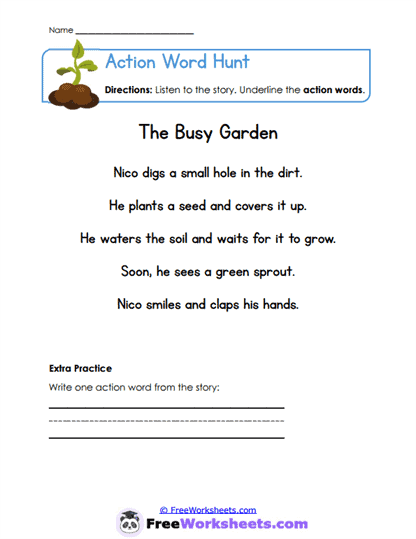
Action Words
- What Kids Do:
Children listen to or read a short story about planting a garden and underline action words like digs, waters, plants, and smiles within the sentences. Learners practice identifying what characters are doing while focusing closely on important vocabulary inside the story passage. - Target Skill:
Students strengthen reading comprehension and grammar readiness by recognizing verbs that describe actions in a text. The activity also supports vocabulary growth, sentence awareness, listening comprehension, and understanding how action words help explain story events clearly.
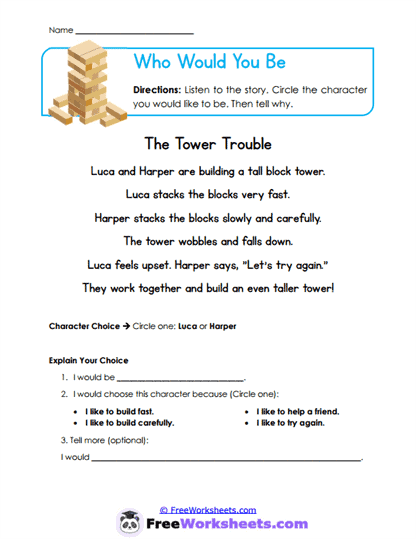
Character Choices
- What Kids Do:
Students listen to a story about children building a block tower together and decide which character they would most like to be in the story. Learners explain their choices aloud while discussing teamwork, persistence, friendship, and problem-solving during literacy conversations. - Target Skill:
Children strengthen character comprehension and oral reasoning skills by reflecting on character actions, choices, and behaviors within a story. The worksheet also supports speaking confidence, social thinking, comprehension development, and personal connection-making during reading.
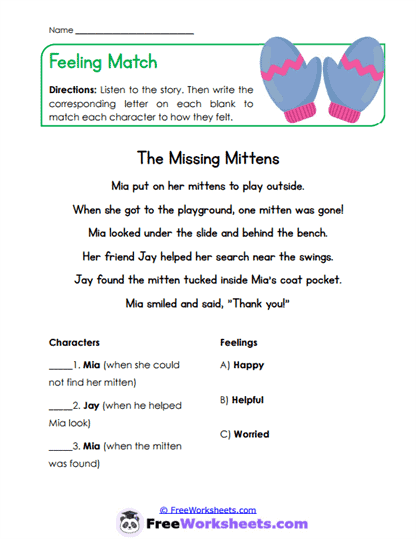
Feeling Clues
- What Kids Do:
Children listen to a story about a missing mitten and match each character to the feeling that best fits the story events. Learners think carefully about clues from actions and situations while discussing emotions like worried, happy, and helpful during comprehension practice. - Target Skill:
Students build comprehension and emotional vocabulary skills by identifying how characters feel during different parts of a story. The activity also strengthens listening comprehension, social-emotional understanding, reasoning skills, and understanding of character reactions and motivations.
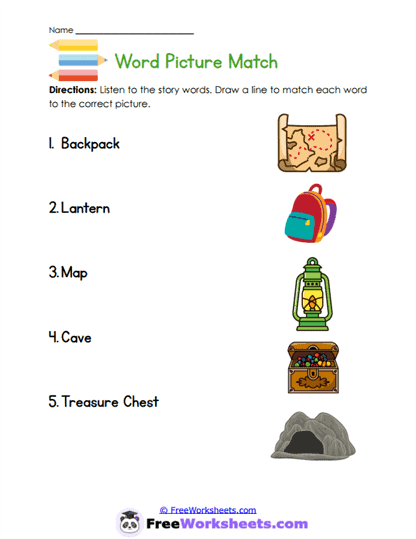
Picture Matches
- What Kids Do:
Students study vocabulary words connected to a treasure hunt theme and draw lines matching each word to the correct picture. Learners carefully compare images and vocabulary while practicing visual recognition and comprehension during themed literacy activities. - Target Skill:
Children strengthen vocabulary recognition and reading comprehension by connecting spoken or written words to matching visual representations. The worksheet also supports attention to detail, word-picture association skills, and understanding how vocabulary connects to story themes.
Place Clues
- What Kids Do:
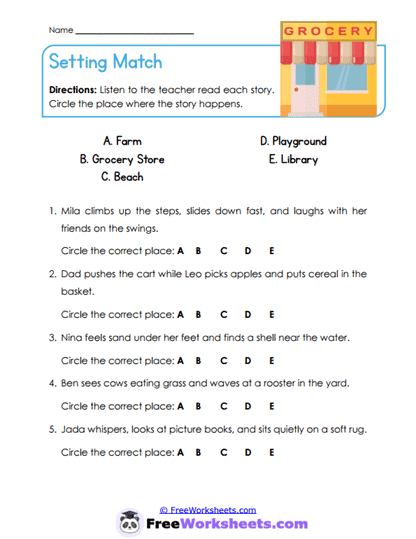
Children listen to short passages describing familiar places and use story clues to decide where each scene most likely happens. Learners circle settings like beaches, playgrounds, farms, or libraries after thinking carefully about the descriptive details provided. - Target Skill:
Students strengthen comprehension and reasoning skills by identifying story settings using clues from actions, objects, and vocabulary within short passages. The worksheet also supports listening comprehension, vocabulary development, and understanding of story elements.
Question Words
- What Kids Do:
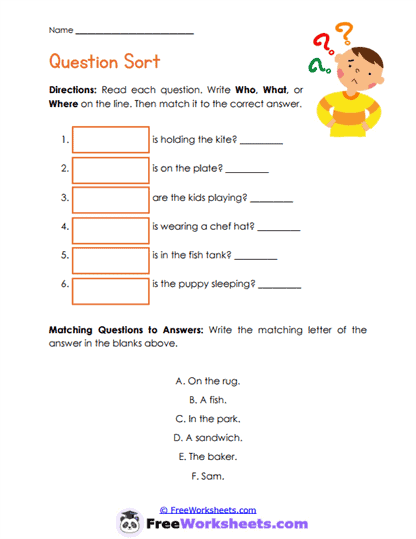
Students read or listen to simple questions missing the correct question word and choose whether who, what, or where belongs in the blank. Learners then connect each completed question to the matching answer while practicing comprehension and oral language skills. - Target Skill:
Children build comprehension and questioning skills by understanding how different question words ask for different kinds of information. The activity also strengthens vocabulary understanding, oral language development, listening skills, and sentence comprehension.
Rainy Answers
- What Kids Do:
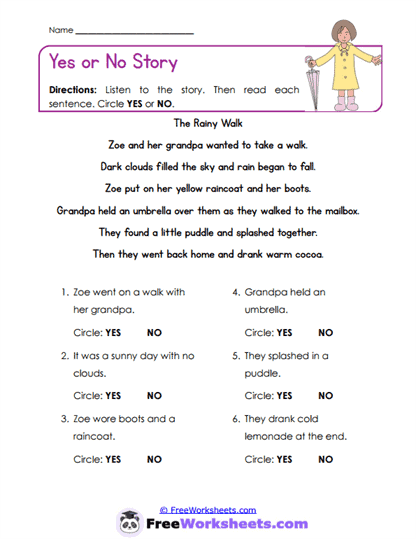
Students listen to a short rainy-day story and answer yes-or-no comprehension questions based on details from the passage. Learners think carefully about story events involving umbrellas, rain boots, and walking outside before circling their responses. - Target Skill:
Students strengthen listening comprehension and memory skills by recalling important story details and responding accurately to simple comprehension questions. The worksheet also supports attention skills, oral reasoning, and understanding of story-based information.
Real Life Reading
- What Kids Do:
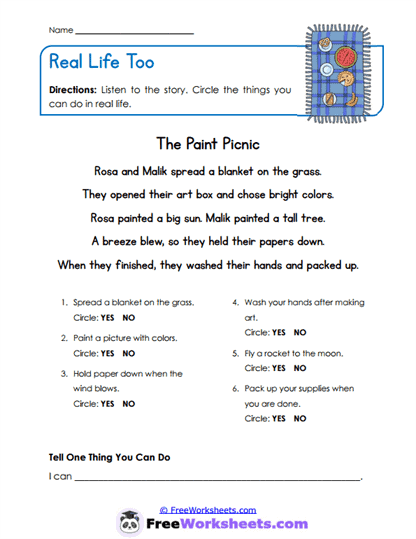
Children read or hear a story about painting outside and decide whether actions from the story are things people can really do in everyday life. Learners answer yes-or-no questions while connecting reading details to personal experiences and real-world understanding. - Target Skill:
This activity strengthens comprehension and reasoning skills by helping students connect stories to realistic everyday experiences and actions. Learners also develop personal connection-making, listening comprehension, and understanding of real versus imaginary situations in text.
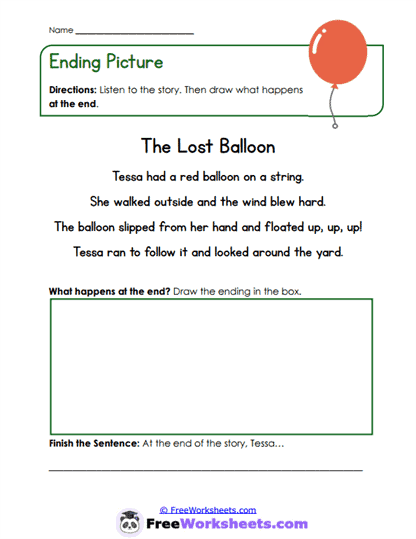
Story Endings
- What Kids Do:
Students listen to a story about a balloon blowing away and draw what they think happens at the end of the story. Learners complete sentence starters and explain their predictions while using clues from earlier events in the passage. - Target Skill:
Children strengthen prediction and sequencing skills by using story clues to imagine logical endings for a narrative. The worksheet also supports creative thinking, oral storytelling, comprehension development, and understanding of story structure and event connections.
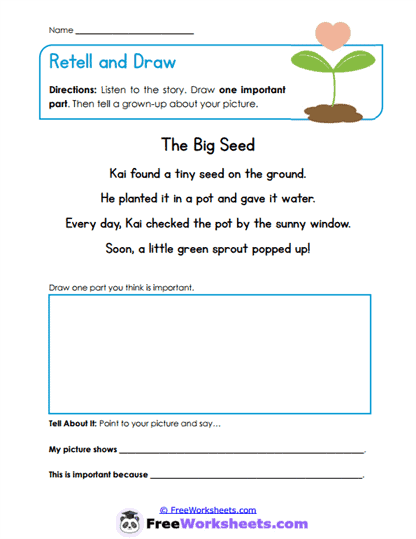
Story Retells
- What Kids Do:
Students listen to a story about planting a seed, choose one important part of the story, and draw the event inside a large response box. Learners explain their drawings aloud while practicing retelling and speaking about story events clearly. - Target Skill:
Students develop retelling and comprehension skills by identifying and explaining important story events in their own words. The activity also strengthens sequencing, oral language development, vocabulary growth, and understanding of story structure and key details.
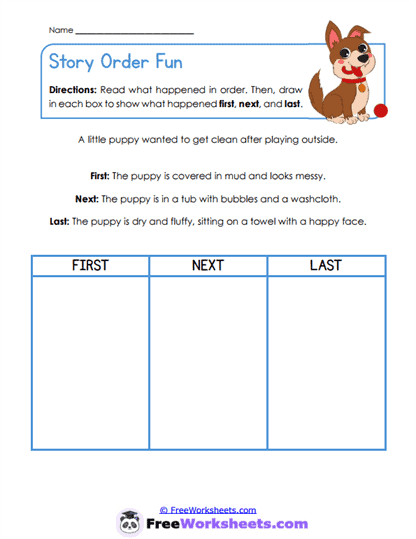
Story Sequencing
- What Kids Do:
Children listen to a story about a muddy puppy getting cleaned up and draw what happened first, next, and last in the correct order. Learners organize events visually while retelling story details and discussing the sequence of actions aloud. - Target Skill:
Children strengthen sequencing and comprehension skills by organizing story events from beginning to end using picture and story clues. The worksheet also supports logical thinking, retelling abilities, oral language development, and understanding of narrative order.
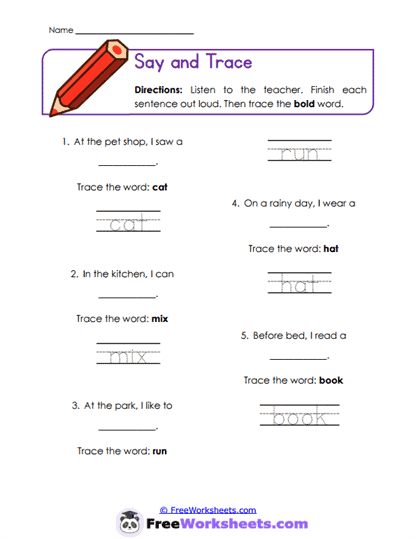
Trace Words
- What Kids Do:
Students listen to simple sentence prompts, finish the sentences aloud using matching vocabulary words, and trace the bold target words carefully on handwriting lines. Learners connect spoken language, comprehension, and handwriting practice during one literacy activity. - Target Skill:
Students build vocabulary recognition and reading readiness by connecting sentence meaning to important printed words through tracing practice. The activity also strengthens fine motor skills, oral language development, print awareness, and early comprehension abilities.