
About This Worksheet
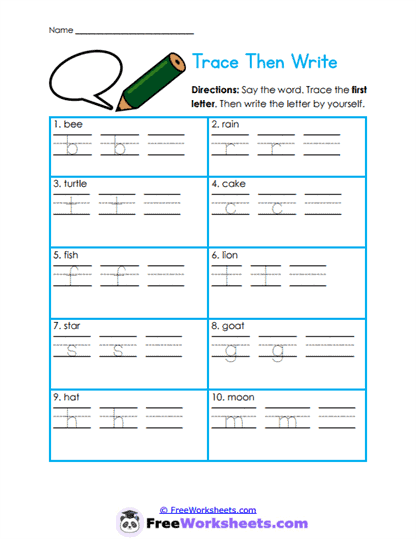
This worksheet helps preschool students practice tracing and independently writing beginning sound letters. Early handwriting and phonics activities teach children that spoken sounds are connected to written symbols. Students say each word aloud, trace the first letter, and then practice writing the letter on their own. For example, the word bee begins with the /b/ sound, so students trace and write the letter B. This activity strengthens handwriting control, phonemic awareness, and alphabet recognition skills.
Curriculum and Grade Alignment
This preschool literacy worksheet focuses on handwriting development, phonics, and sound-letter correspondence. Children practice hearing beginning sounds while improving pencil control and letter formation. Before completing this activity, students should recognize several alphabet letters and understand basic beginning sounds. Future literacy learning may include independently writing complete words and reading simple phonetic text. This worksheet aligns with CCSS.ELA-LITERACY.RF.K.1.D and TEKS standards related to handwriting and phonological awareness.
Student Tasks
On this worksheet, students will say simple words like rain, turtle, goat, and moon aloud. Learners trace the beginning letter shown beside each word before writing the letter independently on the blank handwriting lines. Children repeat the motion several times to strengthen memory and letter formation skills. Students practice connecting sounds, letters, and handwriting movements during one activity. The worksheet also encourages children to slow down and form letters carefully instead of rushing.
Common Challenges and Misconceptions
Some preschool students may understand the sound correctly but struggle with tracing or writing the letter neatly. Children can also confuse uppercase and lowercase letters while completing the handwriting practice. A few learners may rush through the tracing portion without paying attention to proper starting points. Others may forget the beginning sound when moving from tracing to independent writing. Teachers can help by modeling both the sound and the letter formation step by step.
Implementation Guidance
Teachers can use this worksheet during handwriting lessons, phonics instruction, or literacy center rotations. Parents may also use the activity at home to strengthen both early reading and fine motor skills together. Saying the sound aloud while tracing and writing the letter can help children remember the connection more clearly. Adults can encourage children to trace slowly and use correct pencil grip during practice. This worksheet also works well as independent review after introducing beginning consonant sounds.
Details and Features
The worksheet includes handwriting lines that guide preschool students in proper letter sizing and placement. Repeated tracing and writing opportunities help children build confidence and improve fine motor control. Familiar vocabulary words make the activity approachable for beginning readers and writers. The page layout is organized clearly so students can focus on one word and letter at a time. The worksheet prints cleanly for classroom lessons, homeschool use, or literacy intervention instruction.