
Hand-eye Coordination Activities Worksheets
Hand-eye coordination activities for preschool fine motor skills help young children connect what they see with controlled hand, pencil, crayon, and scissor movements. These free, ready-to-print PDF worksheets are prepared for immediate classroom use, fine motor centers, homeschool lessons, quiet work, or extra practice at home. Children strengthen visual tracking, pencil control, matching, and spatial awareness while working toward important preschool fine motor goals.
About This Collection of Worksheets
Hand-eye coordination develops when children learn to make their hands respond accurately to what their eyes are seeing. Preschool activities such as matching pictures, tracing paths, circling objects, copying shapes, coloring specific items, cutting pieces, and placing them in the correct location all give children opportunities to practice that connection. These skills support later handwriting, drawing, cutting, reading readiness, classroom routines, and many other everyday tasks.
This collection gives children many different ways to coordinate visual information with purposeful movement. They match identical and related pictures, search for target objects, trace paths and line patterns, copy shapes, follow horizontal lines, find odd pictures, cut and match pieces, place objects into logical scenes, follow coloring directions, and trace then match familiar shapes. The mix of pencil, crayon, cutting, gluing, and visual-search activities keeps fine motor practice varied while reinforcing careful observation.
Teachers can use these worksheets in preschool fine motor centers, pre-writing lessons, visual discrimination activities, small groups, morning work, or independent practice. Parents and homeschool educators can choose pages based on whether a child needs more help with tracking, drawing lines, tracing, matching, cutting, or following visual directions. Because the activities combine movement with simple thinking tasks, children can build coordination while also strengthening early reasoning and attention.
Paul’s Teacher Tip
Encourage children to find the answer with their eyes before moving their hand. That simple pause can reduce rushed marks and help children connect visual information with more controlled pencil or crayon movement. For tracing activities, let children follow the path with a finger first before using a writing tool. When cutting and pasting, have them place all pieces in the correct spots before adding glue so the thinking step stays separate from the fine motor step. If a page has several tasks, completing one row or section at a time can help young learners stay focused without tiring their hands.
Worksheet Collection Skill Spotlights
Circle Search
What Kids Do:
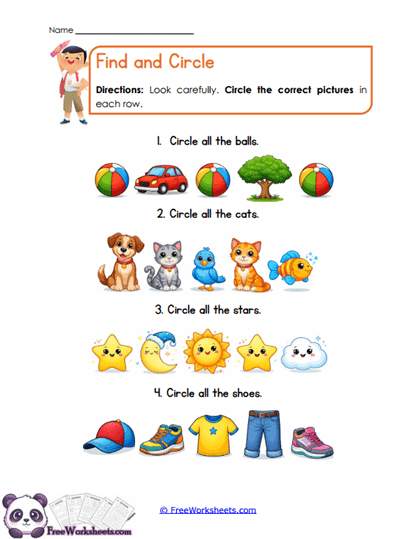
Children scan rows of familiar pictures and find every ball, cat, star, or shoe requested in the directions. They circle each correct object, continue looking across the full row for additional matches, and can check their answers afterward to make sure none were missed.
Target Skill:
This activity strengthens visual discrimination, sustained attention, and curved pencil control. Children practice comparing details, searching systematically from left to right, and coordinating what their eyes identify with the hand movement needed to draw a controlled circle around each target.
Cut Matching
What Kids Do:
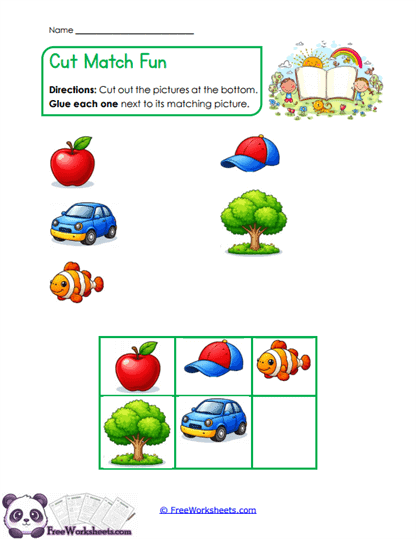
Children cut out five small picture pieces showing familiar objects such as an apple, hat, car, tree, and fish. They compare each loose piece with the pictures above, place every cutout beside its identical match, and glue the pieces down after checking the pairs.
Target Skill:
The worksheet combines scissor control, visual matching, spatial placement, and gluing. Children strengthen hand-eye coordination as they cut around picture boxes, compare visual details, position pieces accurately, and complete a multi-step fine motor activity in an organized sequence.
Direction Coloring
What Kids Do:
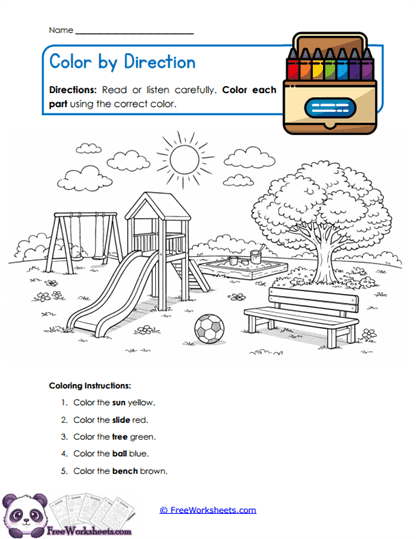
Children study a playground scene and follow five simple directions telling them which object to find and what color to use. They locate the sun, slide, tree, ball, and bench, then color each one according to the stated direction before checking the scene again.
Target Skill:
This activity develops hand-eye coordination through visual searching and controlled coloring while also reinforcing one-step directions. Children practice locating a specific object in a busier scene, remembering the assigned color, and guiding the crayon within spaces of different sizes.
Line Tracking
What Kids Do:
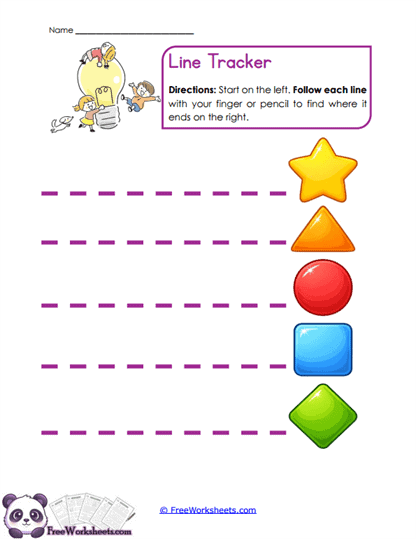
Children begin at the left side of several horizontal dashed lines and follow each path to a colorful shape on the right. They may first use a finger and then repeat the movement with a pencil, finishing one row completely before moving to the next.
Target Skill:
The worksheet strengthens left-to-right visual tracking, focused attention, and coordinated hand movement. Children learn to keep their eyes and hand on one path without jumping rows, supporting later reading direction, tracing, handwriting, and other classroom tasks that require steady tracking.
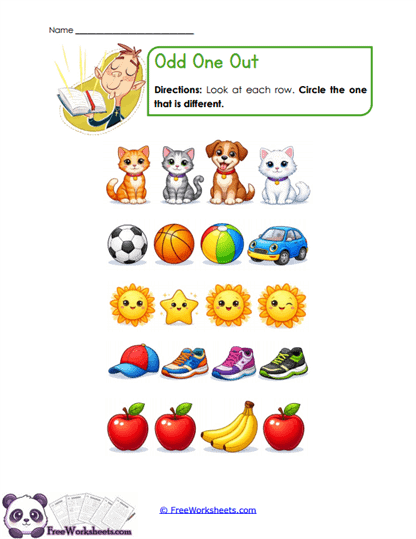
Odd Matching
What Kids Do:
Children examine rows of familiar objects and animals and decide which picture does not belong with the others. They compare the full group, point to the different item, circle it carefully, and can explain what makes that picture different from the rest.
Target Skill:
This activity builds visual discrimination, classification, reasoning, and curved pencil control. Children practice noticing similarities and differences before acting, then coordinate their visual choice with the hand movement required to circle the correct picture accurately.
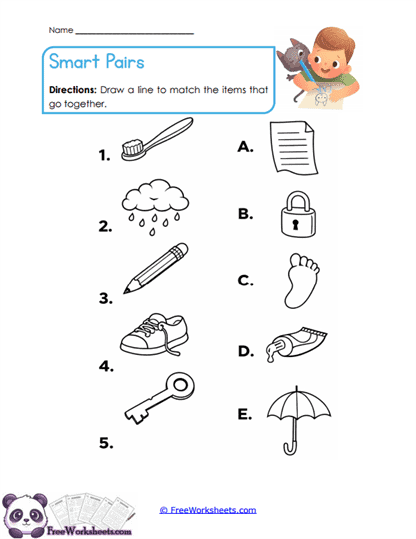
Partner Match
What Kids Do:
Children look at everyday objects in two columns and decide which items naturally belong together, such as a toothbrush with toothpaste or a key with a lock. They point to each pair, draw a connecting line, and can explain how the two objects are related.
Target Skill:
The worksheet strengthens visual tracking and pencil control while adding early reasoning and vocabulary. Children practice comparing objects by purpose rather than appearance, moving their eyes across the page, and guiding a line from one meaningful match to another.
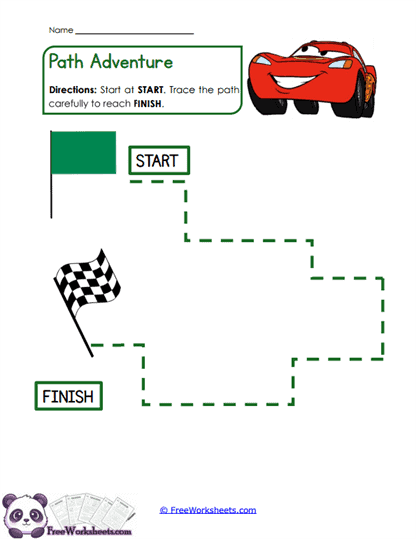
Path Tracing
What Kids Do:
Children begin at a clearly marked START point and trace a dashed racing route all the way to FINISH. The path includes several straight sections and corners, requiring them to slow down, follow each turn, and keep their pencil close to the intended route.
Target Skill:
This activity develops controlled pencil movement, visual tracking, and directional changes. Children practice looking slightly ahead, pausing at corners, and coordinating hand movement with a planned path, which supports later maze work, handwriting, tracing, and drawing.
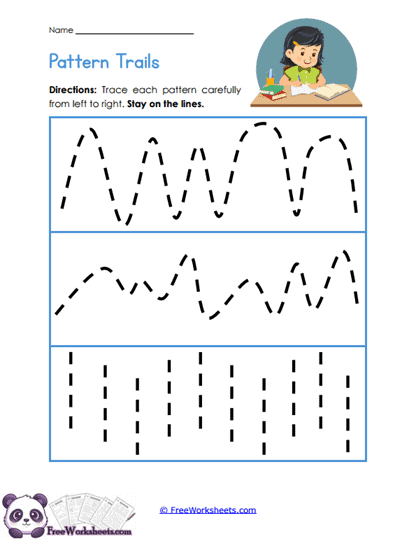
Pattern Tracing
What Kids Do:
Children trace several different left-to-right patterns, including tall loops, smaller waves, sharp turns, and vertical strokes. Each row asks them to follow the dashed path smoothly while adjusting their hand movement to match the type of line in front of them.
Target Skill:
The worksheet builds flexible pre-writing control through repeated curves, peaks, dips, turns, and straight strokes. Children strengthen left-to-right movement, hand-eye coordination, and the controlled motions that later contribute to forming letters and numbers.
Picture Pairs
What Kids Do:
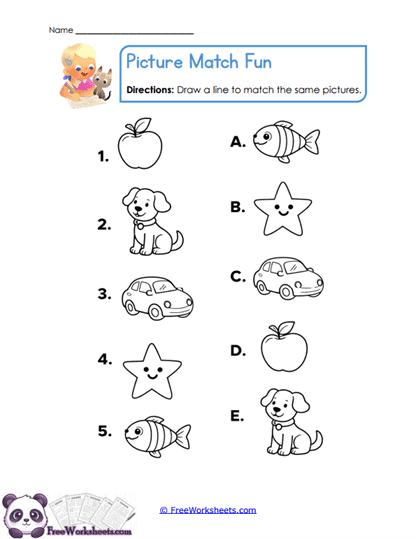
Children study five pictures on the left side of the page and search for the identical image among choices on the right. Once they locate each matching apple, dog, car, star, or fish, they draw a line across the page to connect the pair.
Target Skill:
This beginner matching activity develops visual discrimination, attention, memory, and controlled line drawing. Children practice finding an exact visual match before moving the pencil, helping them coordinate eye movement and hand movement across a larger area of the page.
Picture Placement
What Kids Do:
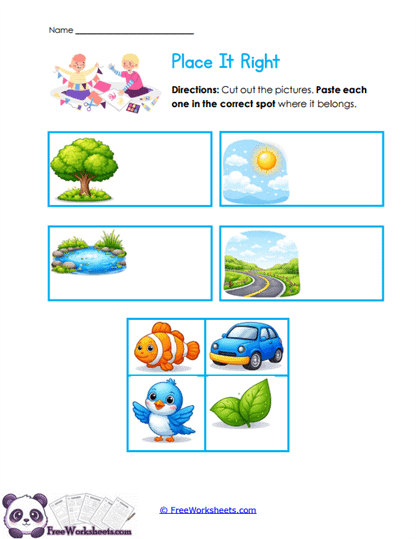
Children cut out pictures such as a fish, car, bird, and leaves and decide which larger scene each object belongs with. They place the pieces into the logical locations first, check their choices, and then glue each picture into the correct space.
Target Skill:
The activity combines hand-eye coordination with spatial reasoning and real-world associations. Children strengthen scissor use, visual matching, positioning, and pasting while learning to connect objects with meaningful settings such as water, roads, trees, or other familiar environments.
Shape Copy
What Kids Do:
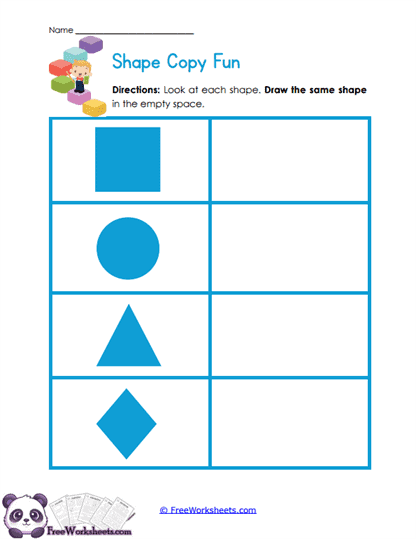
Children study a square, circle, triangle, and diamond shown as models, then draw each same shape inside the blank box beside it. They look closely at curves, straight sides, corners, and angled lines and try to reproduce those visual features with their own pencil movements.
Target Skill:
This worksheet strengthens visual memory, spatial awareness, and independent drawing control. Children practice turning a visual model into purposeful hand movements, an important readiness skill for later copying letters, numbers, symbols, and simple classroom examples.
Shape Tracing
What Kids Do:
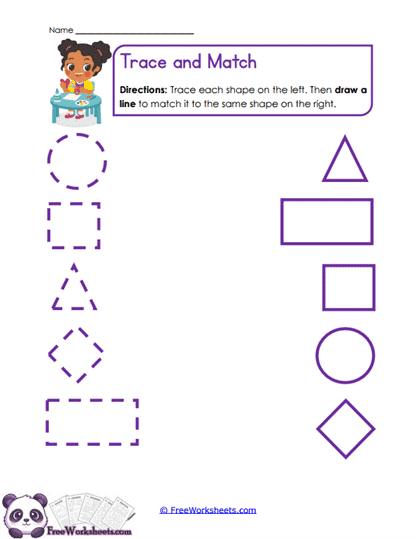
Children trace dashed outlines of a circle, square, triangle, diamond, and rectangle on the left side of the page. After tracing, they search for the matching solid shape on the right and draw a line connecting each traced figure with its correct partner.
Target Skill:
This activity combines tracing, shape recognition, visual discrimination, and connecting-line control. Children practice curves, straight sides, corners, and angled movements while also comparing similar forms and coordinating what they see with accurate pencil movement.