
Coloring Pages Worksheets
Coloring pages for preschool fine motor skills give young children playful practice with crayon control, tracing, matching, cutting, and careful hand movements. These free, ready-to-print PDF worksheets are prepared for immediate classroom use, learning centers, homeschool lessons, quiet time, or extra practice at home. Children strengthen grip control, hand-eye coordination, visual matching, and early scissor skills while working toward important preschool fine motor goals.
About This Collection of Worksheets
Coloring pages can do much more than provide preschool children with a quiet activity. Large outlines, simple pictures, tracing paths, and smaller details encourage children to guide crayons and pencils with greater control while strengthening the small muscles in their hands and fingers. These early movements support later classroom skills such as drawing shapes, forming letters and numbers, using scissors, and completing other hands-on tasks.
This collection adds variety by combining traditional coloring with simple preschool thinking skills. Children color familiar shapes, fruits, animals, playground objects, and seasonal pictures; follow numbered color guides; trace a fish; match shapes with colors; compare big and small areas; and color before cutting out a large star. Some pages provide broad open spaces for beginning colorers, while others introduce smaller sections that require shorter and more controlled movements.
Teachers can use these worksheets in fine motor centers, themed preschool lessons, morning work, art stations, or calm independent practice. Parents and homeschool educators can use the pages for short activities that combine creativity with hand-strengthening practice without making the experience feel overly academic. Because the collection includes both open-ended coloring and activities with simple directions, adults can easily choose a page that matches a child’s current level of control and attention.
Paul’s Teacher Tip
For preschool coloring, focus more on control and effort than perfect neatness. Thick crayons or triangular crayons can be easier for children who are still developing a comfortable grip, while regular crayons offer a little more precision for children who are ready. Encourage broad strokes in large spaces and shorter movements when children reach small details. For tracing or cutting pages, model slow movements first rather than asking children to finish quickly. If a page feels overwhelming, cover part of it and let the child complete one small section at a time.
Worksheet Collection Skill Spotlights
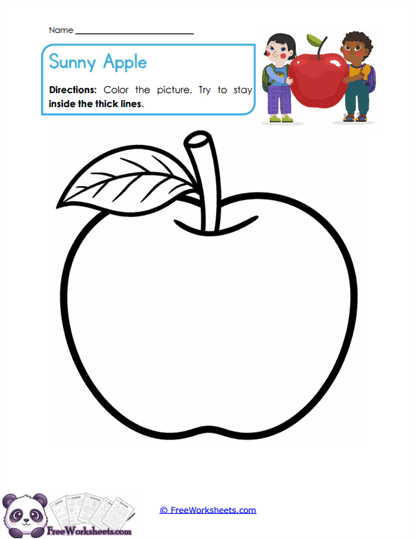
Apple Coloring
What Kids Do:
Children color one large apple with a bold outer edge, along with its smaller stem and leaf. They can choose traditional apple colors or create their own design while practicing slower crayon movements around the curved outline and more controlled strokes inside the smaller details.
Target Skill:
This activity strengthens beginning crayon control, grip development, and hand-eye coordination by giving children both a large open coloring area and smaller spaces to manage. The curved apple edge also encourages children to practice changing direction without moving far outside a clear boundary.
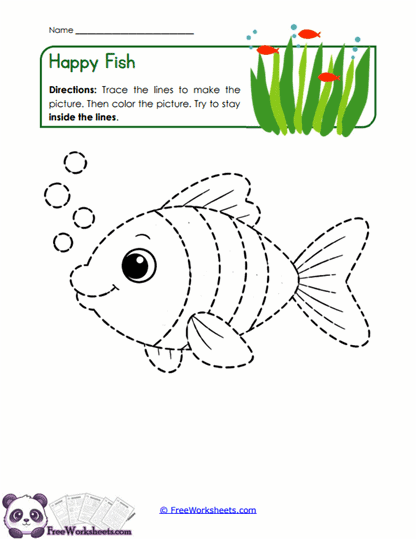
Fish Tracing
What Kids Do:
Children first follow dotted lines to complete a fish and then color the finished picture. They trace curved and straighter sections, work around the fins and smaller details, and then use broader coloring movements inside the completed outline while also coloring bubbles or other small spaces.
Target Skill:
The worksheet combines early pencil-path control with coloring practice, helping children strengthen hand-eye coordination and learn to guide a writing tool along a planned route. Those controlled tracing movements support later letter formation, number writing, and basic drawing skills.
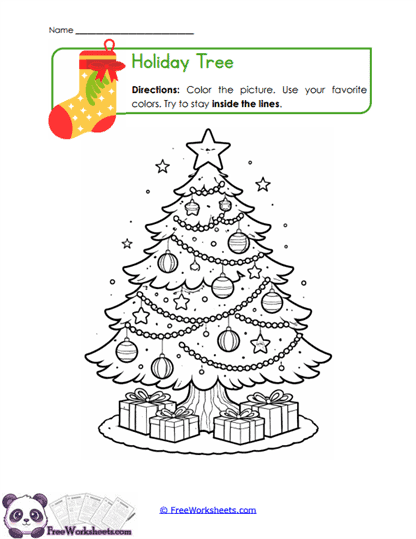
Holiday Coloring
What Kids Do:
Children color a large decorated holiday tree along with ornaments, garland, stars, presents, and other seasonal details. They move between broad tree sections and smaller decorations, choosing their own colors while completing one part of the busy picture at a time.
Target Skill:
This page develops fine motor endurance and flexible crayon control by requiring both large sweeping movements and small careful strokes. Children also practice visual attention as they notice separate picture parts and adjust their movements to fit spaces of different sizes.
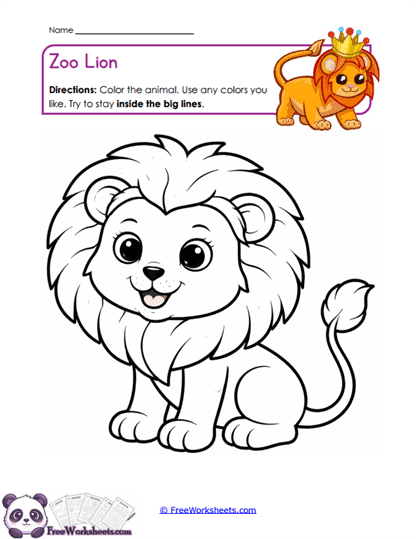
Lion Coloring
What Kids Do:
Children color a friendly lion with a large mane, face, body, paws, and tail. The picture allows broad coloring in larger sections while the face and smaller body details encourage children to slow down, change direction, and use shorter strokes when more control is needed.
Target Skill:
The activity strengthens hand muscles and teaches children to adjust their crayon movements to match the size and shape of the space. Moving among curves, broad sections, and tighter details also supports coordination, visual attention, and greater confidence using coloring tools.
Number Coloring
What Kids Do:
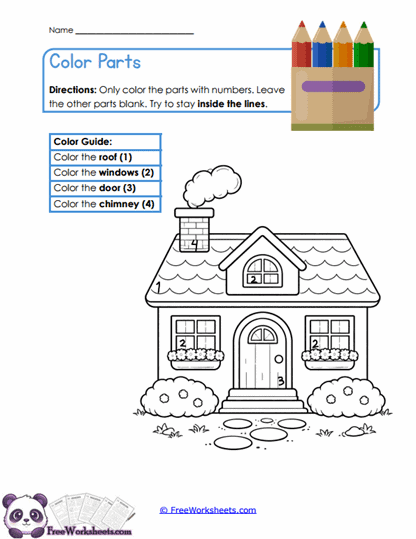
Children use a numbered color guide to color selected parts of a house, including areas such as the roof, windows, door, and chimney. They match each number to its assigned color, fill only the numbered sections, and leave the other parts of the picture blank as directed.
Target Skill:
This activity combines coloring control with number recognition, visual scanning, and direction-following. Children must notice which spaces belong in the activity, connect each printed number with the correct color, and use increasingly precise movements in smaller house details.
Picnic Colors
What Kids Do:
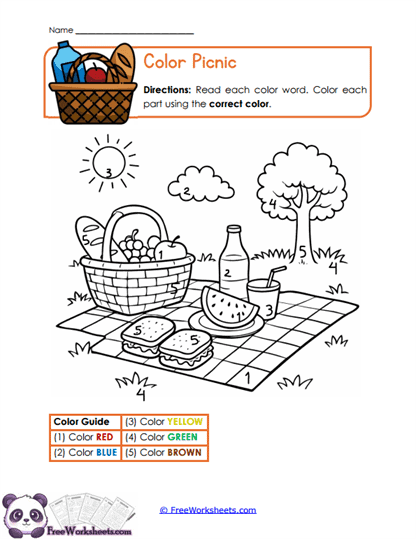
Children follow a five-color number guide while coloring a picnic scene filled with familiar objects such as a basket, food, drinks, grass, a tree, and a blanket. They locate each number, match it with the correct color, and fill both broad and detailed sections of the picture.
Target Skill:
The page strengthens fine motor control while also developing early number matching, color recognition, visual scanning, and attention to directions. Moving from one numbered region to another encourages children to pause, check information, and then control the crayon within each space.
Playground Coloring
What Kids Do:
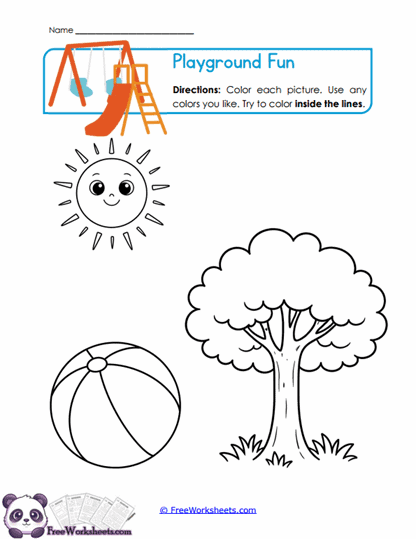
Children freely color three familiar outdoor pictures: a sun, ball, and tree. They choose their own colors and fill each object while working with different kinds of lines, from the curved edge of the ball to the smaller rays of the sun and more detailed areas of the tree.
Target Skill:
This activity gives children repeated practice changing the size and direction of their crayon strokes. The mix of simple and more detailed shapes strengthens grip, coordination, boundary awareness, and the ability to move from large coloring motions to smaller controlled movements.
Rocket Colors
What Kids Do:
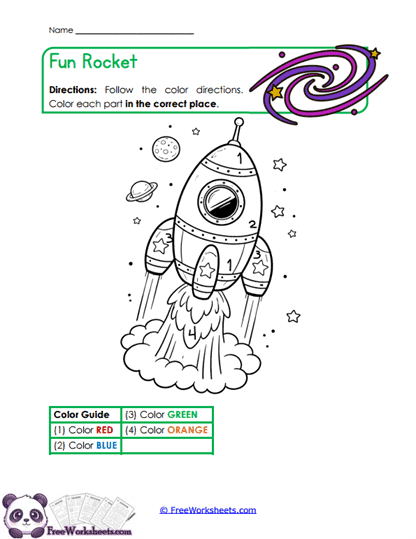
Children color a rocket by matching numbered sections with a four-color guide. They find each printed number, identify the corresponding color, and fill the matching rocket section before checking the guide again to make sure the different numbered areas were completed correctly.
Target Skill:
This worksheet develops fine motor coordination alongside early number and color matching. Children strengthen visual attention and direction-following by scanning for numbered sections, while the rocket’s varied spaces encourage both broad coloring strokes and more precise movements.
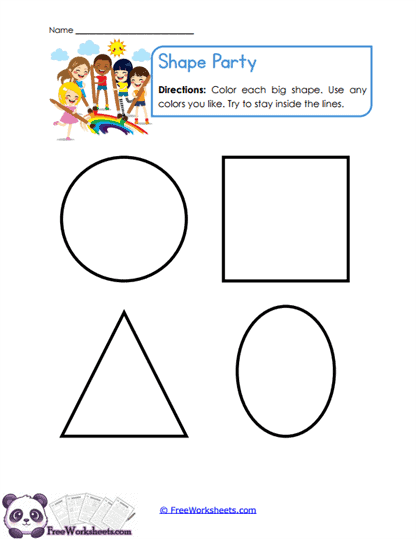
Shape Coloring
What Kids Do:
Children color four large basic shapes-a circle, square, triangle, and oval-using any colors they choose. The bold outlines and wide open spaces give beginning colorers room to practice filling an area while also naming or identifying each shape as they work.
Target Skill:
This simple activity builds early crayon grip, hand strength, boundary awareness, and basic shape recognition. Following straight and curved edges encourages children to guide their hands in different ways while developing the control needed for later tracing and pre-writing activities.
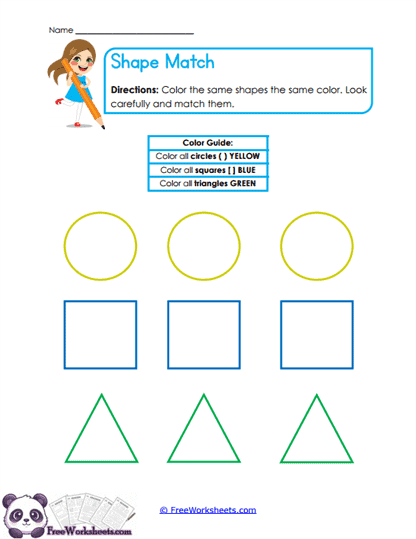
Shape Matching
What Kids Do:
Children look through repeated circles, squares, and triangles and use a simple color guide to color all examples of the same shape alike. They identify each figure before choosing its color and repeat the process across several rows of shapes.
Target Skill:
This activity combines fine motor practice with early visual discrimination and sorting skills. Children learn to recognize consistent shape features, follow a matching rule, and color repeated figures with enough control to stay close to their outlines.
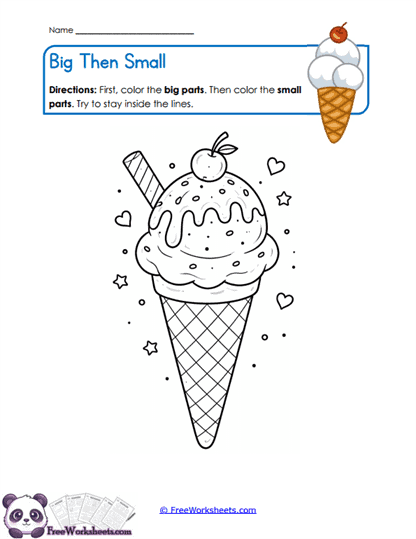
Size Coloring
What Kids Do:
Children study an ice cream picture and first color the large sections before moving to its smaller details. They compare the size of different picture parts, use broad strokes where there is plenty of space, and then shift to shorter, slower movements in tighter areas.
Target Skill:
The worksheet develops size-comparison language while teaching children to adjust their hand movements to the space available. Switching between large and small areas supports visual awareness, crayon control, fine motor flexibility, and an understanding of big-versus-small relationships.
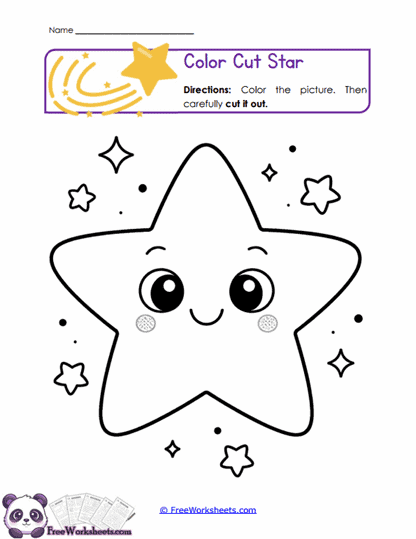
Star Craft
What Kids Do:
Children color a large star using any colors they like and then cut carefully around its thick outside border with child-safe scissors. They turn the paper as they move around the points and corners, creating a finished star that can be used for a craft or display.
Target Skill:
This page combines two important preschool fine motor skills: crayon control and early scissor use. Cutting around the star strengthens bilateral coordination because one hand operates the scissors while the other turns and steadies the paper through changes in direction.