
Line Tracing (Straight, Curved, Zigzag) Worksheets
Line tracing for preschool fine motor skills helps young children practice straight, curved, and zigzag movements while building early pencil control. These free, ready-to-print PDF worksheets are prepared for immediate classroom use, fine motor centers, homeschool lessons, quiet work, or practice at home. Children strengthen hand-eye coordination, left-to-right tracking, and controlled line movement while working toward important preschool pre-writing goals.
About This Collection of Worksheets
Line tracing gives preschool children a simple way to practice the hand movements they will later use for drawing, writing letters, forming numbers, and completing classroom tasks. Straight strokes teach children how to move in a controlled direction, curves build smoother hand motion, and zigzags introduce sharper stops and turns. By repeating these patterns, children gradually become more comfortable guiding a pencil, crayon, or marker along a planned path.
This collection includes vertical rain lines, road paths, fence strokes, horizontal tower connections, ladder rungs, rainbow arcs, facial curves, winding balloon strings, ocean waves, spirals, mountain zigzags, and lightning-shaped paths. The activities vary the direction, length, and shape of each movement so children can practice both simple and more challenging pre-writing strokes without doing the same task over and over.
Teachers can use these worksheets in preschool fine motor centers, handwriting-readiness lessons, seasonal units, morning work, or small-group practice. Parents and homeschool educators can begin with short straight lines and then move toward longer curves, waves, spirals, and sharper zigzags as control improves. Because the pages include familiar themes such as rainbows, balloons, farms, roads, and weather, children can build hand strength and coordination in a way that feels playful rather than repetitive.
Paul’s Teacher Tip
For tracing practice, focus on slow, controlled movement rather than perfect accuracy. Let children follow each path with a finger first so their eyes understand where the line is going before the pencil starts moving. Encourage top-to-bottom strokes for vertical lines and left-to-right movement for horizontal and flowing patterns because those directions support later handwriting habits. On curves and zigzags, remind children to slow down before the path changes direction. If a pencil feels too difficult, a thicker crayon or marker can help children build confidence before moving to a finer writing tool.
Worksheet Collection Skill Spotlights
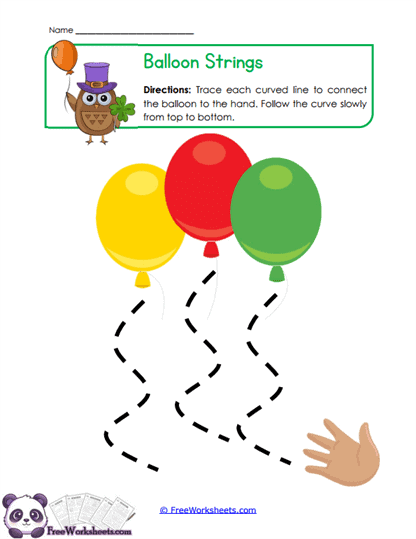
Balloon Curves
What Kids Do:
Children trace three long balloon strings from the balloons downward toward a hand. Each string bends in a slightly different way, so children follow gentle turns, stay close to the dashed path, and complete one winding line at a time.
Target Skill:
This activity strengthens sustained curved-line control and top-to-bottom visual tracking. Children practice adjusting direction gradually over a longer path while coordinating eye movement with controlled hand motion, supporting later tracing, drawing, and handwriting tasks.
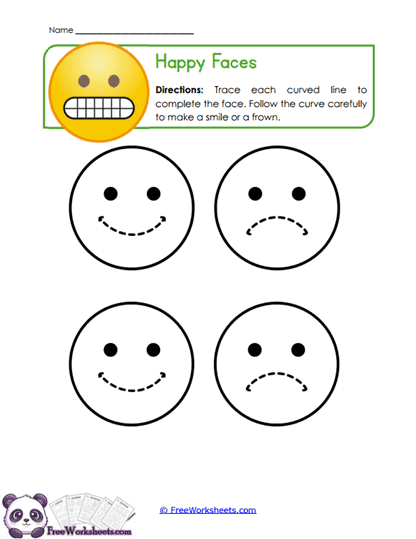
Face Curves
What Kids Do:
Children trace curved mouth lines to complete happy and sad faces. They follow upward arcs for smiles and downward arcs for frowns, trying to keep the pencil close to the dashed guide from one side of the face to the other.
Target Skill:
The worksheet builds smooth curved pencil movement and visual attention to direction. Children learn that curves can move upward or downward while strengthening the rounded strokes needed for many letters, numbers, and early drawing activities.
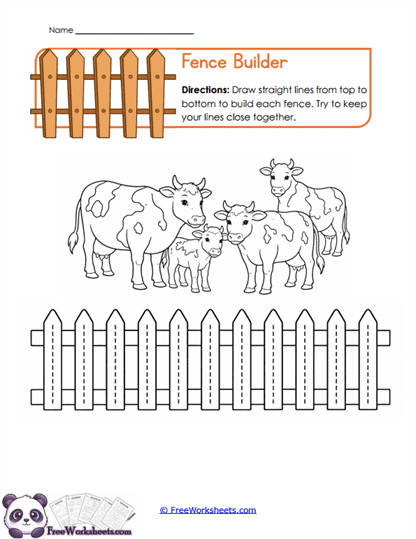
Fence Lines
What Kids Do:
Children complete a farm fence by tracing or drawing repeated vertical lines from the top of each fence board toward the bottom. They work across the fence one stroke at a time while trying to keep each line straight and evenly spaced.
Target Skill:
This activity develops controlled vertical strokes, spacing awareness, and top-to-bottom movement. Children strengthen one of the most important pre-writing motions while practicing consistency across repeated lines and improving hand-eye coordination.
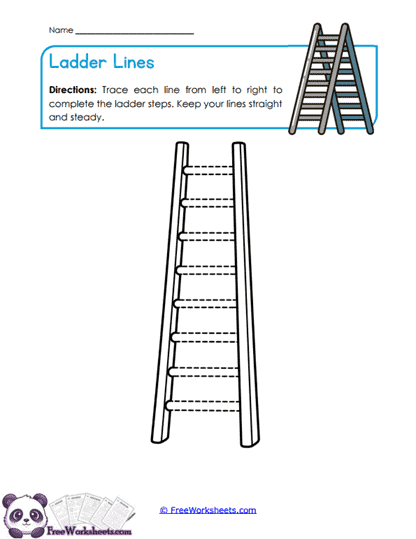
Ladder Tracing
What Kids Do:
Children trace the short horizontal rungs of a ladder from left to right. Each dashed line gives them a clear starting point and ending point, allowing them to repeat the same side-to-side movement several times down the page.
Target Skill:
The worksheet reinforces horizontal pencil control, consistent stopping, and left-to-right movement. Repeating short straight strokes helps children build steadier hand motion and prepares them for letters, shapes, and early handwriting patterns that use horizontal lines.
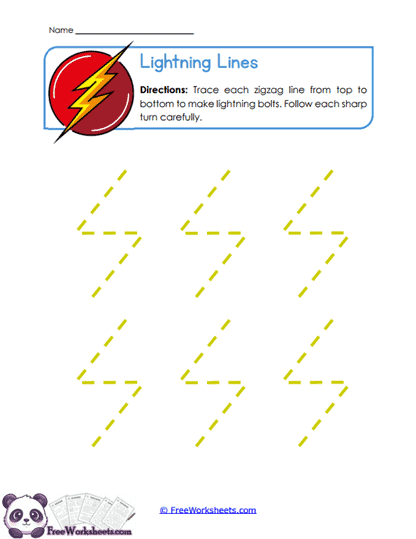
Lightning Traces
What Kids Do:
Children start at the top of several lightning-bolt paths and trace downward through a series of sharp diagonal turns. They pause at each corner, change direction, and continue toward the bottom while staying close to the dashed zigzag.
Target Skill:
This activity strengthens diagonal-line control and deliberate direction changes. Children practice stopping before sharp turns, coordinating angled strokes, and following a top-to-bottom sequence that supports later drawing and formation of shapes and letters with slanted lines.
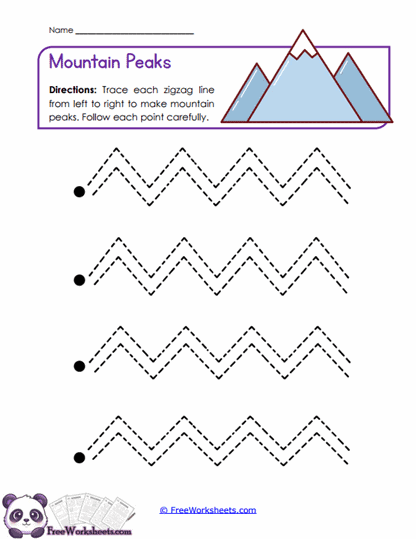
Mountain Zigzags
What Kids Do:
Children trace repeated mountain-like zigzag paths from left to right. They follow each rise and fall, pause at the peaks and valleys, and continue across several rows while trying to keep the pointed pattern clear.
Target Skill:
The worksheet develops control over diagonal strokes, sharp turns, and left-to-right visual tracking. Children practice the stop-and-change-direction movements needed for shapes, letters, and numbers that contain angled lines or pointed forms.
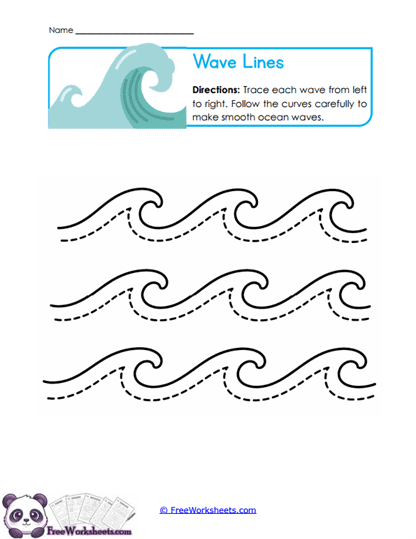
Ocean Waves
What Kids Do:
Children trace several rows of repeating ocean-wave patterns from the left side of the page to the right. They follow each rise, curl, and fall with smooth movements and repeat the flowing pattern across the full row.
Target Skill:
This activity strengthens continuous curved motion, rhythm, and left-to-right tracking. Children practice moving through repeated curves without stopping at every change, helping develop the smooth hand control used later in rounded letters and connected drawing movements.
Rainy Traces
What Kids Do:
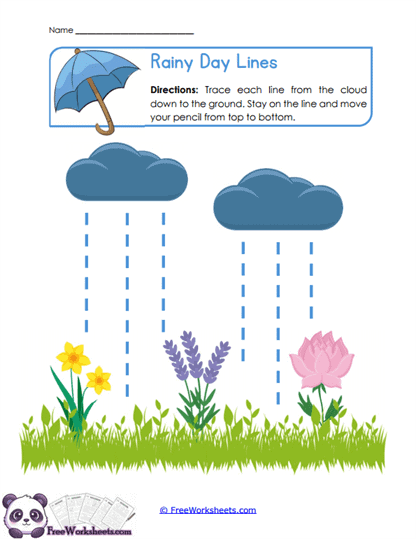
Children trace vertical dashed lines from beneath rain clouds down toward flowers and grass. Each line begins at the top and moves straight downward, giving children repeated practice with the same controlled movement in a playful weather scene.
Target Skill:
This beginner activity develops top-to-bottom pencil control, hand-eye coordination, and consistent vertical strokes. Repetition helps children build the muscle memory needed for later handwriting, number formation, and drawing tasks that depend on straight downward movements.
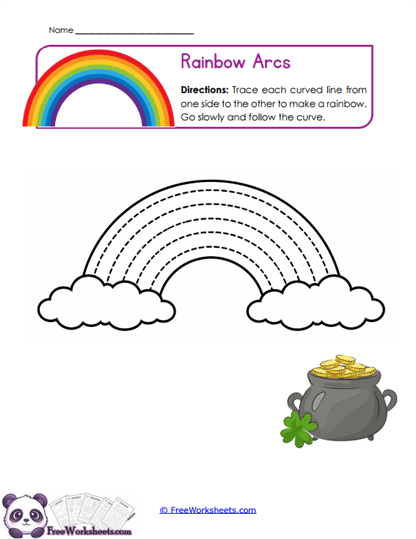
Rainbow Curves
What Kids Do:
Children trace several large rainbow arcs from one cloud to the other. They follow the rounded dashed paths slowly, staying close to each curve while moving across slightly different arc sizes before optionally coloring the picture.
Target Skill:
The worksheet develops broad curved strokes and gradual direction changes. Children strengthen rounded pre-writing movements, visual tracking, and hand-eye coordination while learning to follow an extended arc without flattening or sharply changing the curve.
Road Tracing
What Kids Do:
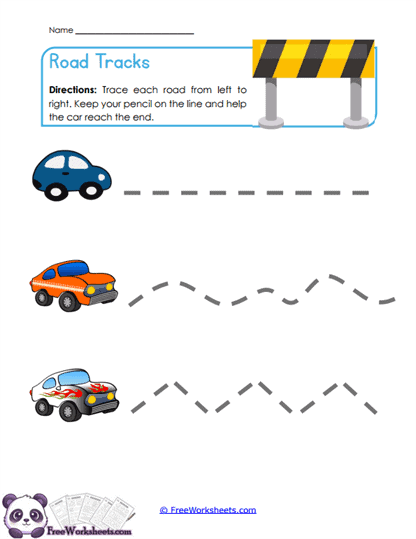
Children trace three road paths from left to right: one straight, one wavy, and one zigzag. Each row asks them to adjust their pencil movement to match the type of line while helping a car travel along its road.
Target Skill:
This activity teaches children to distinguish and reproduce different line patterns. They practice steady straight movement, smooth curves, and sharp directional changes while strengthening flexible pencil control and left-to-right tracking on a single page.
Spiral Trails
What Kids Do:
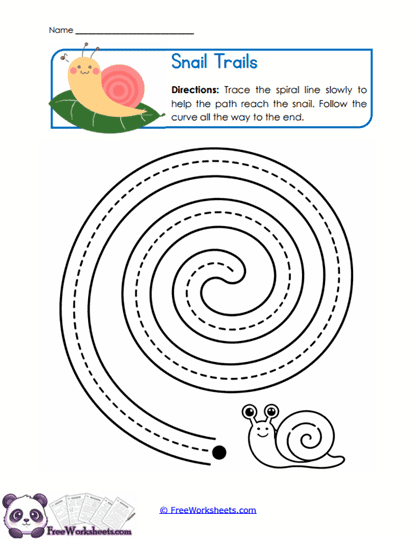
Children begin at the outside of a large spiral and trace inward toward a snail at the center. They follow the path as the curves become tighter, pausing when needed and carefully staying on the same line instead of jumping across nearby sections.
Target Skill:
This more advanced tracing activity strengthens continuous curved movement, concentration, and visual tracking. Children learn to adjust the size of their hand motions as the spiral tightens while maintaining steady control across a long uninterrupted path.
Tower Connections
What Kids Do:
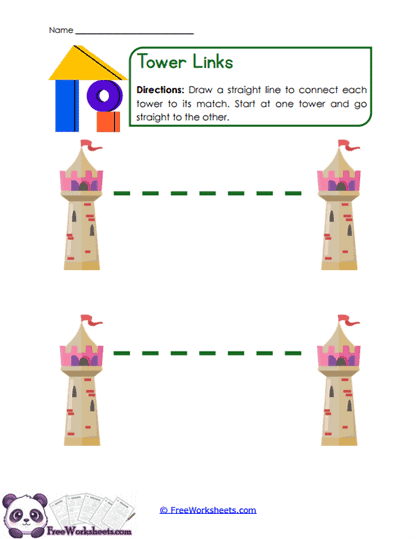
Children look at castle towers on the left and connect each one with its matching tower on the right. They draw a straight horizontal line across the open space while keeping their eyes focused on the ending picture before beginning the stroke.
Target Skill:
The worksheet combines visual matching with controlled left-to-right line drawing. Children practice aiming toward a clear target, maintaining a steadier horizontal path, and coordinating their eye movement with purposeful pencil motion across the page.