
About This Worksheet
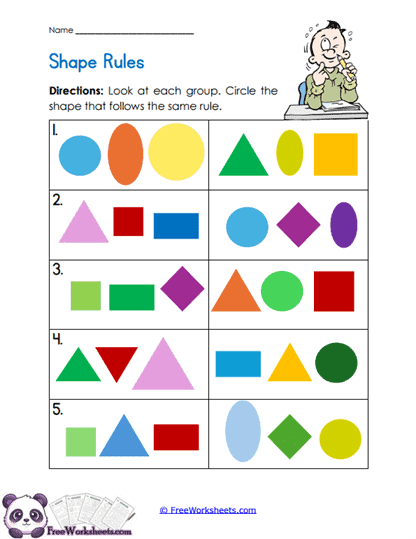
Shape Rules is a preschool geometry activity that helps children figure out what several shapes have in common and then find another shape that follows the same rule. Each row shows a small group of example shapes on the left and three possible choices on the right. Children study the examples and look for a shared feature such as being round, having straight sides, or belonging to the same kind of shape family. For example, if the example group is made of round shapes, the child should choose another round shape. This helps young learners move beyond simply naming shapes and begin thinking about the features that connect them.
Curriculum and Grade Alignment
This worksheet is made for preschool learners who are ready to compare several flat shapes at the same time. The main goal is to help children notice a shared shape feature and use that feature to choose another matching example. Before using this page, your child should be familiar with basic ideas such as straight sides, curved edges, and common shape names. The next step is explaining the rule in words and sorting larger groups of shapes by more than one feature. This activity supports early preparation for Common Core K.G.B.4 by helping children compare and analyze two-dimensional shapes using their attributes.
Student Tasks
On this worksheet, students will study the example shapes shown on the left side of each row. They will decide what feature or rule those shapes share. Children then look at the three choices on the right and circle the shape that follows the same rule. Five rows give students practice noticing several different kinds of shape relationships. This builds observation, comparison, and early geometry reasoning.
Common Challenges and Misconceptions
Some children may choose a shape because the color matches instead of looking at the shape feature. Others may see more than one possible connection and have trouble deciding which rule matters most. A child may also focus on only one example instead of comparing the whole group. Encourage your child to describe all of the example shapes before looking at the choices. Asking, “What is the same about these shapes?” can help bring the rule into focus.
Implementation Guidance
Teachers can use this worksheet after children have practiced simpler shape sorting activities. It works well in a small group because students can explain the rule they notice before choosing an answer. Parents can make a quick game with paper shapes by placing two or three matching examples together and asking the child to find another one that belongs. Then use the same thinking on the worksheet. This helps children understand that the goal is to find the shared rule rather than simply choose a familiar shape.
Details and Features
This worksheet includes five rows of shape-rule problems with several colorful choices in each one. The examples and answer choices vary in size, color, and shape so children must focus on the important feature. Clear row divisions make the page easy to follow. The circling response keeps the activity simple while the reasoning level is a little more challenging. The printable supports shape comparison, classification, visual reasoning, and geometry vocabulary.