
About This Worksheet
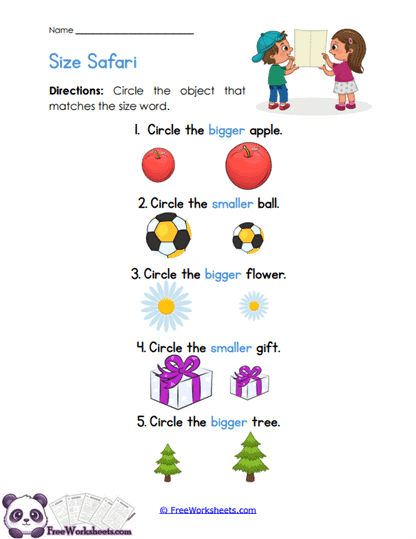
Size Choices is a preschool comparison activity that helps children tell which object is bigger or smaller. Each problem shows two versions of the same kind of object, such as apples, balls, flowers, gifts, and trees. Children look carefully at the pair and circle the object named in the direction. For example, one problem asks children to circle the bigger apple, while another asks them to circle the smaller ball. This gives young learners a very clear way to practice the words bigger and smaller.
Curriculum and Grade Alignment
This worksheet is made for preschool learners who are beginning to compare objects by overall size. The main goal is to help children understand and use the words bigger and smaller correctly. Before using this page, your child should be able to notice obvious differences between two objects. The next step is comparing more than two objects and using words such as biggest and smallest. This activity supports early measurement thinking by helping children compare objects directly based on size.
Student Tasks
On this worksheet, students will look at each pair of matching objects and compare their sizes. They will listen to or read the direction to see whether they need to find the bigger or smaller object. Children then circle the correct picture. Five problems use apples, balls, flowers, gifts, and trees to give repeated practice with the same idea. This helps students connect size words with clear visual examples.
Common Challenges and Misconceptions
Some children may circle the object they like better instead of paying attention to size. Others may mix up the meanings of bigger and smaller. A child may also rush without comparing both pictures first. Encourage your child to point to both objects and say which one is larger before circling. Using a simple sentence such as, “This one is bigger,” can help strengthen the meaning of the size word.
Implementation Guidance
Teachers can use this worksheet after comparing real classroom objects such as blocks, cups, or books. It works well in a small group because children can explain why one object is bigger or smaller. Parents can place two household objects side by side and ask the child the same kind of question before starting the page. If your child is unsure, use hand motions to show big and small while saying the words aloud. This makes the comparison language easier to remember.
Details and Features
This worksheet includes five simple picture pairs with one clear size comparison in each row. The pictures are large and colorful, making the differences easy for preschool children to see. Directions use both bigger and smaller so children practice both words. The clean layout keeps each comparison separate and easy to follow. The printable builds size vocabulary, observation, and early measurement skills.