
About This Worksheet
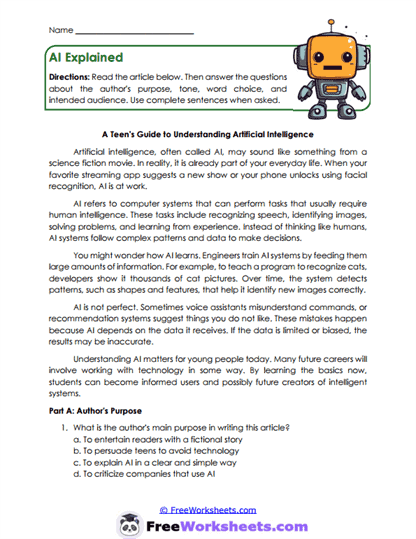
This Grade 7 reading worksheet helps students figure out why an author wrote an informational article. The passage explains artificial intelligence in a simple way, including how it works, where students may see it, and why it matters in the future. Students study the author’s purpose, tone, word choice, and intended audience instead of only collecting facts. For example, explaining how an AI system learns from data shows that the article was written to inform and clarify rather than to entertain.
Learning Goals
The main goal is to help students connect an author’s purpose with the way information is presented. Readers should already be able to identify a main idea and supporting details in nonfiction. This activity moves them toward analyzing how tone, examples, and explanations are chosen for a particular audience. It supports CCSS.ELA-LITERACY.RI.7.6, which asks students to determine an author’s point of view or purpose and explain how it is conveyed.
Student Tasks
On this worksheet, students will read an article that introduces artificial intelligence to young readers. They will decide whether the author’s main purpose is to inform, entertain, persuade, or explain a personal idea. Students will also examine the tone, word choice, and intended audience of the piece. Their answers should use details from the article to show how the author makes a difficult topic easier to understand.
Common Challenges
Some students may choose “to persuade” simply because the article says AI will matter in the future. Others may focus on the robot image or title instead of the way the passage is actually written. Remind them that purpose comes from what the author spends most of the article doing. A helpful question is, “Is the writer mainly teaching me, trying to change my mind, or telling me a story?”
Teaching Suggestions
A teacher can begin by reviewing the four common purposes with one quick example of each. After students read, ask them to point out which parts define AI, explain how it works, and discuss its uses. Parents can help by asking the child who the article seems written for and which words make it feel friendly or serious. This conversation gives students a simple way to connect audience, tone, and purpose.
Worksheet Features
The passage introduces a current technology topic in language that seventh graders can follow. It includes definitions, examples, limits, and future uses, giving students several clues about purpose and audience. A multiple-choice question provides an easy starting point before students move into deeper analysis. The worksheet fits lessons on informational reading, media literacy, technology, or author’s craft.