
About This Worksheet
This worksheet is a poetry analysis activity focused on identifying sound devices such as alliteration, assonance, and onomatopoeia. It is designed for Grade 7 students and helps build understanding of how sound enhances meaning in poetry. Students explore how repeated sounds and word choices create rhythm and imagery. This strengthens both comprehension and appreciation of poetic techniques. For example, “buses boom” demonstrates alliteration by repeating the initial sound.
Curriculum and Grade Alignment
This worksheet aligns with Grade 7 standards for analyzing literary devices in poetry. It supports Common Core Standard CCSS.ELA-LITERACY.RL.7.4, which focuses on word choice and sound devices. Students should already understand basic figurative language. The next step is identifying and explaining how sound patterns affect meaning. In Texas, this connects to TEKS 7.7 for analyzing literary texts.
Student Tasks
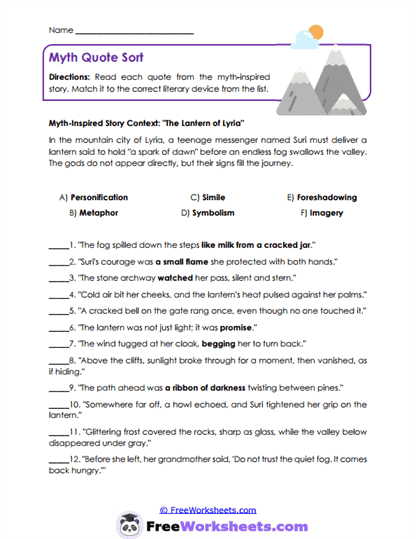
On this worksheet, students will read a poem about a busy city scene. They identify examples of sound devices within the text. Students label each example as alliteration, assonance, or onomatopoeia. They also consider how these sounds contribute to the poem’s energy and imagery. The activity encourages close reading and analysis of poetic language.
Common Challenges and Misconceptions
Students may confuse different sound devices or misidentify examples. Some learners might focus only on definitions instead of how the devices function. Others may overlook subtle sound patterns in the poem. A common misconception is that sound devices are only decorative and not meaningful. Teachers can model examples to show how sound contributes to imagery and tone.
Implementation Guidance
Teachers can use this worksheet during poetry units or lessons on literary devices. It works well in small groups where students can discuss their findings. Parents can support at home by reading the poem aloud and listening for repeated sounds. This worksheet also helps students prepare for analyzing more complex poetry. Regular practice builds stronger literary analysis skills.
Details and Features
The worksheet includes a vivid, engaging poem with clear examples of sound devices. Directions guide students to identify and label each type. The format supports both reading and written responses. It is printable and easy to use in classroom or home settings. The design encourages active engagement with poetic language.