
Self-Monitoring Behaviors Worksheets
These self-monitoring behavior worksheets help students pause, review their choices, and make practical adjustments during the school day. Every activity is Free, Ready-to-print, available in PDF format, and designed for Immediate classroom use. Students strengthen skills in self-awareness, self-management, active listening, responsible participation, and goal setting.
About This Collection of Worksheets
This collection helps students become more aware of what they are doing while learning is still happening. Instead of waiting until the end of the day to hear whether behavior went well, learners check their focus, listening, effort, language, participation, and goal progress at several points. These short pauses give students a chance to reset before one difficult moment turns into a larger problem.
The worksheets include visual ratings, yes-or-no checkpoints, student-teacher comparisons, polite-language tracking, effort checks, positive-choice logs, and next-step planning. Students identify successful behaviors, notice where performance changes, and connect challenges with a specific setting or activity. They then choose one realistic action to practice rather than receiving a broad reminder to behave better.
These printable resources work well during classroom lessons, counseling sessions, independent work, group activities, behavior conferences, and home-learning routines. The collection supports CASEL competencies involving self-awareness, self-management, social awareness, relationship skills, and responsible decision-making. Since the pages range from simple facial ratings to more detailed reflection and planning, adults can select worksheets that match each student’s age and current level of independence.
Paul’s Teacher Tip
Teach students what each behavior looks like before asking them to monitor it. A child may sit quietly but still be thinking about something unrelated, so clear examples matter. Use check-ins as chances to reset rather than as scores that follow students for the rest of the day. When reviewing the page, choose one behavior to discuss and one strategy to practice. Honest answers are far more useful than a chart filled with perfect ratings.
Worksheet Collection Skill Spotlights
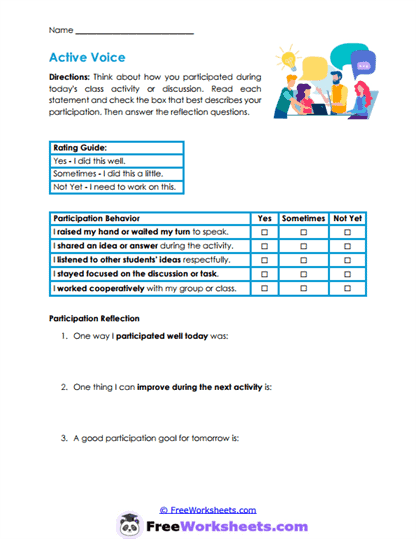
Active Voice
What Kids Do: Students rate whether they waited their turn, shared an idea, listened to others, stayed focused, and cooperated during a lesson or group activity. They identify one strong contribution and choose one participation goal for tomorrow.
Target Skill: This activity teaches that participation includes both speaking and listening. Students learn to value useful ideas, respectful timing, cooperation, and attention rather than judging participation only by how often someone talks.
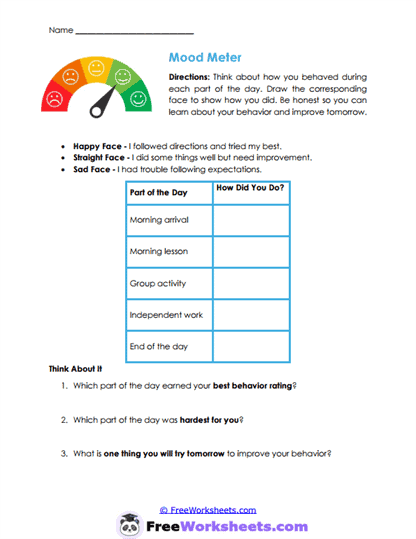
Behavior Mood
What Kids Do: Students draw a happy, straight, or sad face to rate behavior during arrival, lessons, group work, independent work, and the end of the day. They compare the periods and choose one improvement for tomorrow.
Target Skill: This visual page helps younger learners connect behavior with specific parts of the day. Students also learn that one lower rating describes a short period and does not define them as a bad student.
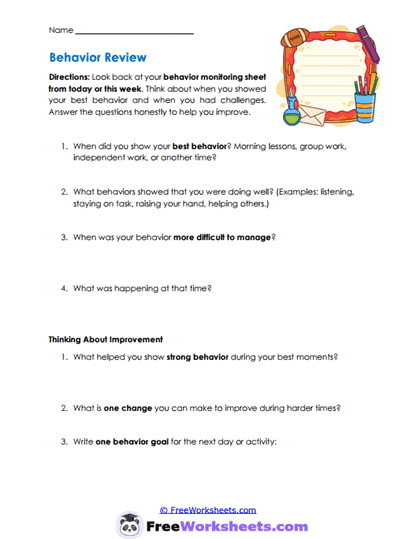
Behavior Review
What Kids Do: Students look back at an earlier checklist or monitoring sheet and describe where behavior was strongest and hardest to manage. They identify helpful supports, surrounding conditions, and one change that could improve a similar situation.
Target Skill: Learners turn monitoring information into meaningful reflection. The worksheet helps them replace broad statements with one exact action, one setting, and one realistic behavior goal.
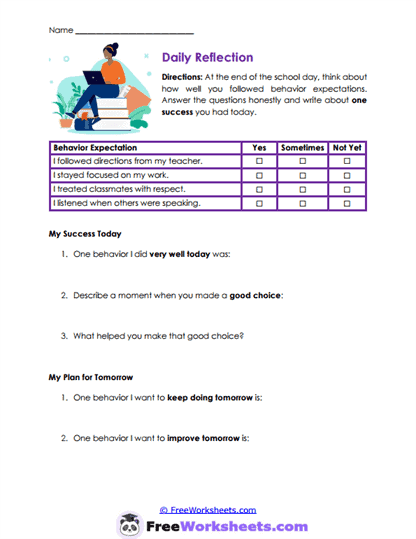
Daily Reflection
What Kids Do: Students rate following directions, staying focused, treating classmates respectfully, and listening to others. They describe one successful choice, explain what helped, and select one behavior to continue and one to improve.
Target Skill: This activity develops balanced self-reflection. Students recognize a strength while still taking responsibility for a skill that needs more practice, preventing the review from becoming either overly negative or unrealistically positive.
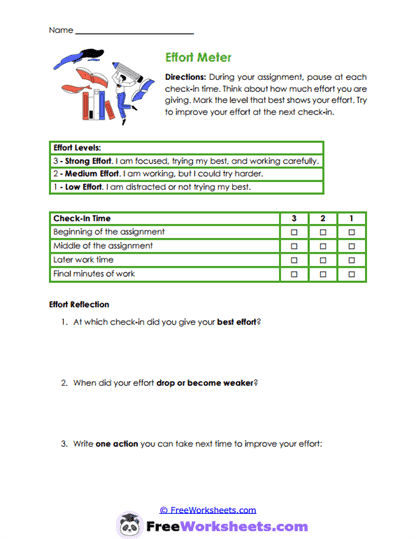
Effort Check
What Kids Do: Students rate their effort at the beginning, middle, later portion, and final minutes of an assignment. They identify where effort was strongest, where it dropped, and which action may help them recover next time.
Target Skill: Students learn that effort can change during a task and can be adjusted before the work is finished. The page separates effort from correctness and focuses on careful work, persistence, and returning after distraction.
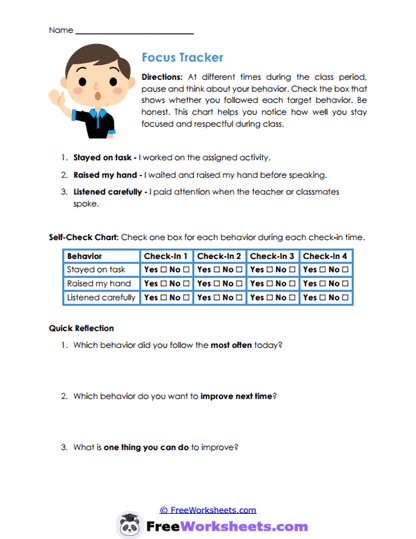
Focus Check
What Kids Do: Students complete four checkpoints during one lesson and mark whether they stayed on task, raised a hand before speaking, and listened carefully. They compare results and choose one specific improvement action.
Target Skill: This worksheet develops in-the-moment self-monitoring. Repeated checkpoints help students recognize changing attention or participation and give them several chances to reset during the same class period.
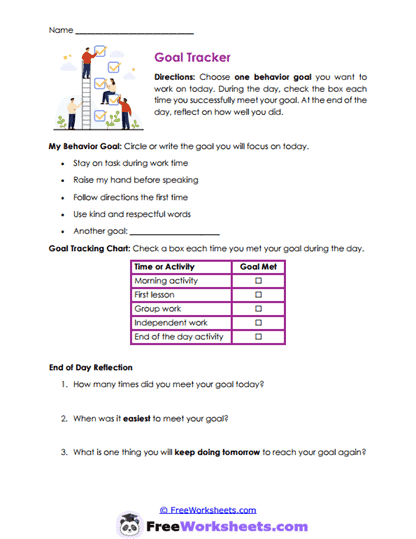
Goal Check
What Kids Do: Students select one daily behavior goal and record success during five school activities. They total the successful check-ins, identify when the goal felt easiest, and decide how to repeat that success tomorrow.
Target Skill: Learners build consistency by breaking one larger goal into smaller practice opportunities. The page also helps them notice which settings or supports make the chosen behavior easier to use.
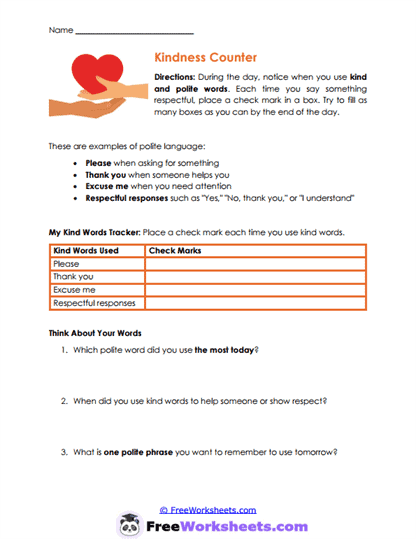
Kind Words
What Kids Do: Students add checkmarks when they say please, thank you, excuse me, or another respectful response. They identify the phrase used most, describe one meaningful example, and choose language to practice tomorrow.
Target Skill: This activity develops respectful communication and social awareness. Students learn that polite words work best when tone, facial expression, timing, and genuine care support the message.
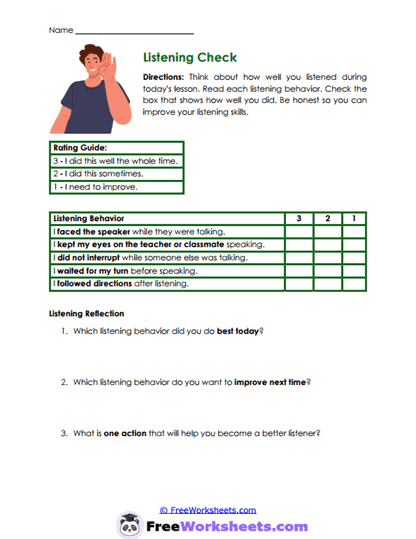
Listening Skills
What Kids Do: Students rate five active-listening behaviors, including facing the speaker, watching, waiting for a turn, and following directions. They identify one listening strength and choose one action that needs more practice.
Target Skill: Learners see that listening involves visible and purposeful behaviors rather than silence alone. The worksheet supports attention, patience, respect, and better understanding during lessons and conversations.
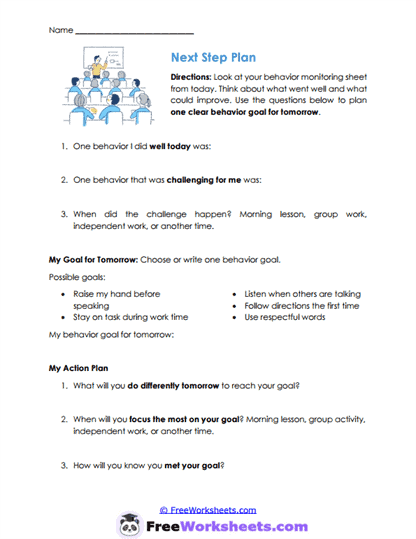
Next Steps
What Kids Do: Students name one successful behavior, one challenge, and the setting where the challenge occurred. They then choose one goal for tomorrow and explain the action, practice time, and sign that will show success.
Target Skill: This page turns daily reflection into a specific plan. Students replace vague promises with one observable behavior and a simple way to know whether they followed through.
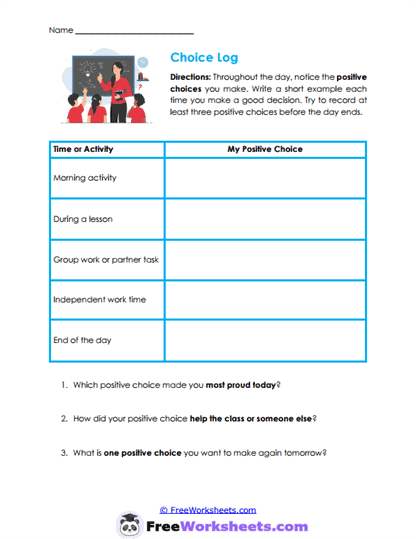
Positive Choices
What Kids Do: Students record one positive choice during morning work, a lesson, group work, independent work, and the end of the day. They select the choice that made them proud and explain how it helped someone or supported learning.
Target Skill: This activity directs attention toward successful decisions as they happen. Students learn that responsibility can look different across settings and that small actions such as waiting, helping, or beginning promptly still matter.
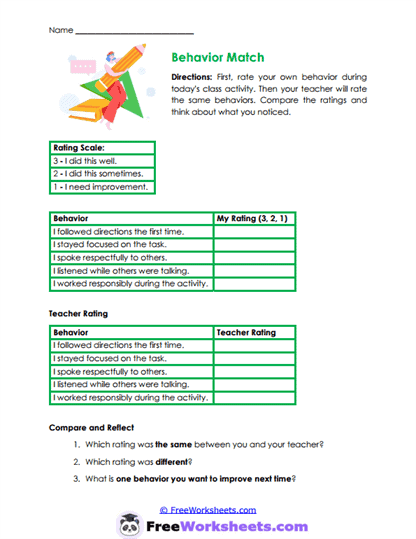
Rating Match
What Kids Do: Students rate five classroom behaviors and then compare their answers with ratings completed by a teacher. They identify one agreement, one difference, and one behavior to improve during the next activity.
Target Skill: Learners practice accepting feedback and comparing viewpoints calmly. The worksheet shows that different ratings can open a helpful conversation when both people use clear examples rather than treating the comparison as a contest.