
About This Worksheet
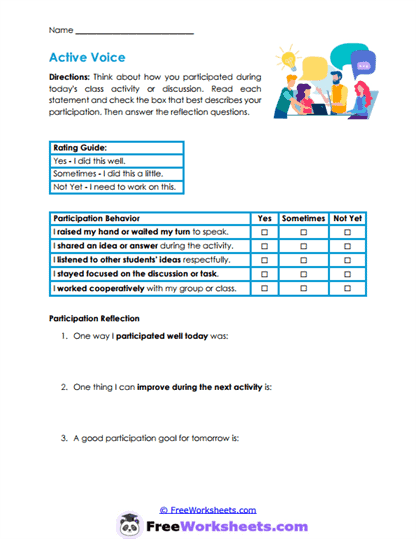
This worksheet is a participation self-check that helps students review how well they contributed during a class activity or discussion. It is a good fit for students in grades 3 through 6 who are learning that strong participation includes speaking, listening, focusing, and cooperating. Children rate five participation behaviors using yes, sometimes, or not yet. For example, “I participated today” becomes “I shared one useful idea and listened respectfully to my classmates.”
Curriculum and Grade Alignment
The main goal is to help students understand that useful participation involves both contributing and respecting the group. Students should already know how to take turns and follow basic discussion expectations. The next skill is making contributions that are more thoughtful, timely, and connected to the lesson. This worksheet supports CASEL relationship skills, self-awareness, and responsible decision-making because students examine how their choices affect group learning.
Student Tasks
On this worksheet, students will rate five participation behaviors from the day’s lesson or activity. They review whether they raised a hand or waited their turn, shared an idea, listened to others, stayed focused, and worked cooperatively. Students then describe one way they participated well and one area they can improve. The final question asks them to set a participation goal for tomorrow.
Common Challenges and Misconceptions
Some students may think participation only means talking often. Others may count off-topic comments or interruptions as useful contributions. Quiet students can also overlook the value of listening and cooperating because those actions may feel less noticeable. Teachers can help by explaining that strong participation includes quality, timing, focus, and respect.
Implementation Guidance
Teachers can use this worksheet after group work, class discussion, reading circles, or collaborative problem-solving. It works best when students complete it soon after the activity while the details are still easy to remember. Parents and homeschool educators can adapt it for shared lessons, sibling projects, or family discussions. Adults should praise one specific contribution before helping the child choose a next-step goal.
Details and Features
The worksheet includes a simple three-choice rating guide. Five participation behaviors are listed in a clear chart with separate response columns. Three reflection questions help students identify success, improvement, and a future goal. The page balances speaking and listening so participation is not judged only by how often a student talks.