
Weekly Behavior Charts Worksheets
These k-12 weekly behavior charts help students review daily choices, notice weekly patterns, and prepare one focused improvement goal. Every activity is free, ready-to-print, available in PDF format, and designed for immediate classroom use. Students strengthen skills in self-awareness, self-management, respectful communication, persistence, and responsible decision-making.
About This Collection of Worksheets
This collection helps students see how everyday classroom choices add up across an entire school week. Learners monitor listening, focus, direction following, kindness, effort, organization, respect, and safe behavior from Monday through Friday. Looking across several days makes it easier to notice steady strengths, occasional setbacks, and situations where extra support may be useful.
The worksheets include star charts, face ratings, subject-by-subject reviews, student-teacher comparisons, kindness logs, effort trackers, classroom-rule checklists, and goal-planning pages. Students record daily progress, compare patterns, explain what helped, and choose one behavior to practice next. Several activities also encourage children to prepare a backup plan for moments when they forget the goal or find the situation harder than expected.
These printable resources work well during Friday reflections, classroom check-outs, individual behavior plans, counseling sessions, home-school communication, and homeschool routines. The collection supports CASEL competencies involving self-awareness, self-management, social awareness, relationship skills, and responsible decision-making. Since the pages range from simple visual charts to written weekly reflections, adults can choose worksheets that match each student’s age, independence, and current behavior needs.
Paul’s Teacher Tip
Complete the chart briefly each day instead of asking students to remember the entire week on Friday. Connect every star, check, face, or score with a specific example so the rating has meaning. Begin the weekly review with one behavior the student handled consistently before discussing a challenge. Keep the next goal small enough to practice in a clear setting, such as listening during reading group. When a student forgets the goal, use the backup plan to help them recover rather than treating the week as unsuccessful.
Worksheet Collection Skill Spotlights
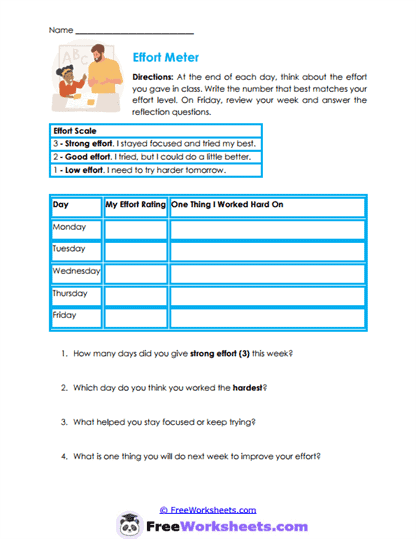
Effort Growth
What Kids Do: Students rate their effort from Monday through Friday and record one task or behavior that showed hard work each day. They identify their strongest effort day, explain what supported persistence, and choose one strategy for next week.
Target Skill: This activity helps students separate effort from grades, speed, or perfect answers. Learners recognize that asking for help, correcting mistakes, returning after distraction, and continuing through difficulty can all show strong effort.
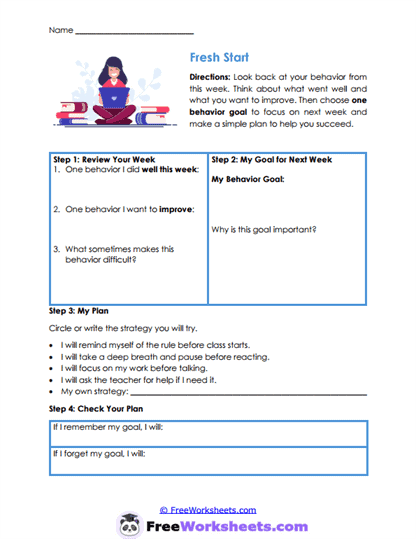
Fresh Goals
What Kids Do: Students review one weekly behavior success, one challenge, and what makes that challenge difficult. They then select one new goal, explain why it matters, choose a strategy, and prepare plans for remembering or forgetting it.
Target Skill: This page turns weekly reflection into a practical reset. Students learn that forgetting a goal does not end the plan and that a clear recovery step can help them return to the expected behavior.
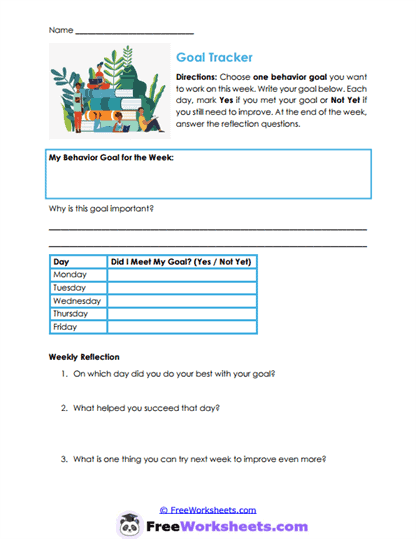
Goal Journey
What Kids Do: Students choose one behavior goal, explain why it matters, and mark yes or not yet each day from Monday through Friday. They identify their strongest day, describe what helped, and select one action for continued improvement.
Target Skill: Learners build consistency by focusing on one visible behavior instead of several broad habits. The phrase not yet encourages continued practice and helps students view an imperfect day as information rather than failure.
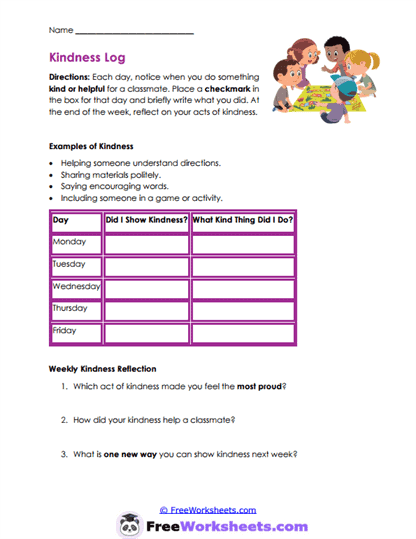
Kindness Week
What Kids Do: Students record one helpful or caring action for each school day. At week’s end, they choose the action that made them proud, explain how it affected another person, and identify a new way to show kindness.
Target Skill: This activity develops social awareness and intentional relationship building. Students learn that kindness includes small repeated actions such as sharing, encouraging, helping, and including others rather than only large gestures.
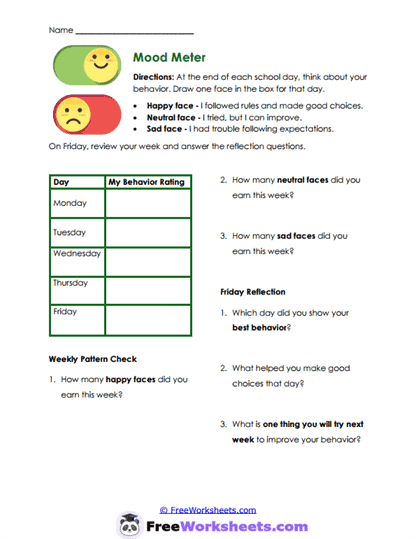
Mood Patterns
What Kids Do: Students draw a happy, neutral, or sad behavior face for each weekday. They count the different ratings, identify their strongest day, explain what supported good choices, and plan one improvement for the next week.
Target Skill: This visual tracker helps younger students notice behavior patterns across several days. Learners also practice separating whether they enjoyed the day from how well they followed classroom expectations.
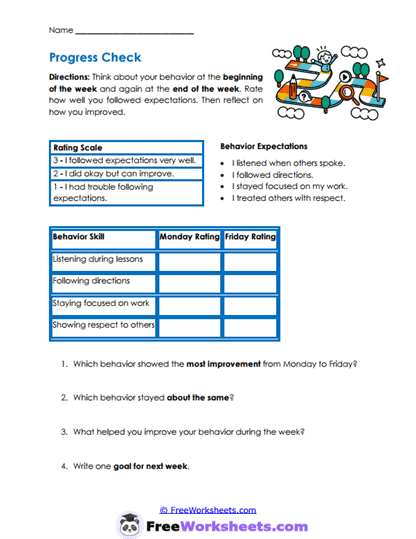
Progress Comparison
What Kids Do: Students rate listening, directions, focus, and respect on Monday and again on Friday. They compare each pair of scores, identify the largest improvement, describe what stayed steady, and set a new weekly goal.
Target Skill: Learners use simple before-and-after evidence to recognize behavior growth. The worksheet shows that a steady rating can still represent success and that improvement should be supported with the actual score change.
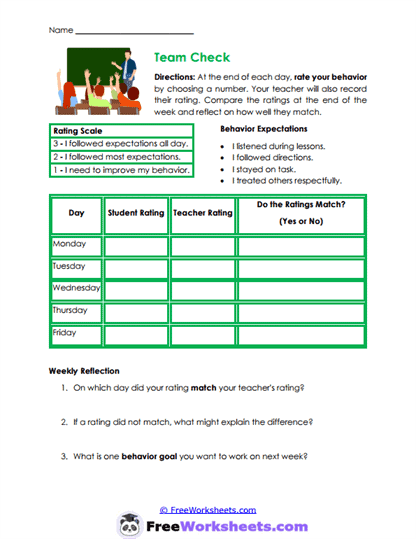
Rating Partners
What Kids Do: Students and teachers independently provide one daily behavior score across five school days. They record whether the ratings match, discuss areas of agreement and difference, and choose one shared goal for the following week.
Target Skill: This activity develops honest self-reflection, feedback skills, and shared problem-solving. Students learn that different scores do not automatically mean someone is unfair and that specific examples can clarify what each person noticed.
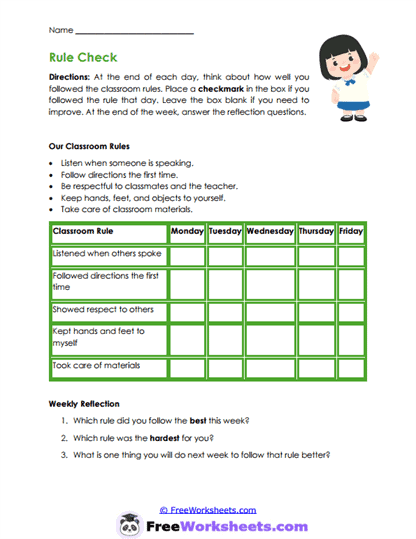
Rule Review
What Kids Do: Students track five classroom rules involving listening, following directions, respect, safe body behavior, and care for materials. They review the weekly pattern, identify the strongest rule, and select one specific improvement action.
Target Skill: This page turns broad classroom rules into observable daily behaviors. Students focus on the actions behind each checkmark instead of treating the weekly total as the only meaningful result.
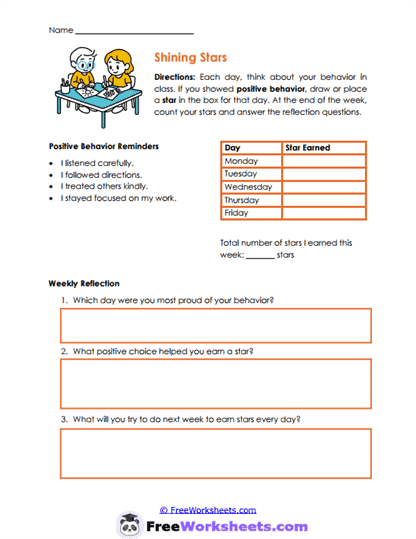
Star Growth
What Kids Do: Students earn or draw one daily star for demonstrating listening, focus, kindness, and direction following. They count the week’s stars, describe their proudest day, and explain which behavior helped them succeed.
Target Skill: This chart connects visual encouragement with named positive choices. Students learn that each star represents behavior and effort rather than simply attending school, finishing the day, or earning a prize.
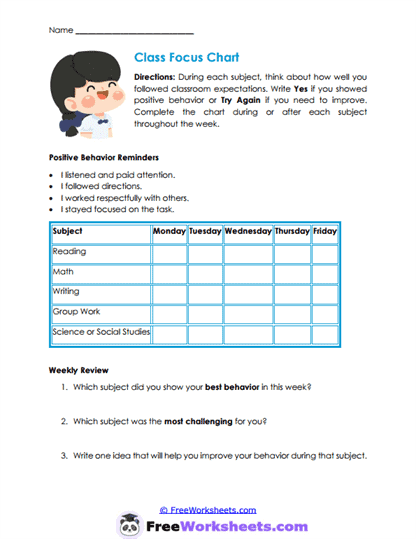
Subject Focus
What Kids Do: Students review behavior during reading, math, writing, group work, and science or social studies throughout the week. They identify the subject with their strongest behavior and choose a strategy for the hardest class.
Target Skill: Learners notice how task demands and classroom settings may affect behavior. The activity also teaches them to separate finding a subject academically difficult from making unhelpful behavior choices during that subject.
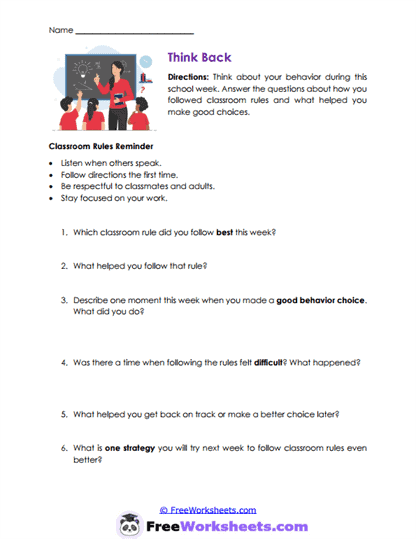
Weekly Reflection
What Kids Do: Students write about the rule they followed best, one strong choice, one difficult moment, and what helped them recover. They finish by choosing a strategy they can use during a similar challenge next week.
Target Skill: This worksheet develops deeper reflection beyond scores and checkmarks. Students connect behavior with situations, supports, recovery, and future action while focusing on the choices they could control.
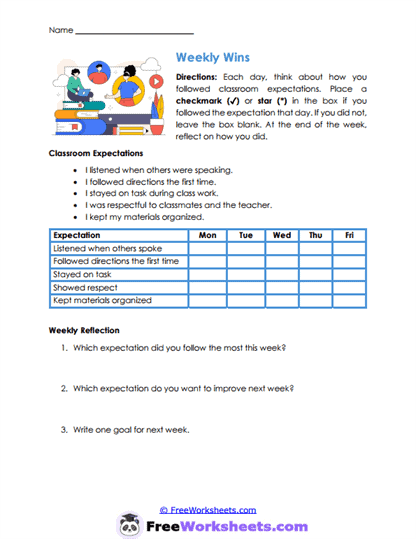
Weekly Wins
What Kids Do: Students track listening, direction following, focus, respect, and organization from Monday through Friday. They identify the most consistent behavior, select one expectation needing practice, and create a focused goal for next week.
Target Skill: Learners see that responsible classroom behavior grows from repeated daily choices. The worksheet supports pattern recognition and helps students choose one manageable goal rather than trying to improve every expectation at once.