
Respectful Classroom Behavior Worksheets
Build stronger classroom habits with worksheets for everyday student success. These free, ready-to-print worksheets are provided in PDF format for immediate classroom use. Students practice empathy, respectful communication, and responsible decision-making aligned to key social-emotional learning skills.
About This Collection of Worksheets
This collection of respectful classroom behavior worksheets helps students understand what respect looks like in real, everyday situations. Through a variety of engaging activities, students learn how their actions, words, and choices affect others. The worksheets focus on practical examples that students can easily relate to, making the learning meaningful and easy to apply.
Students also explore how respect connects to communication, emotions, and problem-solving. They practice choosing kind words, thinking through decisions, and reflecting on their own behavior. These activities help build stronger social awareness and encourage students to take responsibility for their actions in different classroom settings.
Teachers and parents can use these worksheets to reinforce expectations and build a positive classroom environment. The printable format makes them easy to use for lessons, small groups, or at-home practice. Over time, students begin to develop habits that support respectful interactions and a stronger learning community.
Paul’s Teacher Tip
When teaching respect, make it visible and specific for students. Instead of just saying “be respectful,” show what that looks like in actions, words, and tone. These worksheets are a great starting point, but the real learning happens when you connect them to daily routines and interactions. Encourage students to explain why a behavior is respectful, not just identify it. You can also revisit these activities after group work or class discussions to reflect on how things went. Over time, this builds a deeper understanding of respect that students can carry into every part of their day.
Worksheet Collection Skill Spotlights
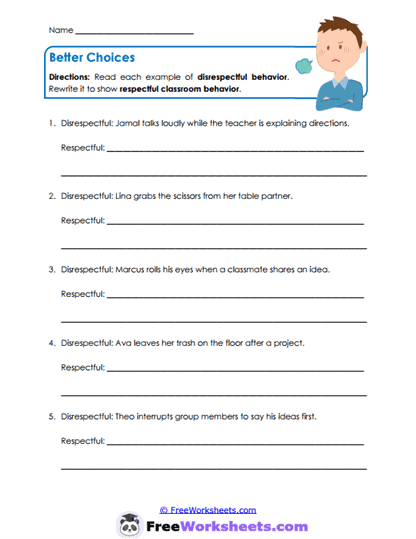
Better Choices
- What Kids Do:
Students read examples of disrespectful behavior and rewrite each one into a respectful alternative. As they work, they must think carefully about what makes the original action inappropriate and how to improve it, helping them connect understanding with real behavior changes. - Target Skill:
Students build self-awareness and behavior revision skills by transforming negative actions into positive ones. This supports responsible decision-making and helps learners practice choosing respectful alternatives in everyday situations.
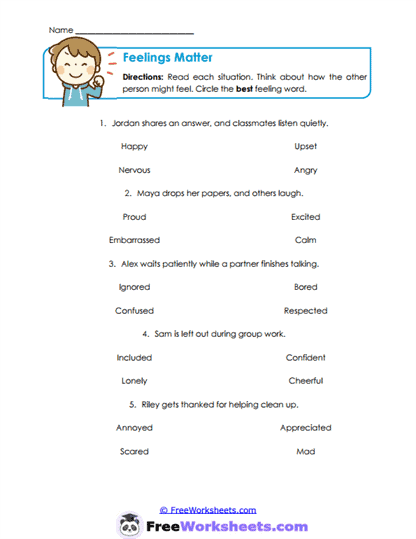
Feelings Matter
- What Kids Do:
Students read short scenarios and decide how another person might feel based on what happened. They must think about perspective and emotional impact, helping them understand how actions affect others in the classroom. - Target Skill:
Students strengthen empathy and emotional awareness by connecting behavior to feelings. This supports social awareness and helps learners respond more thoughtfully in social situations.
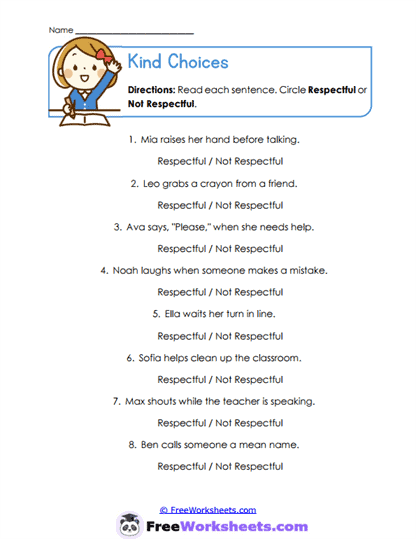
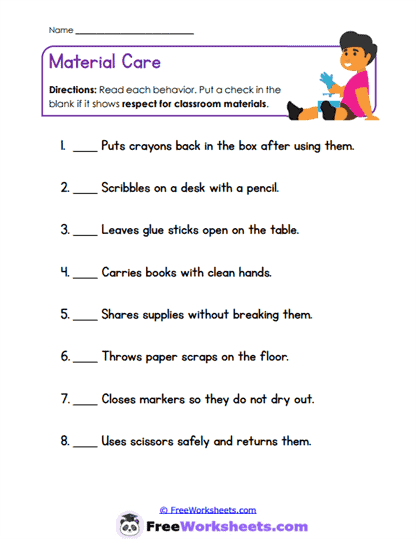
Kind Choices
- What Kids Do:
Students read simple classroom scenarios and decide whether each action shows respect or not. They must carefully evaluate each situation and connect it to expected classroom behavior, building awareness through relatable examples. - Target Skill:
Students develop the ability to identify respectful versus disrespectful behavior. This supports self-management and helps learners apply classroom expectations consistently.
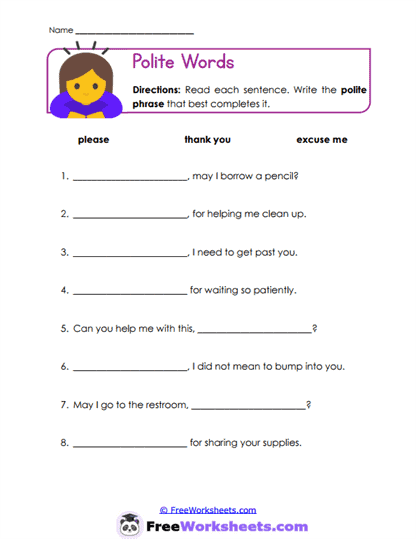
Polite Words
- What Kids Do:
Students complete sentences using polite phrases such as please, thank you, and excuse me. They must think about how language fits each situation, helping them practice respectful communication in everyday interactions. - Target Skill:
Students build communication and language-use skills by applying polite expressions correctly. This supports respectful interaction and helps learners develop positive speaking habits.
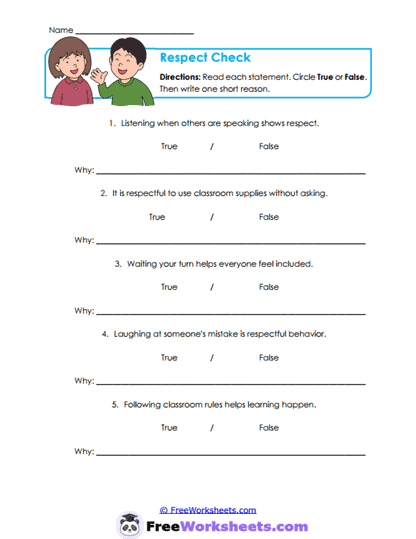
Respect Check
- What Kids Do:
Students read statements about behavior and decide whether each one is true or false. They then explain their reasoning, which requires them to think deeply about what makes behavior respectful. - Target Skill:
Students strengthen reasoning and reflection skills by analyzing behavior and justifying their answers. This supports deeper understanding of respectful actions and decision-making.
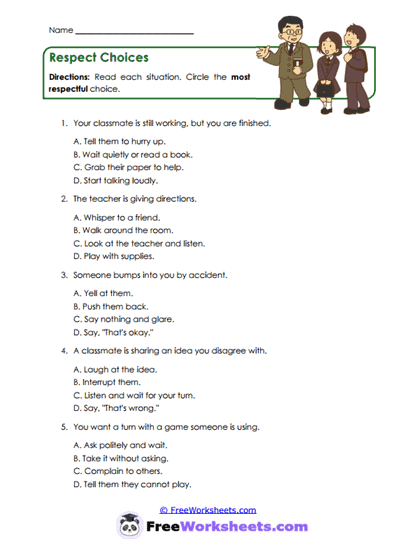
Respect Choices
- What Kids Do:
Students read classroom scenarios and choose the most respectful response from multiple options. They must consider consequences and think through each choice carefully before deciding. - Target Skill:
Students build decision-making and self-control skills by evaluating possible actions and selecting the most appropriate response. This supports responsible behavior in real-life situations.
Respect Reflection
- What Kids Do:
Students reflect on their own behavior by writing about past actions and thinking about how they can improve. This encourages honest thinking and helps them connect behavior with personal growth. - Target Skill:
Students develop self-awareness and goal-setting skills by evaluating their actions and planning improvements. This supports long-term growth in respectful behavior.
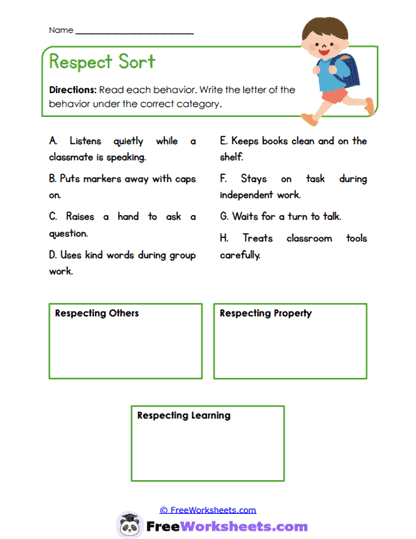
Respect Sort
- What Kids Do:
Students sort behaviors into categories such as respect for others, property, or learning. They must analyze each example and decide where it belongs, helping them understand different forms of respect. - Target Skill:
Students strengthen classification and social awareness skills by recognizing different types of respectful behavior. This helps learners apply expectations across situations.
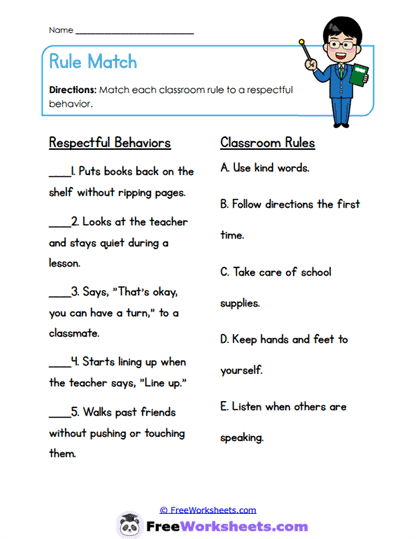
Rule Match
- What Kids Do:
Students match respectful behaviors to the classroom rules they support. They must think about how each action connects to expectations, building a stronger understanding of rules in action. - Target Skill:
Students develop cause-and-effect understanding between behavior and rules. This supports responsibility and helps learners see how actions align with expectations.
Scenario Solutions
- What Kids Do:
Students read real-life classroom scenarios and write their own respectful solutions. They must think through each situation and decide how to respond in a positive and appropriate way. - Target Skill:
Students build problem-solving and communication skills by generating thoughtful responses to challenges. This supports responsible decision-making and respectful interaction.
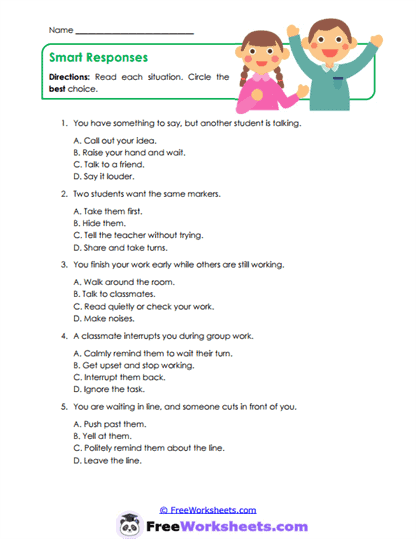
Smart Responses
- What Kids Do:
Students evaluate multiple response options for classroom situations and choose the best one. They must think critically about which action is most respectful and appropriate. - Target Skill:
Students strengthen decision-making skills by comparing choices and selecting the best response. This supports self-management and respectful behavior.
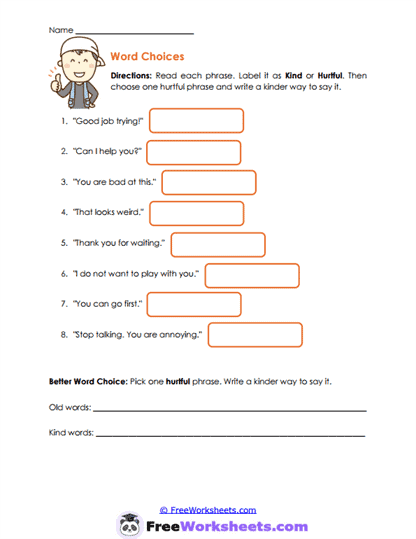
Word Choices
- What Kids Do:
Students read phrases and decide whether the language is kind or hurtful, then rewrite one example in a more positive way. This helps them think about how words affect others. - Target Skill:
Students build communication and empathy skills by identifying tone and improving language. This supports respectful interaction and stronger peer relationships.