
About This Worksheet
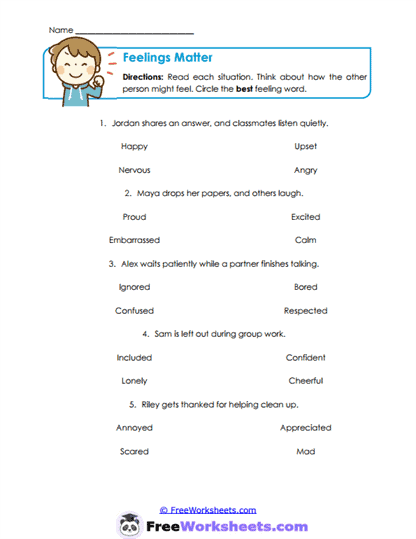
This worksheet is a social-emotional learning activity that helps students understand how actions affect others’ feelings. It is designed for students in Grades 2-4 who are beginning to build empathy and emotional awareness. Learners read short situations and identify how another person might feel based on what happened. This strengthens perspective-taking and emotional vocabulary. For example, being laughed at becomes feeling embarrassed, while being thanked becomes feeling appreciated.
Curriculum and Grade Alignment
The worksheet supports emotional intelligence and interpersonal skills in elementary learners. The primary goal is to help students connect behaviors with emotional outcomes. Students should already have basic reading comprehension and familiarity with common feeling words. This activity builds toward stronger empathy and respectful peer interactions. It aligns with CCSS.ELA-LITERACY.SL.2.1 and supports TEKS standards related to social development and communication skills.
Student Tasks
On this worksheet, students will read a series of classroom-related situations. They will consider how the person in each situation might feel based on what occurred. Learners then choose the best feeling word from the options provided. The activity requires careful thinking about emotions and cause-and-effect relationships. It encourages students to reflect on how their actions impact others.
Common Challenges and Misconceptions
Students may struggle to choose between similar emotions such as nervous and confused. Some learners might select answers based on their own feelings rather than the situation described. Others may not fully understand certain vocabulary words. Rushing through the scenarios can also lead to incorrect choices. Teachers can support students by discussing each feeling word and giving real-life examples.
Implementation Guidance
Teachers can use this worksheet during social-emotional learning lessons or class discussions about empathy. It works well as a partner activity where students explain their reasoning. Parents can also use it at home to talk about feelings and everyday experiences. This worksheet is especially helpful for building a positive classroom community. It can be revisited throughout the year to reinforce emotional awareness.
Details and Features
The worksheet includes clearly written scenarios and multiple-choice feeling options. Its layout is simple and easy for young learners to follow. The content focuses on relatable classroom situations. It is printable and suitable for both independent and guided practice. The design supports both comprehension and emotional development skills.