
Behavior by Setting Worksheets
These worksheets help students understand how actions change depending on where they are in school. These free, ready-to-print worksheets come in PDF format for immediate classroom use or at-home support. Students build decision-making, self-awareness, and appropriate communication skills aligned to curriculum standards expectations.
About This Collection of Worksheets
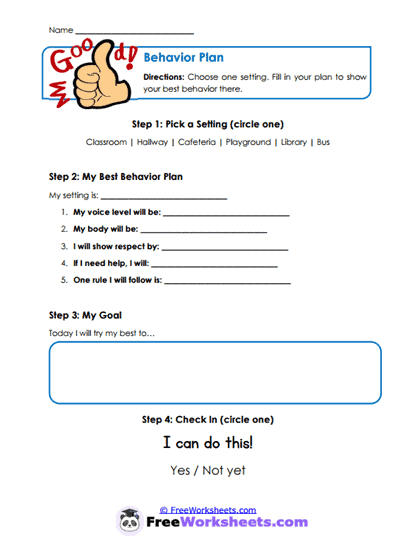
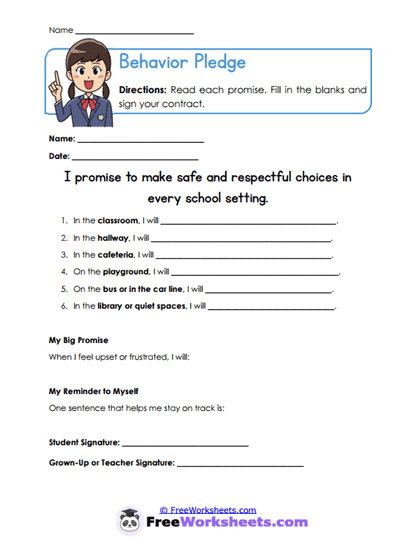
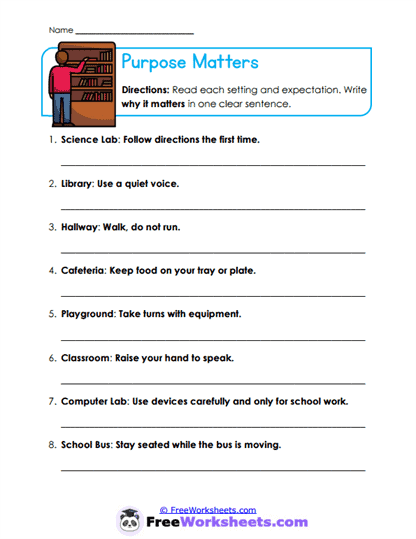
This collection focuses on helping students recognize that behavior is not one-size-fits-all. Each worksheet gives learners the chance to think about how expectations shift between settings like the classroom, hallway, cafeteria, and playground. By working through real-life examples, students begin to see how their choices connect to their environment.
The activities are designed to move from simple recognition to deeper thinking. Students start by identifying correct behaviors and gradually work toward explaining, correcting, and applying those behaviors in new situations. This progression supports both younger learners who are just beginning to understand rules and older students who are developing independence.
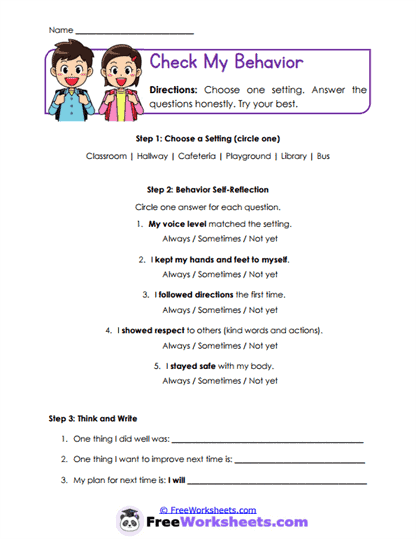
Teachers and parents will find these worksheets easy to use and flexible. They can be used as quick warm-ups, full lessons, small group discussions, or reflection activities. Because the scenarios are relatable and practical, students are more likely to engage and transfer these skills into real-life situations.
Paul’s Teacher Tip
When teaching behavior by setting, try to connect each worksheet to real moments in your classroom or school day. Pause and ask students, “Where would this happen?” or “Would this work everywhere?” to get them thinking beyond the paper. It also helps to model both correct and incorrect behaviors in a light, safe way so students can clearly see the difference. Encourage students to explain their thinking out loud, especially when answers are not obvious. This builds stronger reasoning and helps them internalize expectations. Over time, you’ll notice students beginning to self-correct because they understand the “why” behind the rule.
Worksheet Collection Skill Spotlights
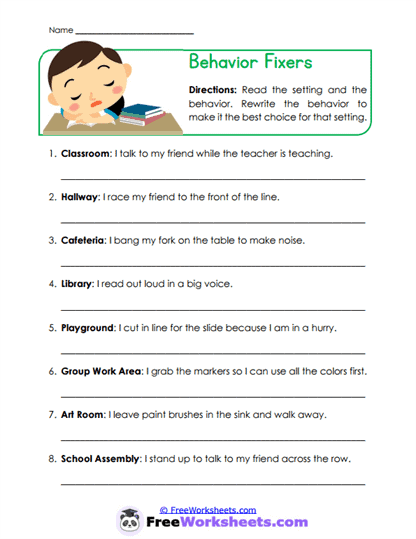
Behavior Fixers
- What Kids Do:
Students read short, relatable scenarios that describe common school misbehaviors and then rewrite each one to show a better choice. They must carefully think about the setting, the action, and what should happen instead, turning negative examples into positive ones through clear written responses. - Target Skill:
This activity strengthens self-reflection and behavior correction by guiding students to analyze actions and replace them with appropriate alternatives. It supports communication and decision-making skills by helping learners connect expected behaviors to specific environments in a meaningful, applied way.
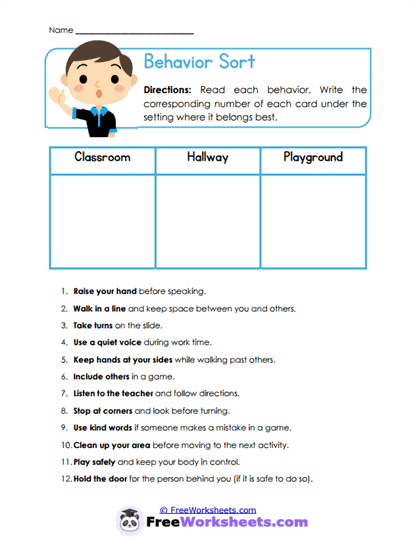
Behavior Sort
- What Kids Do:
Students sort a list of behaviors into the correct school setting categories such as classroom, hallway, or playground. They read each action closely, think about where it belongs, and place it in the correct column, encouraging careful reading and thoughtful categorization. - Target Skill:
This task builds classification and context-awareness skills by requiring students to evaluate how behavior expectations change depending on location. It supports listening and following directions while reinforcing the ability to apply rules appropriately across different school environments.
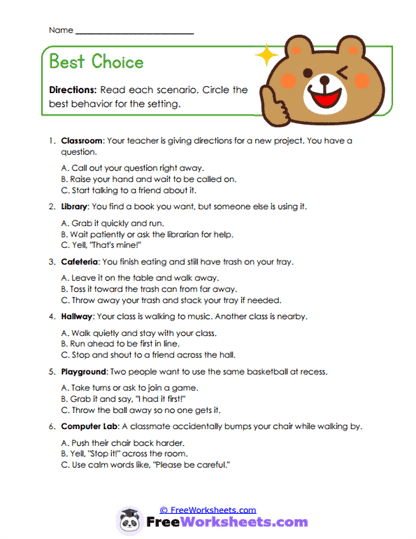
Best Choice
- What Kids Do:
Students read real-life school scenarios and choose the best response from multiple options. They must evaluate each choice carefully, compare possibilities, and decide which behavior fits the situation best, rather than simply picking what they prefer. - Target Skill:
This worksheet strengthens decision-making and critical thinking by helping students weigh options and select appropriate actions. It supports responsible behavior and communication skills by encouraging thoughtful evaluation of choices within different school contexts.
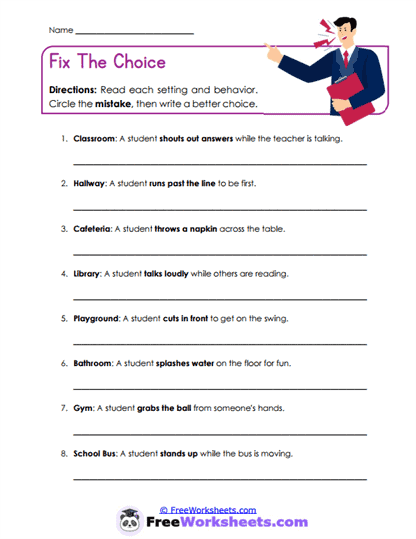
Fix The Choice
- What Kids Do:
Students examine short scenarios that include an inappropriate behavior and then rewrite each one with a better, more appropriate action. They must identify the mistake first and then clearly explain how to fix it in a way that matches the setting. - Target Skill:
This activity develops problem-solving and self-monitoring skills by helping students recognize errors and generate improved responses. It reinforces appropriate communication and behavior by encouraging students to think through both actions and consequences.
Right or Wrong?
- What Kids Do:
Students read behavior statements and decide if each action is appropriate or inappropriate for a given setting. They mark their answers and reflect on why a behavior is right or wrong, encouraging careful thinking before responding. - Target Skill:
This worksheet builds quick recognition of appropriate behavior while reinforcing understanding of school rules. It supports comprehension and judgment skills by helping students connect actions to expectations in different environments.
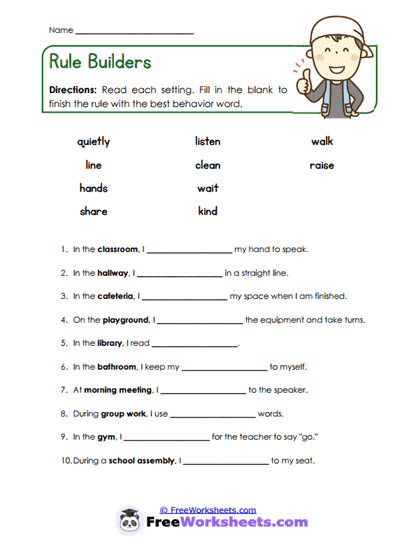
Rule Builders
- What Kids Do:
Students use a word bank to complete sentences about expected behaviors in different school settings. They must choose the correct word that fits both the action and the location, building meaningful connections between language and behavior. - Target Skill:
This activity strengthens vocabulary use and behavior understanding by linking key action words to real-life situations. It supports language development and appropriate communication by helping students apply correct terms in context.
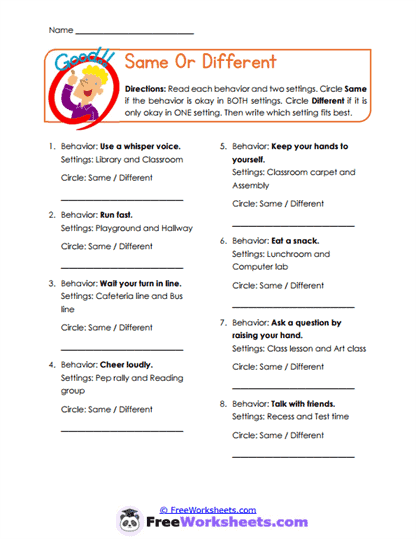
Same Or Different
- What Kids Do:
Students compare behaviors across two different settings and decide whether the action works in both or only one. They circle their answer and sometimes explain their thinking, encouraging deeper analysis of each situation. - Target Skill:
This worksheet develops comparison and reasoning skills by helping students understand that some behaviors apply across settings while others do not. It supports flexible thinking and situational awareness in social environments.
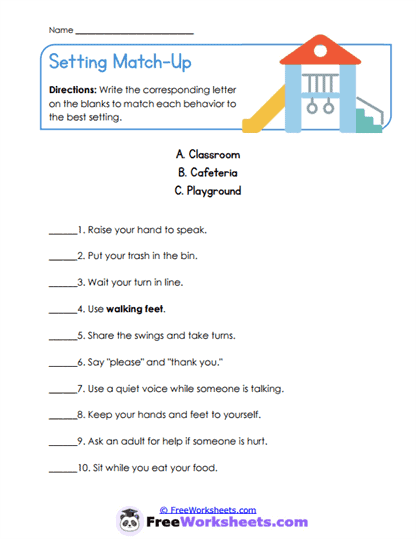
Setting Match-Up
- What Kids Do:
Students read behavior descriptions and match each one to the correct school setting. They use context clues and prior knowledge to determine where each action belongs, building stronger connections between behavior and environment. - Target Skill:
This task strengthens comprehension and context analysis by requiring students to apply behavior knowledge to specific settings. It supports discussion and collaboration skills as students learn to justify their choices.
Setting Solutions
- What Kids Do:
Students read short problem scenarios and write what they should do in each situation. They must think through the problem, consider the setting, and provide a clear and appropriate response for each case. - Target Skill:
This worksheet builds problem-solving and self-management skills by encouraging students to generate thoughtful responses. It supports communication and decision-making by helping learners apply behavior expectations independently.
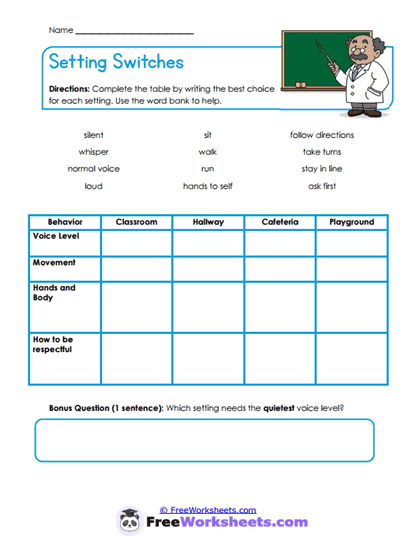
Setting Switches
- What Kids Do:
Students complete a chart that compares behaviors like voice level, movement, and respect across different school settings. They use a word bank to fill in each section and reflect on how expectations change from place to place. - Target Skill:
This activity develops analytical thinking and adaptability by helping students understand how behavior shifts across environments. It reinforces awareness of expectations and encourages consistent, appropriate actions in varied settings.
What Should You Do?
- What Kids Do:
Students read everyday school situations and write what they should do in each case. They must consider emotions, setting, and expectations to create thoughtful, appropriate responses to each scenario. - Target Skill:
This worksheet strengthens decision-making and self-regulation by guiding students to think before acting. It supports communication and problem-solving skills by encouraging clear, responsible responses to real-life situations.