
Following Directions Worksheets
Use these worksheets to build strong classroom independence through careful, step-by-step task completion. These free, ready-to-print PDF activities are made for immediate classroom use with clear directions and low-prep printing. Students strengthen sequencing, executive functioning, close reading, and procedural reasoning skills that transfer across subjects.
About This Collection of Worksheets
Following directions is a core school success skill for Behavior Skills learners because it supports self-management, task stamina, and accuracy across reading, writing, math, and classroom routines. As students move from simple one-step directions to multi-step procedures, they also develop executive functioning skills like working memory, organization, and self-monitoring. Many pages in this collection connect directly to reading standards that ask students to understand and carry out steps in procedural or informational text.
Teachers can use these worksheets for morning work, small-group interventions, literacy centers, substitute plans, or quick assessment checks that reveal who is skipping steps or misreading key words like first, next, and last. Several activities also work well as partner tasks where students test directions and give feedback, building communication and accountability. The variety of formats-sequencing, error analysis, drawing directions, and mission-style challenges-keeps practice engaging while reinforcing consistent expectations.
All printables are designed to be classroom-friendly with ink-saving black-and-white pages, uncluttered layouts, and developmentally appropriate language. Clear numbering and structured response spaces help students track steps without getting overwhelmed. Because the tasks are low-prep and repeatable, they’re easy to revisit throughout the year whenever accuracy, attention, and follow-through need reinforcement.
Paul’s Teacher Tip
Students who struggle with directions often aren’t “not listening”-they’re overwhelmed. Teach them to chunk directions: read one step, do one step, then check it off. Model this process explicitly. Also, highlight or underline key words like first, next, circle, draw, or label before starting. For students who rush, build in a habit of asking, “Did I do everything?” before turning in work. This simple pause can dramatically improve accuracy and independence over time.
Worksheet Collection Skill Spotlights
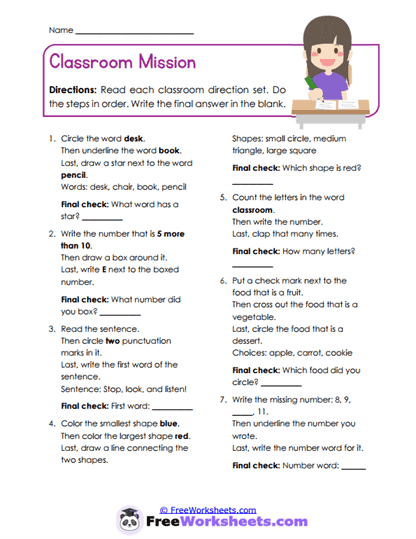
Classroom Mission
• What Kids Do – Students follow a series of steps like circling, coloring, and answering a final check question.
• Target Skill – Builds ability to follow multi-step directions and self-check for accuracy.
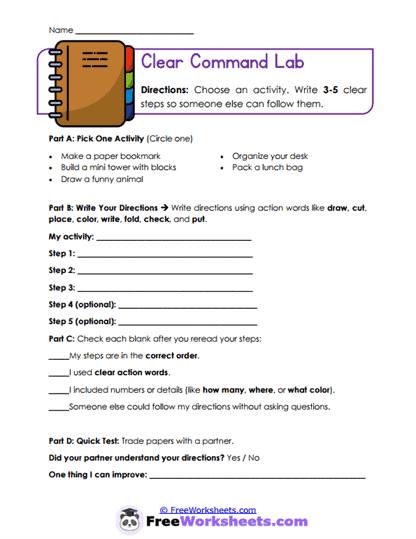
Clear Command Lab
• What Kids Do – Students write their own step-by-step directions and test them with a partner.
• Target Skill – Develops clear procedural writing and logical sequencing.
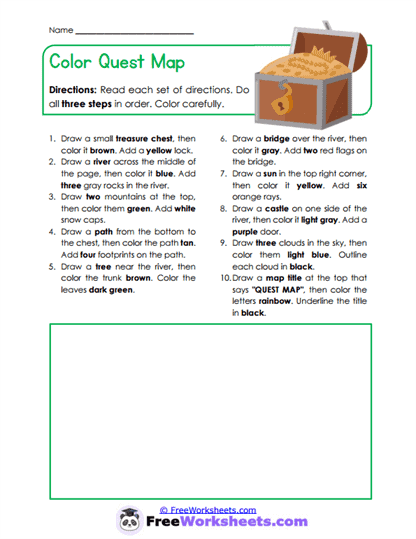
Color Quest Map
• What Kids Do – Students follow detailed directions to draw and color a map with specific placements.
• Target Skill – Builds ability to follow multi-step directions with spatial awareness.
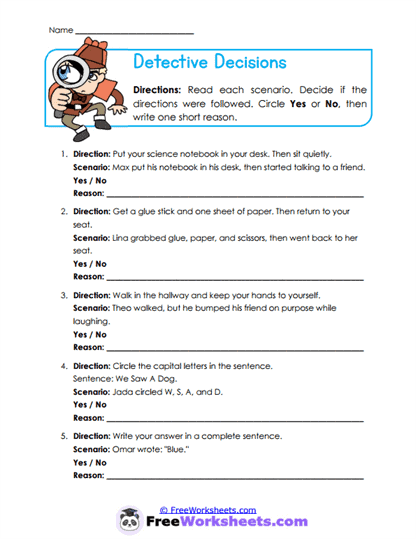
Detective Decisions
• What Kids Do – Students compare directions to actions and explain whether they match.
• Target Skill – Develops reasoning and evidence-based evaluation of directions.
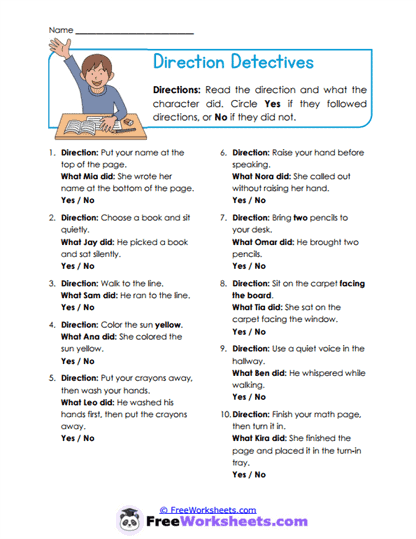
Direction Detectives
• What Kids Do – Students decide if directions were followed correctly by analyzing examples.
• Target Skill – Builds attention to detail and direction-following accuracy.
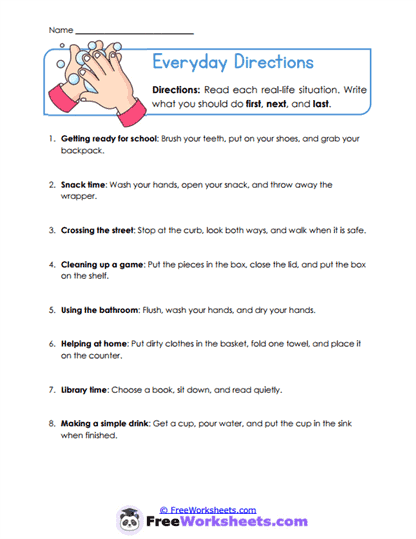
Everyday Directions
• What Kids Do – Students organize routine actions into first, next, and last.
• Target Skill – Develops sequencing of everyday procedures.
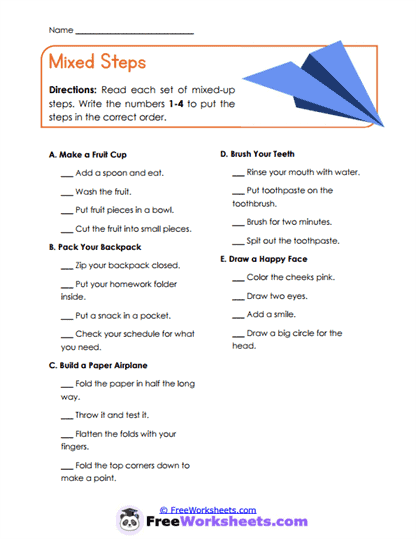
Mixed Steps
• What Kids Do – Students reorder scrambled steps into the correct sequence.
• Target Skill – Builds logical thinking and procedural organization.
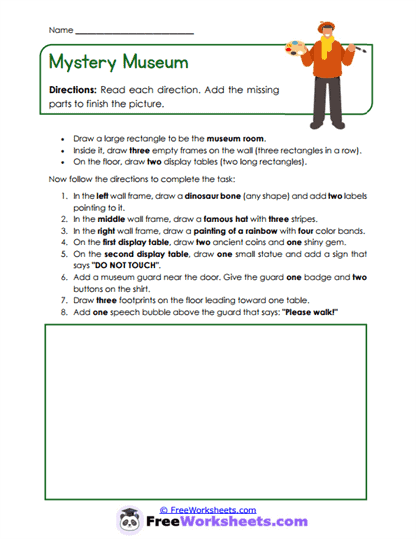
Mystery Museum
• What Kids Do – Students follow step-by-step directions to draw a detailed scene with labels.
• Target Skill – Strengthens multi-step direction-following and precision.
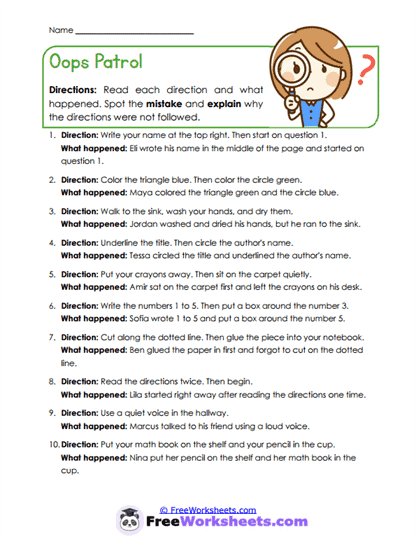
Oops Patrol
• What Kids Do – Students identify and explain mistakes when directions are not followed correctly.
• Target Skill – Builds error analysis and attention to detail.
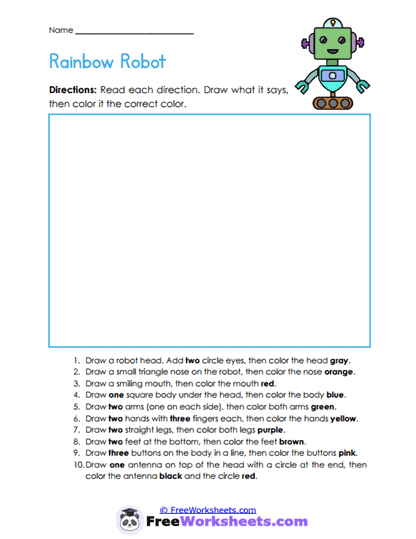
Rainbow Robot
• What Kids Do – Students follow directions to draw and color a robot using specific shapes and colors.
• Target Skill – Develops sequencing, shape recognition, and accuracy.
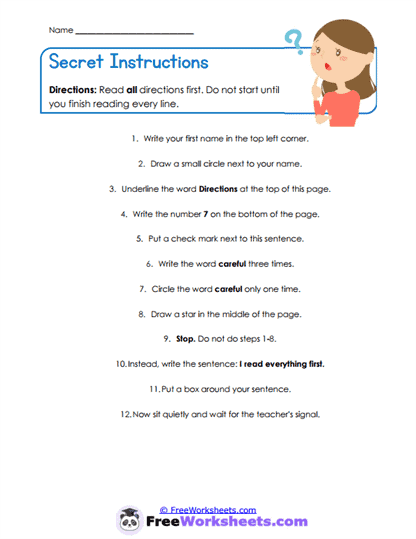
Secret Instructions
• What Kids Do – Students read all directions first and follow the final instruction correctly.
• Target Skill – Builds impulse control and careful reading of directions.
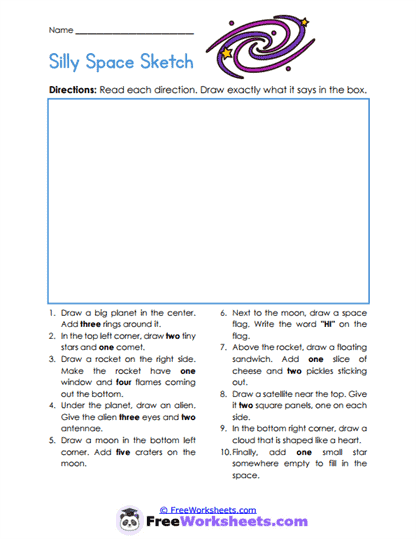
Silly Space Sketch
• What Kids Do – Students follow detailed directions to draw a space scene with correct placement and labels.
• Target Skill – Develops spatial reasoning and multi-step direction-following.