
Positive Behaviors Worksheets
Build stronger classroom habits with Elementary and Middle School Behavior Positive Behaviors worksheets for everyday student success. These free, ready-to-print worksheets are provided in PDF format for immediate classroom use. Students practice self-awareness, emotional regulation, and responsible decision-making aligned to key social-emotional learning skills.
About This Collection of Worksheets
This collection of positive behavior worksheets helps students focus on what they should do, not just what they should avoid. Each activity highlights real-life situations where students can practice making respectful, kind, and responsible choices. By working through relatable examples, students begin to understand how positive actions support both their own success and the classroom community.
Students also explore how their feelings, decisions, and behaviors are connected. These worksheets guide learners to think about how to respond in challenging situations, solve problems, and handle emotions in constructive ways. Over time, this builds confidence and helps students develop stronger habits that carry into daily life.
Teachers and parents can use these worksheets to create meaningful conversations about behavior and expectations. The printable format makes it easy to use during lessons, small groups, or at home. With consistent practice, students learn to make thoughtful choices that lead to positive outcomes.
Paul’s Teacher Tip
When teaching positive behaviors, try to spotlight and celebrate what students are doing right as much as possible. These worksheets work best when paired with real examples from your classroom, so students can see the connection between practice and daily life. Encourage students to explain their thinking, especially when choosing the best response in a scenario. You can also revisit the same activity later to see how their reasoning has grown. For younger students, modeling the behavior through role-play can make a big difference. Over time, this helps turn positive choices into automatic habits.
Worksheet Collection Skill Spotlights
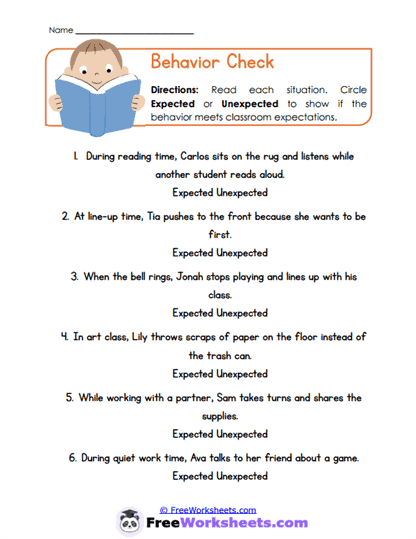
Behavior Check
- What Kids Do:
Students read realistic classroom scenarios and decide whether each behavior is expected or unexpected. As they work, they must slow down, think about context, and consider how each action fits classroom expectations, helping them connect rules to real-life situations they experience daily. - Target Skill:
Students strengthen their ability to evaluate behavior using classroom norms and expectations. This supports self-management and responsible decision-making by helping learners consistently recognize appropriate actions in everyday situations.
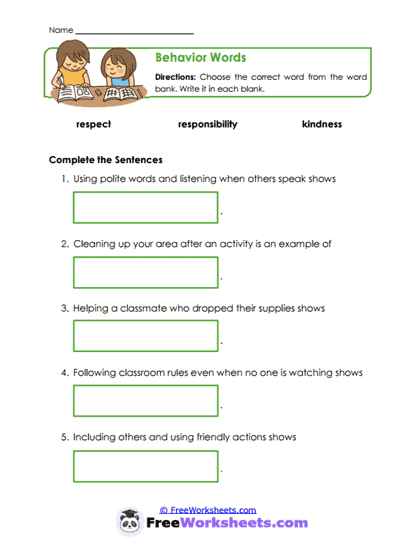
Behavior Words
- What Kids Do:
Students read sentences describing actions and choose the correct word, such as respect, responsibility, or kindness, to complete each one. This helps them connect everyday behavior to larger character traits and understand what those values look like in action. - Target Skill:
Students build vocabulary and conceptual understanding of positive behavior traits. This supports social awareness and helps learners recognize how actions reflect values like kindness, respect, and responsibility.
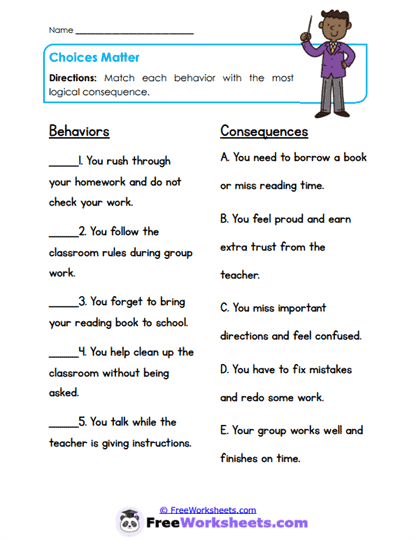
Choices Matter
- What Kids Do:
Students read behavior examples and match each one to a likely consequence. This requires them to think carefully about how actions lead to outcomes, helping them understand the real impact of their choices on themselves and others. - Target Skill:
Students develop cause-and-effect reasoning related to behavior. This strengthens responsible decision-making and helps learners anticipate outcomes before acting.
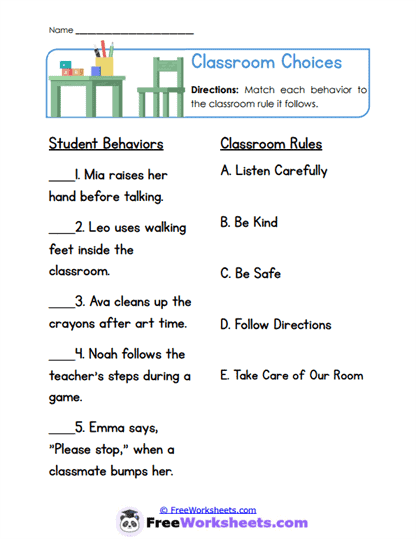
Classroom Choices
- What Kids Do:
Students match student actions to classroom rules such as listening, being kind, or following directions. They must understand both the behavior and the rule, which encourages deeper thinking about how expectations guide daily actions. - Target Skill:
Students strengthen their understanding of how rules connect to behavior. This supports social awareness and helps learners apply expectations consistently in classroom situations.
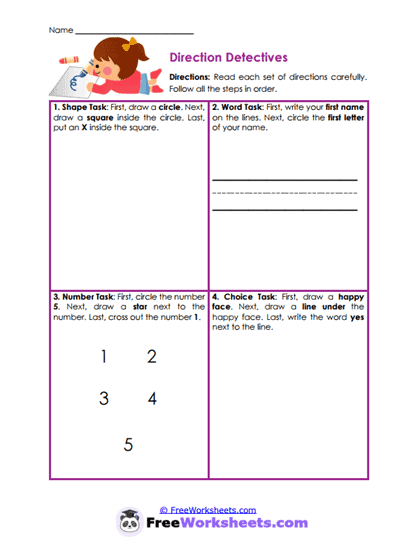
Direction Detectives
- What Kids Do:
Students follow multi-step directions that require careful reading and attention to detail. They complete each step in order, which encourages them to slow down and focus on instructions instead of rushing through tasks. - Target Skill:
Students build executive functioning skills such as attention, sequencing, and self-control. This supports classroom readiness and helps learners develop habits for following directions accurately.
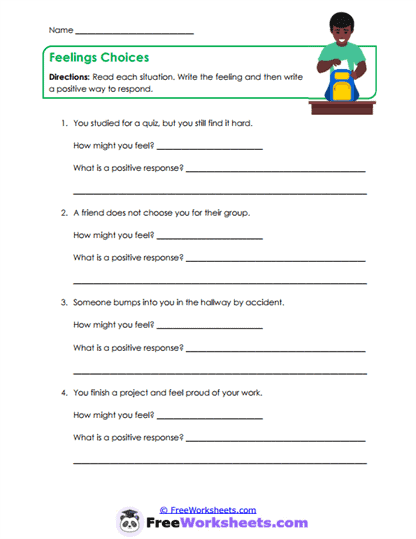
Feelings Choices
- What Kids Do:
Students read scenarios, identify how they might feel, and then write a positive response to that feeling. This helps them connect emotions to actions and think through better ways to respond in challenging situations. - Target Skill:
Students strengthen emotional regulation and self-awareness. This supports social-emotional learning by helping learners manage feelings and choose appropriate responses.
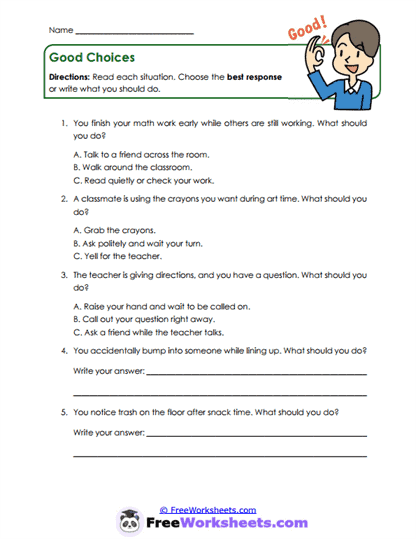
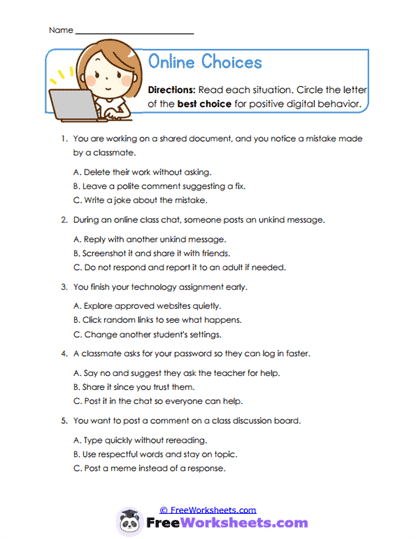
Good Choices
- What Kids Do:
Students read short scenarios and choose the best possible response from multiple options. They must think beyond what is simply acceptable and identify the most respectful and responsible action. - Target Skill:
Students develop higher-level decision-making skills by evaluating multiple choices and selecting the strongest response. This supports responsible behavior and thoughtful action.
Kind Actions
- What Kids Do:
Students review examples of behavior and decide which ones demonstrate kindness. In some cases, they also explain their reasoning, helping them think more deeply about how actions affect others. - Target Skill:
Students build empathy and relationship skills by recognizing and reflecting on kind behaviors. This supports positive social interaction and classroom community building.
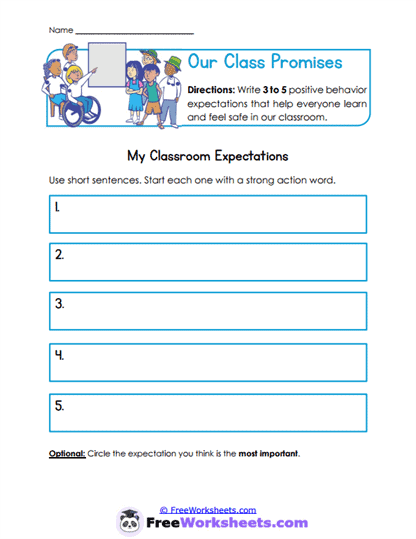
Our Class Promises
- What Kids Do:
Students write their own classroom promises using sentence starters like “I will…” to describe positive behaviors. This encourages them to think about how they want to act and take ownership of their choices. - Target Skill:
Students develop goal-setting and responsibility skills. This supports self-management and helps learners build consistent positive behavior habits.
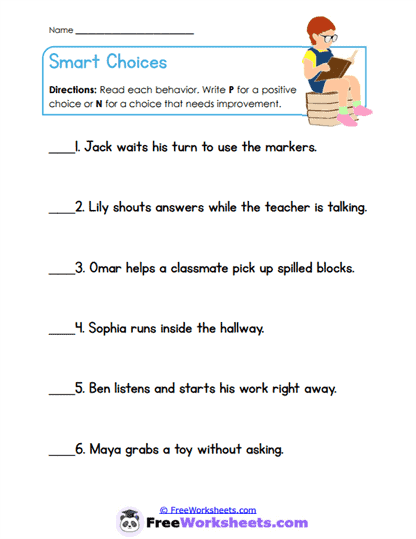
Smart Choices
- What Kids Do:
Students read behavior statements and decide whether each one is a positive choice or needs improvement. This helps them evaluate actions and think about how behavior affects others in a classroom setting. - Target Skill:
Students strengthen behavior evaluation skills by identifying appropriate and inappropriate actions. This supports self-management and reinforces positive decision-making.
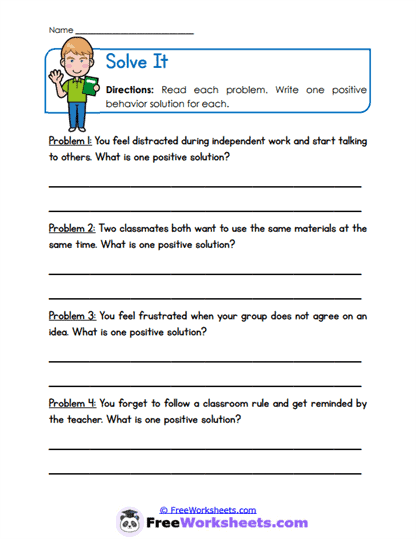
Solve It
- What Kids Do:
Students read problem scenarios and write a positive solution for each one. They must think through challenges and come up with appropriate responses, encouraging deeper reflection and problem-solving. - Target Skill:
Students build problem-solving and self-management skills by generating appropriate responses to challenges. This supports responsible decision-making and conflict resolution.
Teamwork Time
- What Kids Do:
Students evaluate group scenarios and decide whether behaviors show good teamwork. They may also suggest better choices, helping them think about how actions affect collaboration and group success. - Target Skill:
Students strengthen collaboration and relationship skills by identifying behaviors that support teamwork. This helps learners participate effectively in group settings and build positive peer interactions.