
General Expectations Worksheets
Build stronger classroom habits with worksheets for everyday student success. These free, ready-to-print worksheets are provided in PDF format for immediate classroom use. Students practice self-management, decision-making, and understanding consequences aligned to key social-emotional learning skills.
About This Collection of Worksheets
This collection of general behavioral expectation worksheets helps students understand what appropriate behavior looks like across common school situations. From classroom participation to respectful communication, each activity gives learners clear examples of positive and negative choices. Students are encouraged to think about how their actions impact others and the learning environment.
The worksheets also guide students in recognizing that behavior expectations can change depending on the setting. Whether they are in the classroom, on the playground, or working in a group, students learn to adjust their actions to fit the situation. This helps build flexibility, awareness, and stronger social skills that support success both in and out of school.
Teachers and parents can use these worksheets to reinforce consistent expectations and routines. The activities are easy to implement and provide meaningful opportunities for discussion, reflection, and growth. With repeated practice, students begin to internalize positive behaviors and make better choices independently.
Paul’s Teacher Tip
When teaching general behavior expectations, consistency is everything. Try using the same language across lessons so students clearly understand what “expected behavior” looks like in different situations. It also helps to connect each worksheet to real moments in your day, like lining up, group work, or transitions. Encourage students to explain their answers out loud, which builds deeper understanding and ownership. You can even revisit the same worksheet later in the year to see how thinking has improved. Over time, this repetition helps turn good choices into natural habits.
Worksheet Collection Skill Spotlights
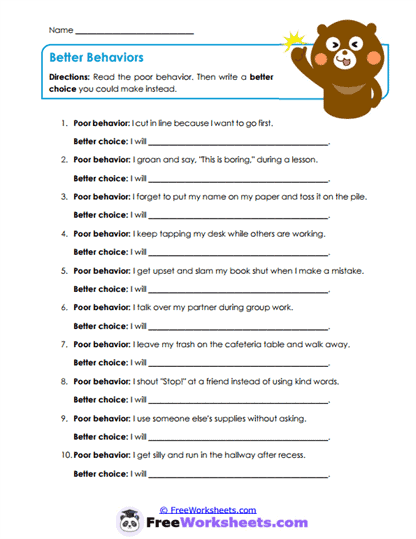
Better Behaviors
- What Kids Do:
Students read examples of poor or inappropriate behavior and then rewrite each one into a better, more positive choice. As they work, they must think carefully about what went wrong and how to improve it, which builds deeper understanding of both actions and consequences in everyday situations. - Target Skill:
Students develop behavior correction and self-reflection skills by identifying negative actions and replacing them with appropriate alternatives. This supports self-management and responsible decision-making by helping learners actively practice improving their choices.
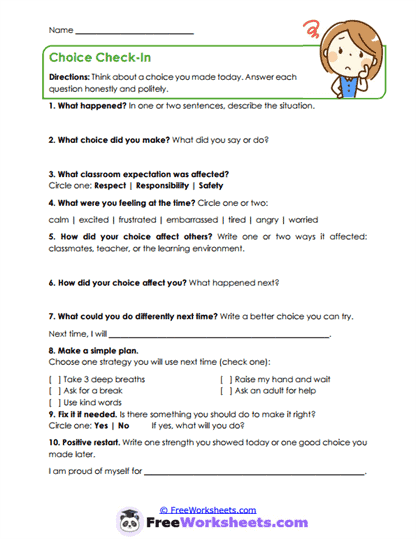
Choice Check-In
- What Kids Do:
Students reflect on a real-life situation where they made a choice and think through what happened, how they responded, and how it affected others. They write about their experience and consider what they might do differently next time, encouraging deeper personal thinking. - Target Skill:
Students build self-awareness and reflection skills by analyzing their own behavior and its impact. This strengthens responsible decision-making and helps learners develop more thoughtful responses in future situations.
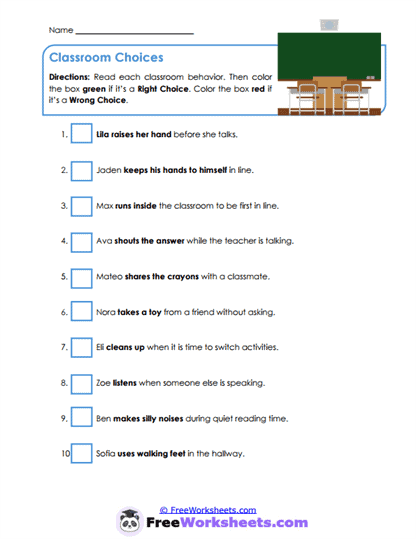
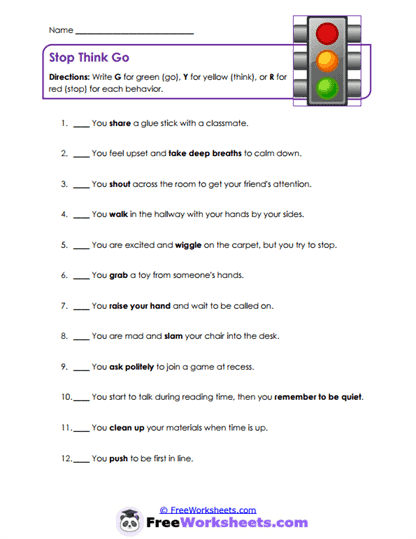
Classroom Choices
- What Kids Do:
Students read a list of classroom behaviors and decide whether each one is a right or wrong choice, often using color coding to show their answers. This requires them to think about rules, expectations, and how behavior affects the classroom environment. - Target Skill:
Students strengthen their understanding of appropriate versus inappropriate classroom behavior. This supports self-management and helps learners consistently apply expectations when evaluating everyday actions.
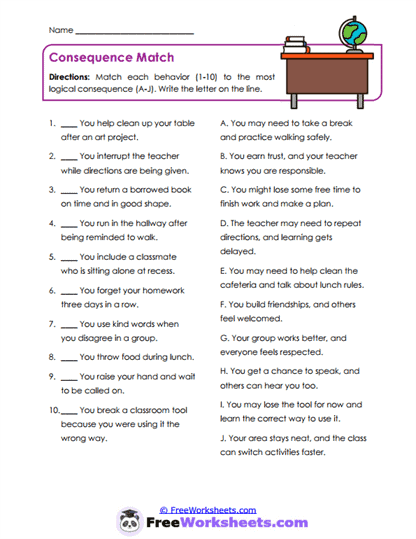
Consequence Match
- What Kids Do:
Students match behavior examples with the most likely outcomes, carefully reading both sides before making connections. This helps them understand how actions lead to results and encourages them to think about consequences before making decisions. - Target Skill:
Students develop cause-and-effect reasoning related to behavior, strengthening their ability to predict outcomes. This supports responsible decision-making and helps learners connect their choices to real-world consequences.
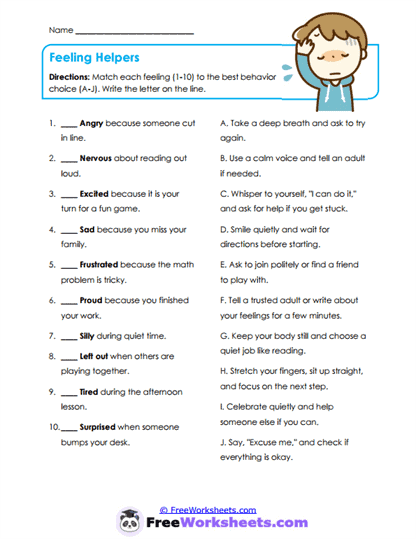
Feeling Helpers
- What Kids Do:
Students read different feelings and match them to positive actions that can help manage those emotions. They must think about how to respond in a healthy way, building awareness of both emotions and appropriate coping strategies. - Target Skill:
Students build emotional regulation and self-management skills by connecting feelings with positive responses. This supports social-emotional learning and helps learners respond to challenges in constructive ways.
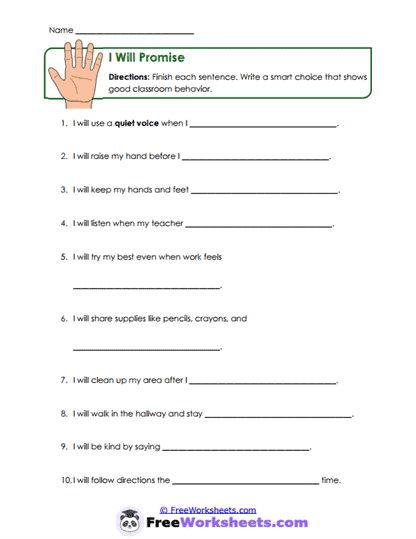
I Will Promise
- What Kids Do:
Students complete sentence starters about how they will follow classroom rules, creating personal commitments to positive behavior. This encourages them to think about their actions and take ownership of how they behave each day. - Target Skill:
Students strengthen goal-setting and responsibility skills by committing to specific positive behaviors. This supports self-management and helps learners develop consistent habits aligned with classroom expectations.
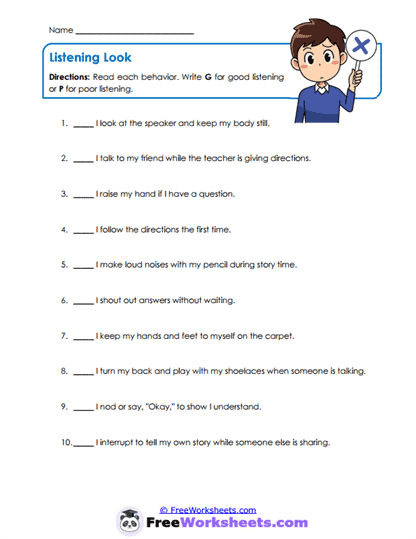
Listening Look
- What Kids Do:
Students evaluate different actions and decide whether they show good or poor listening skills. They must think about what active listening looks like in real situations, including body language and focus. - Target Skill:
Students build communication and attention skills by identifying behaviors that support active listening. This strengthens participation, respect, and engagement in classroom learning.
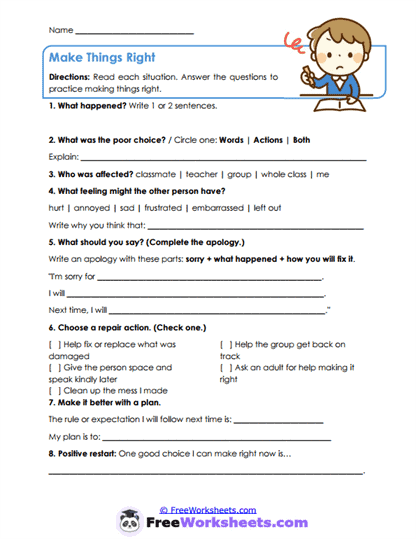
My Behavior Plan
- What Kids Do:
Students identify a behavior they want to improve, set a clear goal, and outline steps they can take to make progress. This process encourages reflection and helps students think about how to change their actions over time. - Target Skill:
Students develop goal-setting and self-improvement skills by creating actionable behavior plans. This supports long-term self-management and helps learners take responsibility for their growth.
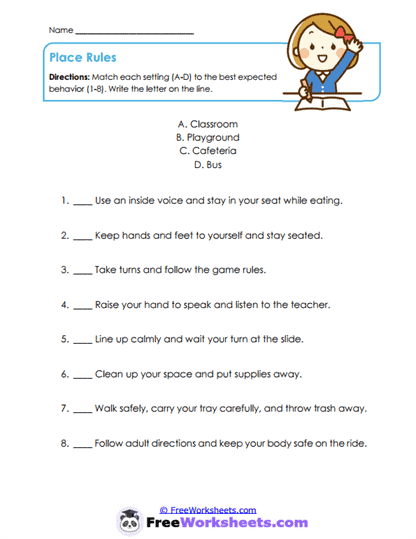
Place Rules
- What Kids Do:
Students match behavior examples to the correct school setting, such as classroom, playground, or cafeteria. They must think about where each action belongs, helping them understand how expectations change depending on location. - Target Skill:
Students strengthen situational awareness and flexible thinking by applying behavior expectations across different environments. This supports social awareness and helps learners adapt their actions appropriately.
Respect Rules
- What Kids Do:
Students read behavior scenarios and decide whether each one shows respect. They must think about how actions affect others and identify what respectful behavior looks like in everyday interactions. - Target Skill:
Students build relationship skills and social awareness by recognizing respectful versus disrespectful actions. This helps reinforce kindness, cooperation, and positive social interactions.
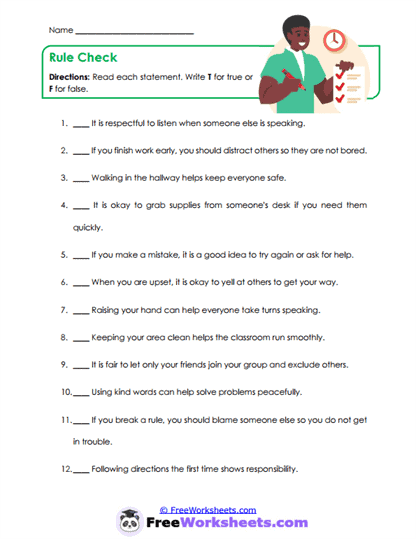
Rule Check
- What Kids Do:
Students read statements about classroom behavior and determine whether each one is true or false. This requires careful reading and thoughtful evaluation of expectations and routines. - Target Skill:
Students reinforce their understanding of classroom rules and expectations. This supports self-management and helps learners consistently apply correct behavior standards.
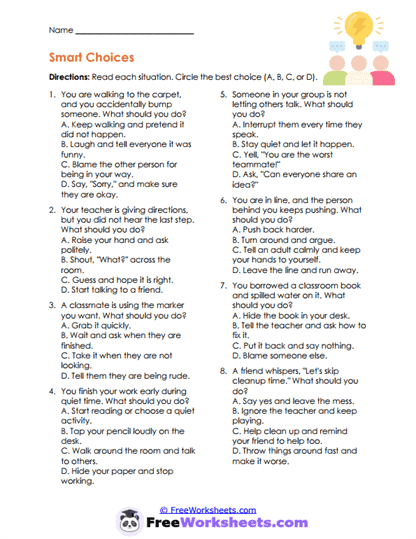
Smart Choices
- What Kids Do:
Students read short scenarios and choose the best behavior from several options. They must consider fairness, respect, and consequences when selecting their answers. - Target Skill:
Students strengthen decision-making skills by evaluating multiple choices and selecting the most appropriate response. This supports responsible behavior and thoughtful action.