
School Rules Worksheets
Build stronger classroom habits with worksheets for everyday student success. These free, ready-to-print worksheets are provided in PDF format for immediate classroom use. Students practice understanding expectations, cause-and-effect reasoning, and responsible decision-making aligned to key social-emotional learning skills.
About This Collection of Worksheets
This collection of school rules worksheets helps students understand how expectations guide behavior in real-life situations. Each activity connects rules to actions, showing students what following expectations actually looks like throughout the school day. By working through relatable examples, students begin to see how rules support safety, learning, and respect.
Students also explore how behavior changes depending on location, situation, and responsibility. These worksheets guide learners to think more deeply about why rules matter and how their choices affect outcomes. Over time, this builds stronger awareness, independence, and accountability in everyday school settings.
Teachers and parents can use these worksheets to reinforce consistent expectations and routines. The printable format makes them easy to use during lessons, small groups, or at home. With regular practice, students develop habits that support a safe, respectful, and productive learning environment.
Paul’s Teacher Tip
When teaching school rules, focus on helping students understand the “why” behind each expectation. These worksheets are most effective when paired with real classroom examples and discussions. Encourage students to explain their thinking instead of just selecting answers, which builds deeper understanding. You can also revisit the same activity later in the year to see how student reasoning has improved. For younger students, modeling behaviors or acting out scenarios can make the learning more concrete. Over time, this approach helps students internalize rules and apply them independently.
Worksheet Collection Skill Spotlights
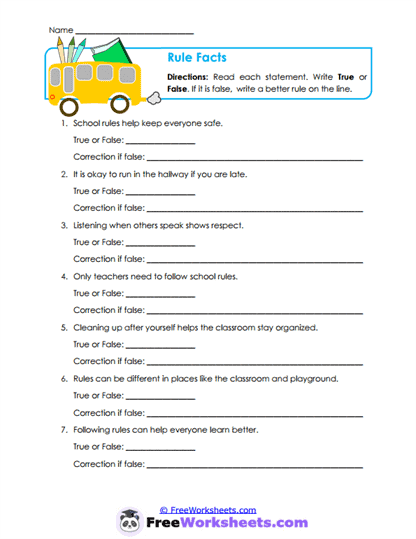
Behavior Facts
- What Kids Do:
Students read statements about school behavior and decide whether each one is true or false, then correct any false ideas. As they work, they must think carefully about what expectations really mean and how they apply in everyday school situations, encouraging deeper understanding rather than quick answers. - Target Skill:
Students build critical thinking and reasoning skills by evaluating statements and correcting misunderstandings. This supports stronger comprehension of school expectations and helps learners clearly understand what following rules looks like in practice.
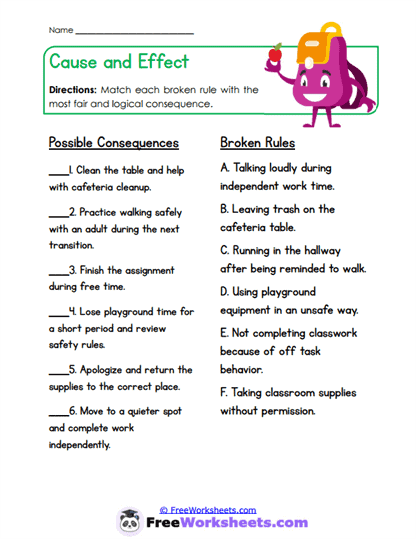
Cause Effect
- What Kids Do:
Students read examples of actions that break expectations and match each one with a logical consequence. They must carefully consider how behavior leads to outcomes, helping them connect everyday actions with real results in a meaningful way. - Target Skill:
Students strengthen cause-and-effect reasoning related to behavior. This supports accountability and helps learners understand how their choices directly impact consequences in school settings.
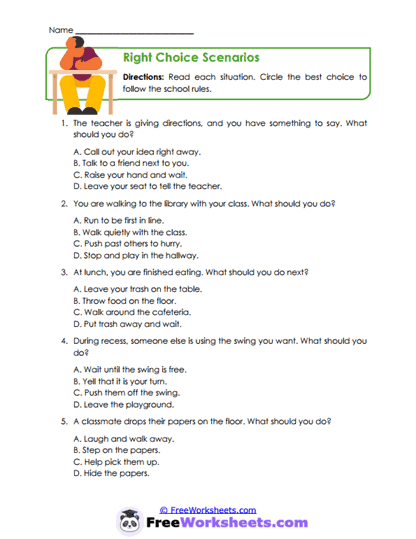
Choice Scenarios
- What Kids Do:
Students read short school-based scenarios and choose the best response from multiple options. They must compare choices and think through which action reflects positive behavior and meets expectations. - Target Skill:
Students develop decision-making skills by evaluating options and selecting appropriate actions. This supports responsible behavior and helps learners apply school rules in real-life situations.
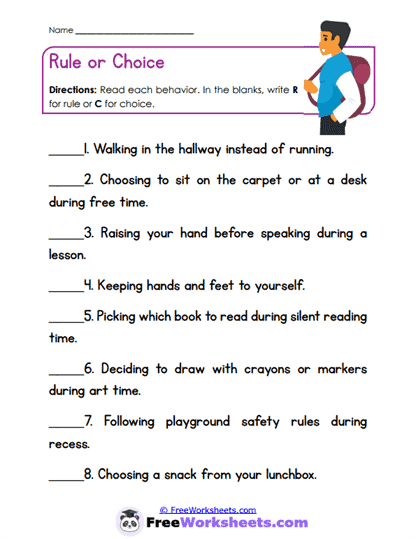
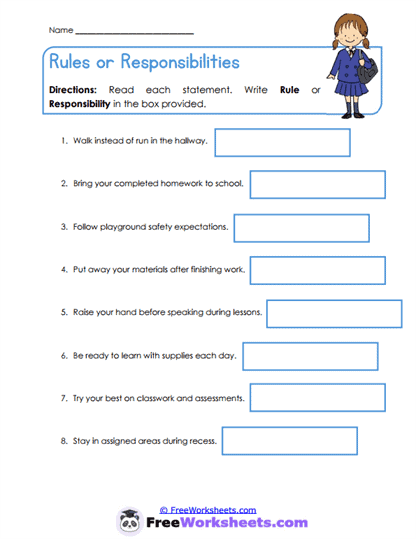
Choice Sort
- What Kids Do:
Students read a list of actions and sort them into categories such as expectations or personal choices. This requires them to think about responsibility and understand which behaviors are required versus optional. - Target Skill:
Students build classification and self-management skills by distinguishing between rules and choices. This helps learners take ownership of behavior and understand expectations more clearly.
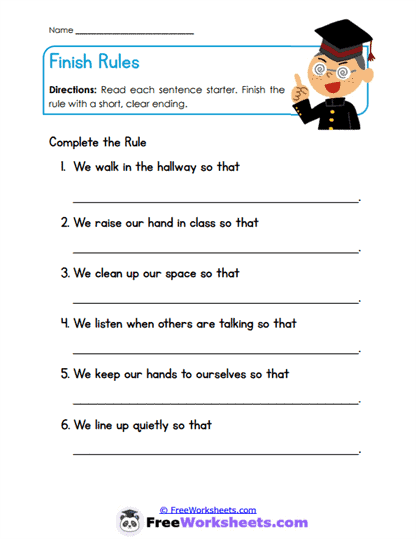
Finish Sentences
- What Kids Do:
Students complete sentence starters related to school behavior by adding logical endings. They must think about why certain actions matter, connecting behavior with outcomes through writing and reflection. - Target Skill:
Students strengthen reasoning and writing skills by explaining the purpose behind expectations. This supports deeper understanding of behavior and helps learners express ideas clearly.
Goal Setting
- What Kids Do:
Students reflect on their behavior and identify areas for improvement, then write specific goals they want to work toward. This encourages honest thinking and helps them focus on personal growth. - Target Skill:
Students develop self-awareness and goal-setting skills by planning improvements. This supports long-term behavior growth and helps learners take responsibility for their actions.
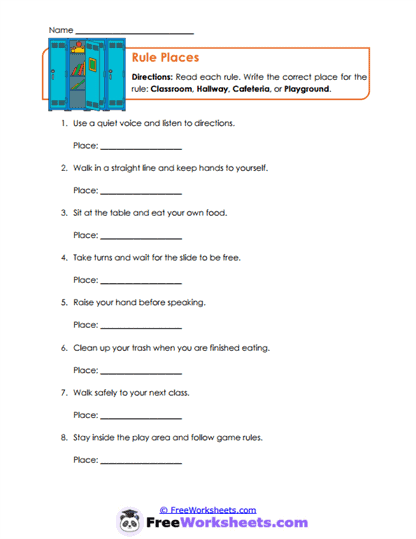
Places
- What Kids Do:
Students read behavior descriptions and decide which school location each one belongs to, such as classroom, hallway, or cafeteria. This helps them understand how expectations change depending on where they are. - Target Skill:
Students build situational awareness by applying behavior expectations across different environments. This supports flexibility and helps learners adjust their actions appropriately.
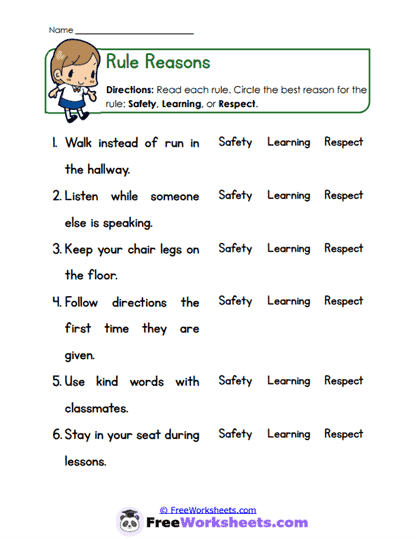
Reasons Why
- What Kids Do:
Students read actions and determine the main reason behind each one, such as safety, learning, or respect. They must think beyond the action itself and consider its purpose. - Target Skill:
Students strengthen reasoning and critical thinking skills by connecting behavior to purpose. This helps learners understand why expectations exist and supports thoughtful decision-making.
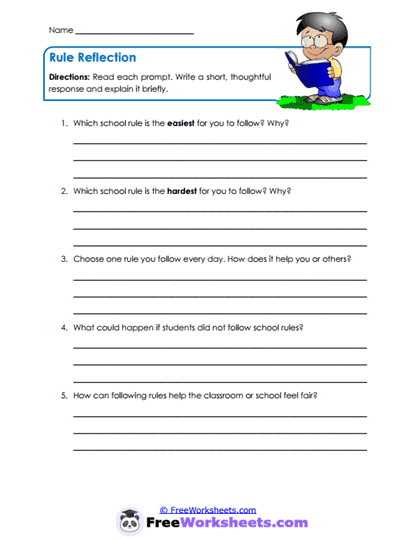
Reflection Writing
- What Kids Do:
Students respond to prompts about their own behavior, reflecting on strengths and challenges. They write about their experiences and consider how they can improve. - Target Skill:
Students build self-reflection and writing skills by analyzing their own actions. This supports self-awareness and helps learners grow in responsibility.
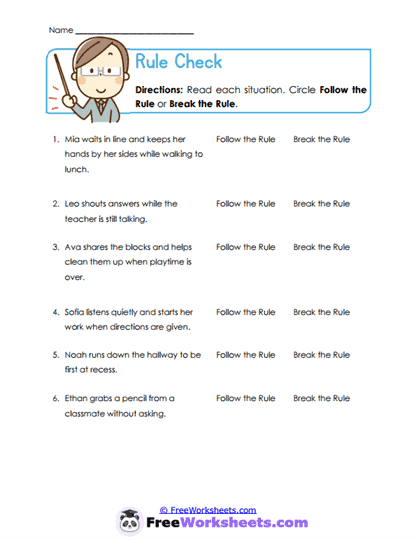
Rule Check
- What Kids Do:
Students read short scenarios and decide whether each behavior follows or breaks expectations. They must think carefully about what is appropriate in each situation. - Target Skill:
Students develop evaluation skills by identifying appropriate and inappropriate behavior. This supports understanding of rules and strengthens decision-making.
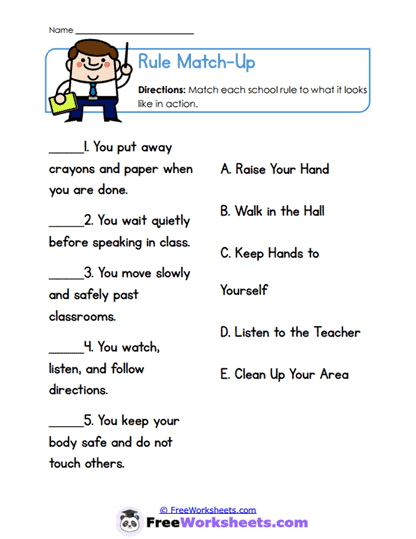
Rule Match-Up
- What Kids Do:
Students match actions to the school expectations they represent, helping them connect rules to real-life behavior. They must read both sides carefully to make accurate matches. - Target Skill:
Students build understanding of how rules apply to everyday actions. This supports comprehension and helps learners see how expectations guide behavior.
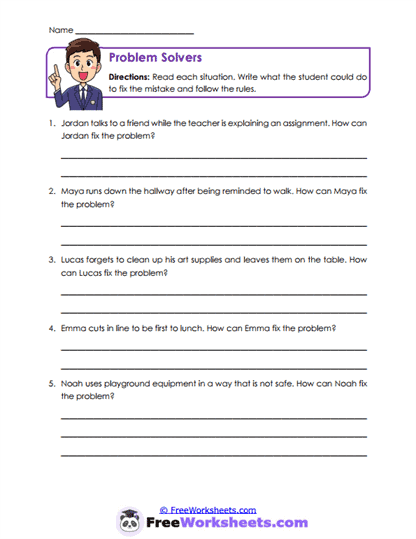
Scenario Writing
- What Kids Do:
Students read school-based scenarios and write their own responses explaining what they would do. This requires them to think through situations and express appropriate actions clearly. - Target Skill:
Students strengthen problem-solving and communication skills by applying expectations in writing. This supports responsible decision-making and clear expression.