
Expected vs Unexpected Behaviors Worksheets
Build stronger classroom habits with Grade 1 to Grade 8 Behavior worksheets for social-emotional learning. These free, ready-to-print worksheets are provided in PDF format for immediate classroom use. Students practice decision-making, self-management, and understanding consequences aligned to key SEL and behavior standards.
About This Collection of Worksheets
This collection of behavior worksheets is designed to help students clearly understand the difference between expected and unexpected actions in school and social settings. Across a wide grade range, students are guided through real-life scenarios that help them reflect on choices, consider consequences, and build stronger decision-making habits. Each activity focuses on practical situations students encounter every day.
The worksheets also support social-emotional learning by helping students connect actions to feelings, outcomes, and group dynamics. Learners begin to recognize how their behavior impacts others and how different environments may require different responses. This builds awareness, empathy, and flexible thinking that carries beyond the classroom.
Teachers and parents can use this collection to reinforce positive behavior through structured, easy-to-follow activities. The printable format makes it simple to integrate into lessons, small groups, or at-home practice. Together, these worksheets create meaningful opportunities for discussion, reflection, and growth in responsible behavior.
Paul’s Teacher Tip
When using behavior worksheets, take time to talk through the “why” behind each answer rather than just checking for correctness. Students grow faster when they hear real examples and can explain their thinking out loud. Try pairing students for short discussions so they can compare perspectives and learn from each other. You can also connect the worksheets to your classroom rules or routines to make the learning feel more real. For younger students, act out a few scenarios to bring the situations to life. Over time, this kind of practice helps students pause, think, and make better choices independently.
Worksheet Collection Skill Spotlights
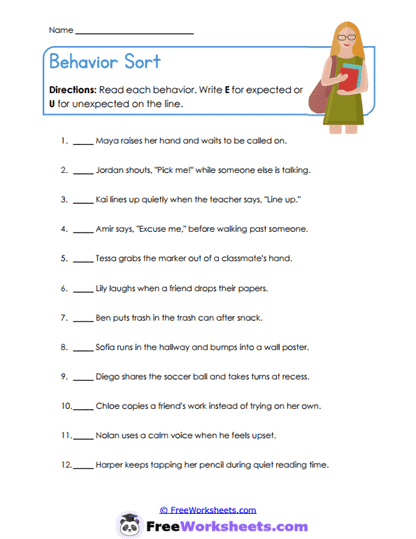
Behavior Sort
- What Kids Do:
Students read a variety of behavior-based scenarios and decide whether each action is expected or unexpected in a classroom setting. As they work through each example, they must think carefully about rules, routines, and how actions affect others. This encourages slower, more thoughtful reading while also building awareness of appropriate behavior. - Target Skill:
Students develop the ability to distinguish between appropriate and inappropriate actions using reasoning tied to classroom expectations. This supports self-management and responsible decision-making by helping learners evaluate behavior through a structured lens instead of personal preference or impulse.
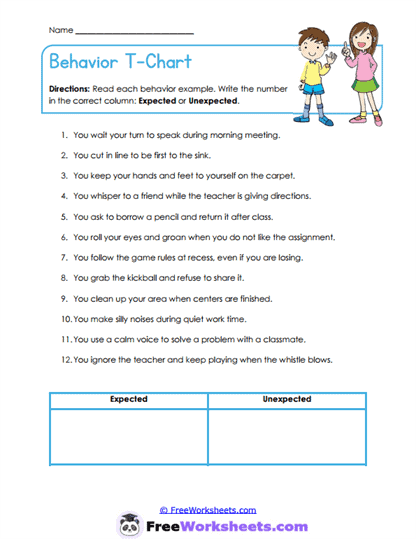
Behavior T-Chart
- What Kids Do:
Students sort different behavior examples into a T-chart labeled expected and unexpected. They actively categorize each scenario, which requires them to pause and consider context, classroom norms, and how actions are perceived. This hands-on organization helps make abstract behavior concepts more concrete. - Target Skill:
Students strengthen classification and reasoning skills while building a clearer understanding of behavior expectations. The activity supports social awareness and decision-making by helping students consistently apply rules and recognize patterns in appropriate versus inappropriate actions.
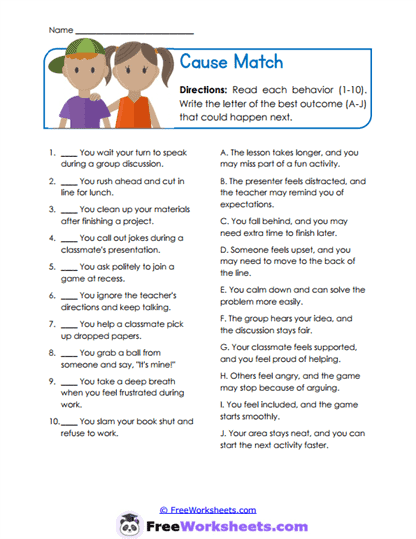
Cause Match
- What Kids Do:
Students match behavior examples with their most likely outcomes, carefully reading both sides before making connections. This process encourages them to think through cause-and-effect relationships and understand how one action can lead to a specific result in real-life situations. - Target Skill:
Students build cause-and-effect reasoning tied to behavior, strengthening their ability to predict outcomes and consequences. This supports responsible decision-making and helps learners connect everyday actions with meaningful social and academic results.
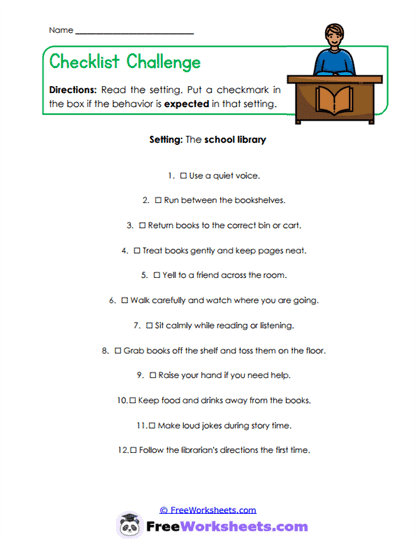
Checklist Challenge
- What Kids Do:
Students review a list of behaviors related to a specific setting, such as a library, and check which actions are appropriate. They must think about how expectations change depending on the environment, applying prior knowledge of rules in a focused and practical way. - Target Skill:
Students develop situational awareness by learning that behavior expectations vary by context. This strengthens self-management and social awareness, helping learners adjust their actions based on location, setting, and shared expectations.
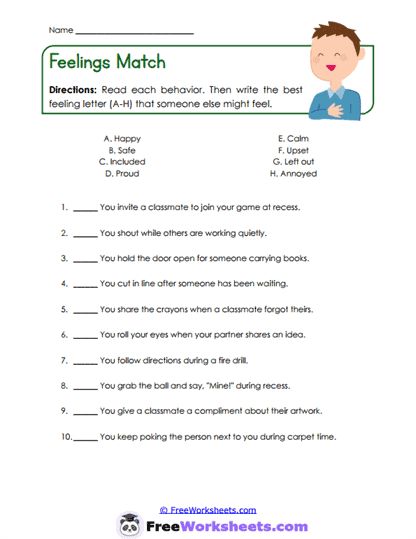
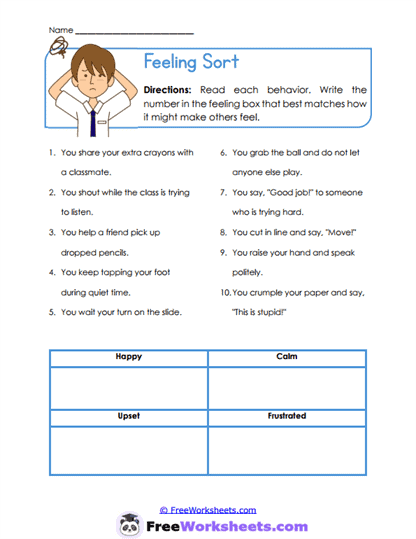
Feelings Match
- What Kids Do:
Students read behavior scenarios and match each one to how someone else might feel as a result. This requires them to step outside their own perspective and consider emotional responses, building deeper understanding of how actions affect others. - Target Skill:
Students strengthen empathy and perspective-taking by connecting behavior with emotional outcomes. This supports relationship skills and social awareness, helping learners better understand and respond to the feelings of peers.
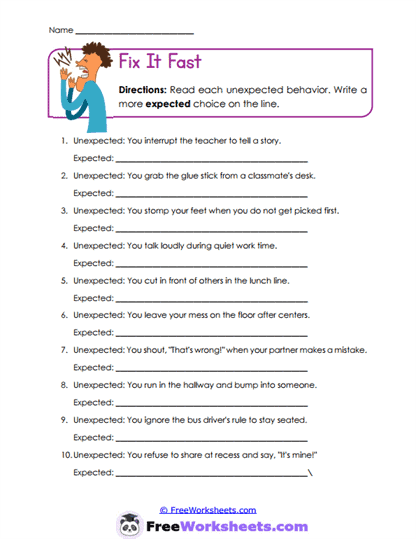
Fix It Fast
- What Kids Do:
Students are given examples of unexpected behaviors and must rewrite each one as a better, more appropriate choice. They actively transform negative actions into positive alternatives, which requires both understanding the problem and generating a solution. - Target Skill:
Students build problem-solving and self-correction skills by identifying inappropriate actions and replacing them with expected behaviors. This supports self-management and encourages students to take ownership of improving their choices.
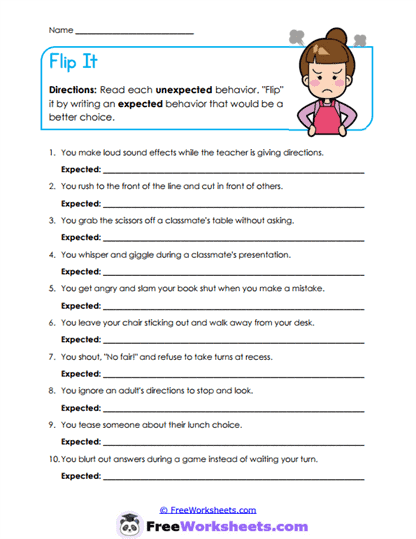
Flip It
- What Kids Do:
Students read examples of poor behavior and “flip” them into positive, expected actions. They must think carefully about what the correct behavior should look like, often rewriting responses in their own words to show understanding. - Target Skill:
Students practice behavior transformation and reflective thinking, which strengthens decision-making and self-regulation. This activity reinforces the idea that mistakes can be corrected with thoughtful choices and improved actions.
Group Sort
- What Kids Do:
Students evaluate behaviors that occur during group work and sort them into expected or unexpected categories. They consider how each action affects teamwork, cooperation, and shared responsibilities within a group setting. - Target Skill:
Students build collaboration and relationship skills by recognizing behaviors that support or disrupt group success. This helps reinforce positive participation, respectful interaction, and shared accountability in team environments.
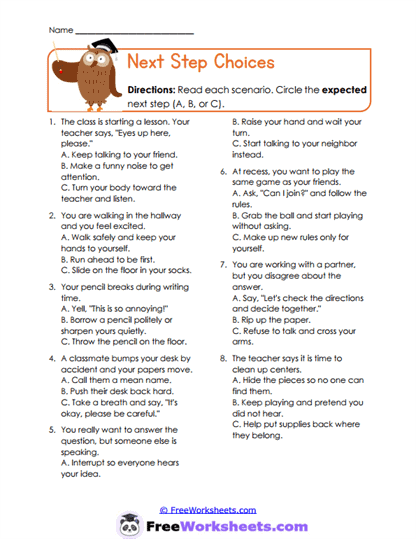
Next Step Choices
- What Kids Do:
Students read short classroom scenarios and choose the best next step from multiple options. They must carefully consider each choice and select the one that reflects appropriate and respectful behavior. - Target Skill:
Students strengthen decision-making skills by evaluating multiple responses and selecting the most appropriate one. This supports responsible behavior and helps learners think through consequences before acting.
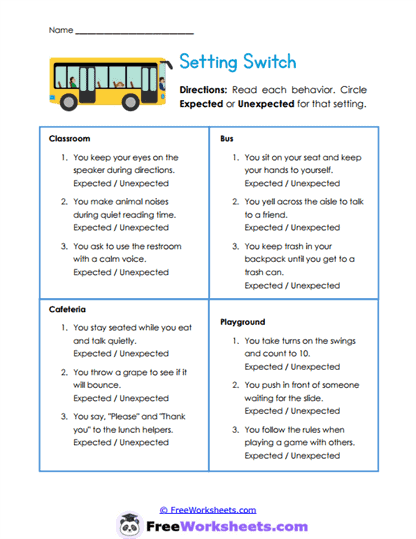
Setting Switch
- What Kids Do:
Students analyze behaviors across different school settings such as the classroom, playground, or cafeteria. They decide whether each action is appropriate based on the location, requiring them to adjust their thinking depending on context. - Target Skill:
Students develop flexible thinking and situational awareness by understanding that expectations change across environments. This supports self-management and helps learners adapt their behavior appropriately in different settings.
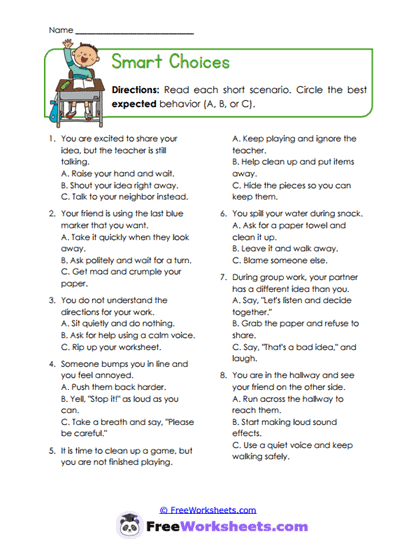
Smart Choices
- What Kids Do:
Students read short scenarios and select the best behavior from several options. They must think about fairness, respect, and consequences while choosing the most responsible response. - Target Skill:
Students improve evaluation and decision-making skills by comparing possible actions and identifying the most appropriate one. This strengthens their ability to make thoughtful, respectful choices in everyday situations.
Think First
- What Kids Do:
Students read behavior scenarios and pause to decide whether the actions are expected or unexpected. They may also reflect on what a better choice would be, encouraging slower, more thoughtful responses. - Target Skill:
Students build self-regulation and reflective thinking by practicing how to pause before acting. This supports better decision-making habits and helps learners develop greater control over their behavior.