
Student Code of Conduct Worksheets
Build stronger classroom habits with All Grades Behavior Student Code of Conduct worksheets for everyday student success. These free, ready-to-print worksheets are provided in PDF format for immediate classroom use. Students practice accountability, decision-making, and understanding consequences aligned to key social-emotional learning skills.
About This Collection of Worksheets
This collection of student code of conduct worksheets helps learners understand expectations in a clear and practical way. Each activity focuses on real-life school situations, guiding students to think about how their actions affect safety, learning, and relationships. By working through these examples, students begin to see how rules connect to everyday behavior.
Students also explore how choices lead to outcomes and how responsibility plays a role in their success. These worksheets encourage learners to reflect, solve problems, and think through better decisions. Over time, this builds stronger judgment, independence, and awareness of how behavior impacts both themselves and others.
Teachers and parents can use these worksheets to support consistent expectations across school and home. The printable format makes them easy to use for lessons, small groups, or independent work. With repeated practice, students develop habits that support respectful, safe, and responsible behavior.
Paul’s Teacher Tip
When working with student conduct, focus on helping students understand both actions and outcomes. These worksheets are most effective when paired with discussion, so students can explain their thinking and hear different perspectives. Try connecting each activity to real classroom situations so the learning feels relevant. You can also revisit activities over time to check for growth in understanding. For older students, encourage written reflection to build deeper accountability. Over time, this helps students take ownership of their behavior and decisions.
Worksheet Collection Skill Spotlights
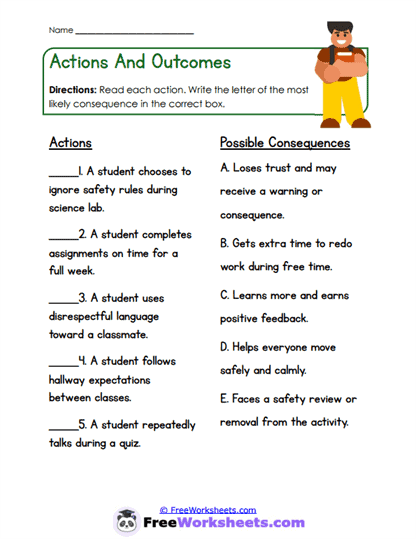
Action Outcomes
- What Kids Do:
Students read examples of behaviors and match each one with the most logical outcome. They must think carefully about how actions lead to consequences, helping them connect behavior to real-world results in meaningful and relatable ways. - Target Skill:
Students build cause-and-effect reasoning by linking actions to outcomes. This supports accountability and helps learners understand how their decisions impact themselves and others.
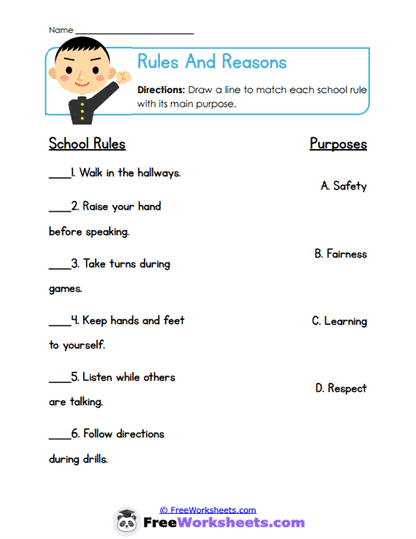
Behavior Reasons
- What Kids Do:
Students match behaviors with their underlying purpose, such as safety, respect, or fairness. They must think beyond the action itself and consider why the behavior is expected in a school setting. - Target Skill:
Students strengthen reasoning skills by connecting behavior to purpose. This supports deeper understanding of expectations and helps learners make more thoughtful decisions.
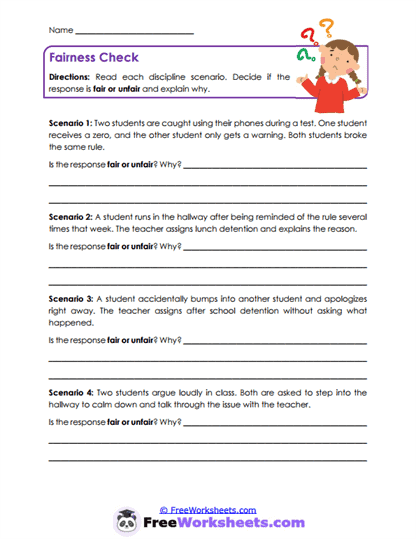
Behavior Review
- What Kids Do:
Students complete a mix of tasks that review key behavior concepts, including identifying appropriate actions and explaining reasoning. They engage with multiple formats that require both recognition and reflection. - Target Skill:
Students reinforce understanding of behavior expectations through varied practice. This supports retention and helps learners apply concepts independently.
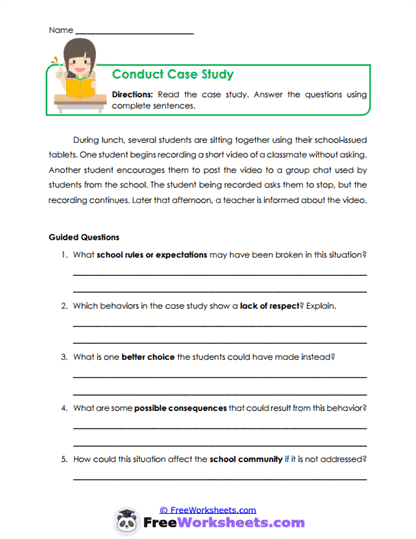
Case Study
- What Kids Do:
Students read a detailed scenario involving behavior and consequences, then answer guided questions. They must analyze the situation and think through what happened and why it matters. - Target Skill:
Students build critical thinking and analysis skills by evaluating real-life situations. This supports problem-solving and helps learners understand the impact of behavior.
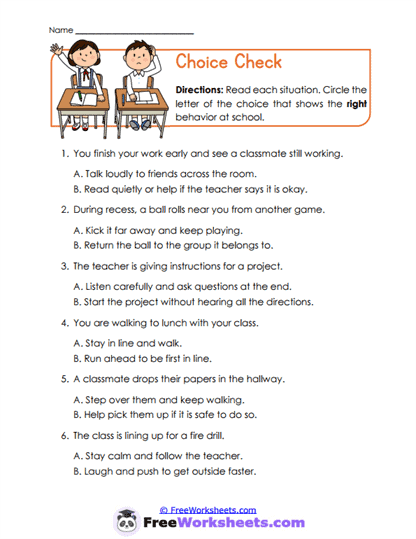
Choice Check
- What Kids Do:
Students read school-based scenarios and choose the best response from multiple options. They must compare choices and decide which one reflects appropriate behavior. - Target Skill:
Students strengthen decision-making skills by evaluating options and selecting the most responsible action. This supports positive behavior in everyday situations.
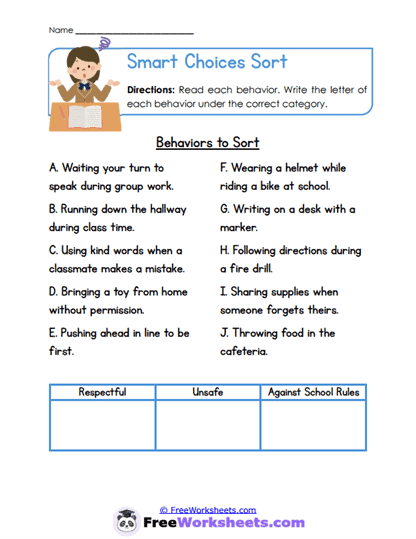
Choice Sort
- What Kids Do:
Students sort behaviors into categories such as respectful, unsafe, or inappropriate. They must think carefully about each action and where it belongs. - Target Skill:
Students build classification and judgment skills by analyzing behavior types. This supports awareness and helps learners recognize differences between actions.
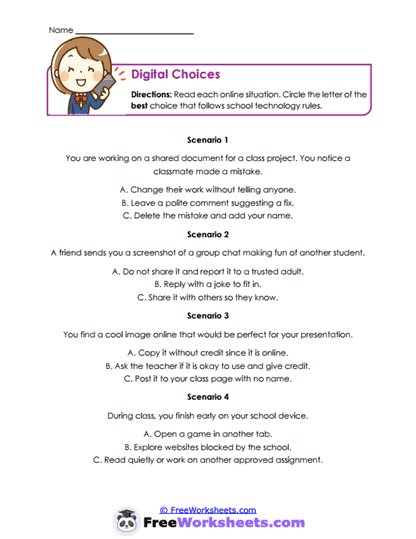
Digital Choices
- What Kids Do:
Students read online scenarios and choose the safest and most respectful response. They must think through digital situations and consider appropriate actions. - Target Skill:
Students develop digital citizenship skills by evaluating online behavior. This supports safe and responsible technology use.
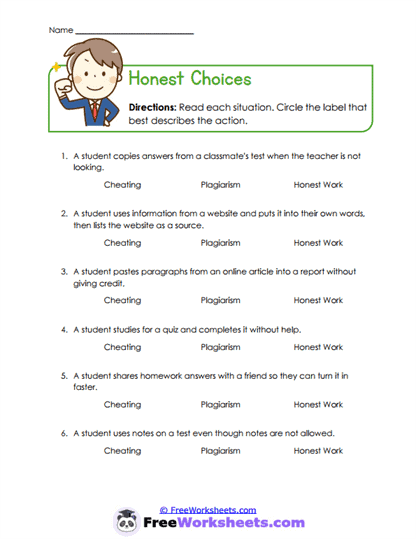
Honest Choices
- What Kids Do:
Students read scenarios and decide whether the behavior represents cheating, plagiarism, or honest work. They must carefully evaluate each situation. - Target Skill:
Students build ethical reasoning and integrity by identifying honest and dishonest actions. This supports responsible academic behavior.
Personal Plan
- What Kids Do:
Students reflect on their behavior and create a plan for improvement. They identify strengths and areas to grow, then write specific goals. - Target Skill:
Students develop self-awareness and goal-setting skills. This supports long-term behavior improvement and personal responsibility.
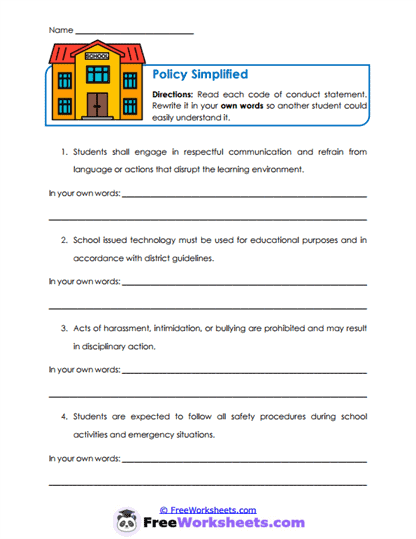
Policy Simplified
- What Kids Do:
Students read formal behavior expectations and rewrite them in their own words. They must understand the meaning before expressing it clearly. - Target Skill:
Students strengthen comprehension and communication skills by translating complex ideas into simpler language. This supports deeper understanding of expectations.
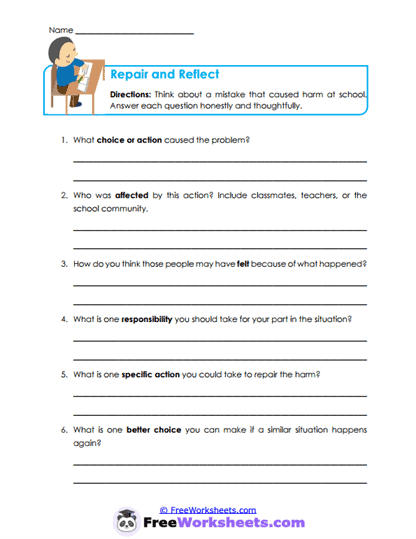
Reflect Repair
- What Kids Do:
Students reflect on a mistake and think through how to make things right. They consider how their actions affected others and plan a better response. - Target Skill:
Students build accountability and empathy by reflecting on behavior and planning improvements. This supports emotional growth and responsible decision-making.
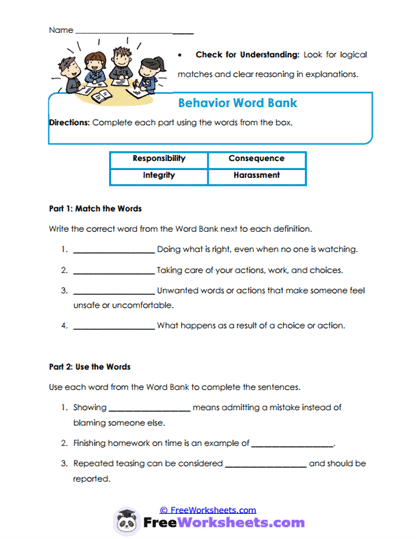
Word Bank
- What Kids Do:
Students match vocabulary words related to behavior with their definitions and use them in sentences. They connect language to real-life actions. - Target Skill:
Students develop vocabulary and comprehension skills related to behavior concepts. This supports clearer understanding and communication.