
Behavior Data Collection Worksheets
These K-12 Classroom Behavior Management worksheets help students collect clear information, recognize patterns, and make thoughtful behavior changes. Every activity is Free, Ready-to-print, available in PDF format, and designed for Immediate classroom use. Students strengthen skills in self-monitoring, data analysis, goal setting, observable behavior, and responsible decision-making.
About This Collection of Worksheets
This collection helps students move beyond broad statements such as “I was distracted” or “My behavior was better.” Learners count, time, rate, compare, and graph specific actions that can be clearly seen or heard. By collecting real information, students can identify when a behavior happens, how long it lasts, and whether a strategy appears to be helping.
The worksheets introduce several useful behavior-data methods, including frequency counts, duration measures, ABC analysis, color ratings, point systems, class checkpoints, and weekly summaries. Students also learn to replace vague labels with observable descriptions, compare two target behaviors, examine triggers and consequences, and create measurable goals based on baseline information. Several activities connect behavior monitoring with math skills through tables, totals, comparisons, and line graphs.
These printable resources work well during individual behavior conferences, counseling groups, intervention planning, advisory lessons, student support meetings, and homeschool routines. The collection supports CASEL competencies involving self-awareness, self-management, social awareness, and responsible decision-making. Since the pages range from simple visual tracking to more advanced data interpretation, adults can choose the activity that matches each student’s age, independence, and current support plan.

Paul’s Teacher Tip
Always define the target behavior before asking a student to track it. A phrase such as “being disrespectful” is too broad, while “talking while another person is speaking” can be observed and counted. Present the data as useful information rather than a grade or punishment, since students are more likely to record honestly when they feel safe. Look for patterns with the child instead of jumping to conclusions about why the behavior occurred. Once a pattern appears, choose one realistic strategy and collect enough new information to see whether it actually helps.
Worksheet Collection Skill Spotlights
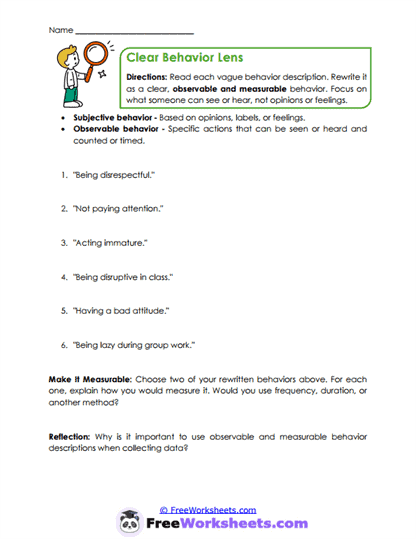
Behavior Clarity
What Kids Do: Students rewrite six vague behavior labels as specific actions that another person could see, hear, count, or time. They then choose measurement methods for two of their rewritten examples and explain why clear descriptions matter.
Target Skill: This activity teaches objective behavior description and fair data collection. Students learn to replace judgmental words with observable actions and avoid guessing about another person’s feelings, motivation, or character.
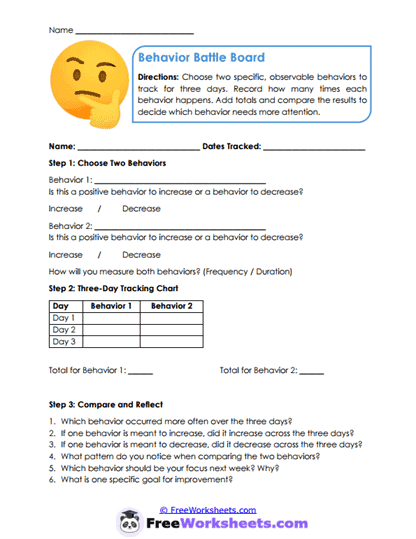
Behavior Compare
What Kids Do: Students choose two observable behaviors, decide whether each should increase or decrease, and track them across three days. They compare the totals, examine patterns, and choose one behavior as the main improvement priority.
Target Skill: Learners practice comparing behavior data carefully and selecting a focused goal. The worksheet also teaches that totals measured in different ways cannot always be compared directly without considering frequency, duration, and seriousness.
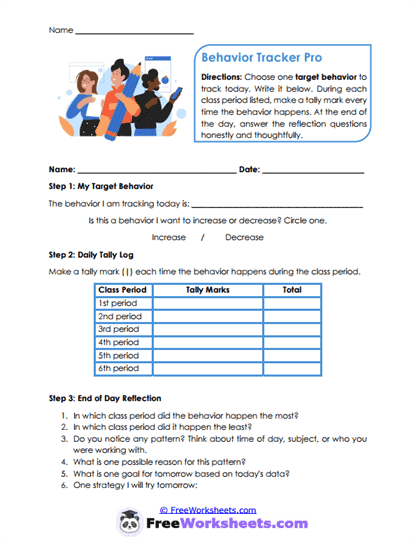
Behavior Counts
What Kids Do: Students choose one target behavior and make a tally mark each time it occurs across six class periods. They total the daily frequency, identify the highest and lowest periods, consider possible patterns, and select a strategy for the next day.
Target Skill: This page develops accurate frequency tracking and honest self-monitoring. Students learn to replace general impressions with specific counts that can guide a practical and measurable behavior plan.
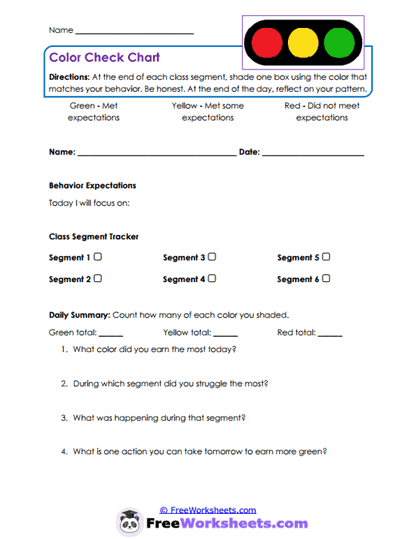
Color Signals
What Kids Do: Students select one behavior expectation and rate themselves green, yellow, or red after six lesson or daily segments. They total each color, identify the hardest period, and choose one action that may lead to stronger ratings.
Target Skill: This visual tracker helps younger learners notice changes across short periods and reset after a difficult segment. Students learn that yellow or red ratings provide helpful information rather than proof that the whole day was a failure.
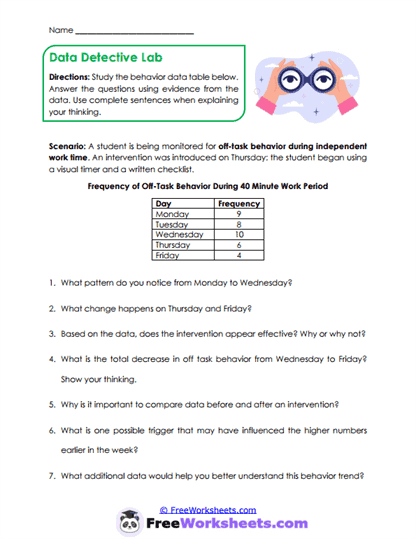
Data Detective
What Kids Do: Students study five days of off-task behavior data and describe how the pattern changes across the week. They calculate the drop from the highest day to Friday, evaluate whether an intervention may be working, and suggest additional information they would need.
Target Skill: Learners use numerical evidence to support conclusions while separating facts from guesses. The activity reinforces that a data table can show what changed but may not fully explain the reason behind that change.
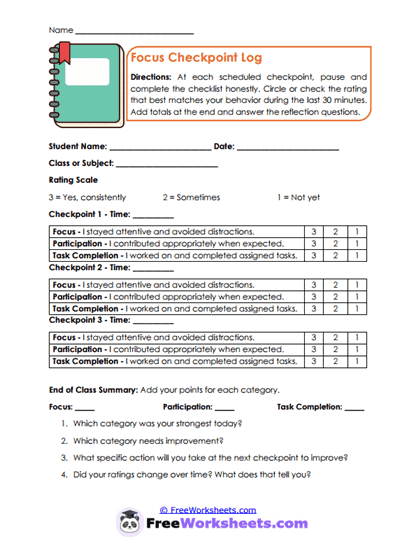
Focus Checkpoints
What Kids Do: Students pause three times during one class period to rate focus, participation, and task completion. At the end of class, they total each category, compare checkpoints, identify a strength, and choose an adjustment for the next work period.
Target Skill: This activity teaches students to monitor behavior while there is still time to make a change. Breaking the lesson into smaller parts helps learners notice when attention drops and treat each checkpoint as a fresh start.
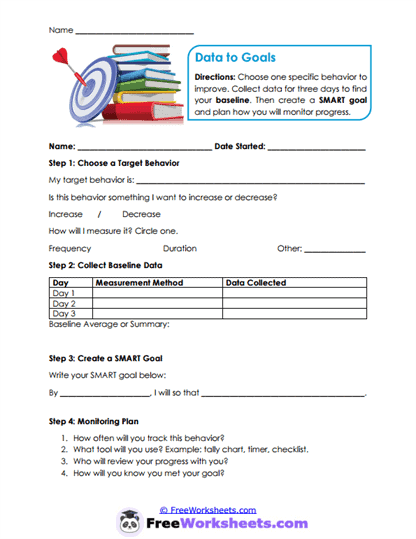
Goal Planning
What Kids Do: Students select a target behavior, decide how it will be measured, and collect three days of baseline data. They then write a SMART goal and create a monitoring plan that includes tools, review times, and a clear measure of success.
Target Skill: Students learn to base behavior goals on real starting information instead of broad wishes. The worksheet develops measurable planning, realistic expectations, progress monitoring, and personal responsibility.
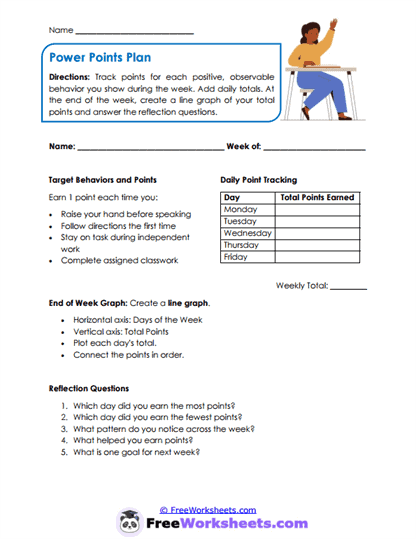
Point Progress
What Kids Do: Students earn daily points for raising a hand, following directions, staying on task, and completing work. They total the week, graph each day’s score, compare stronger and harder days, and choose one goal for the following week.
Target Skill: This page connects positive reinforcement with visual progress monitoring. Students learn to focus on the classroom actions behind the points and use the graph to recognize growth without expecting perfect scores every day.
Time Measures
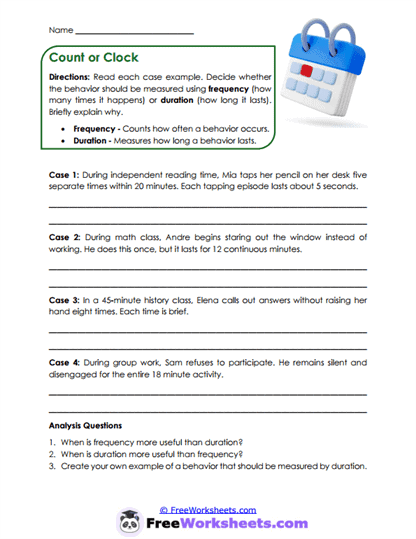
What Kids Do: Students examine four classroom behaviors and decide whether each should be measured by frequency or duration. They explain their reasoning, compare the two methods, and create an original example of a behavior best measured with time.
Target Skill: Learners distinguish counting separate events from timing how long one behavior lasts. The worksheet helps them choose a measurement method that produces useful information instead of using the same tool for every behavior.
Trend Graph
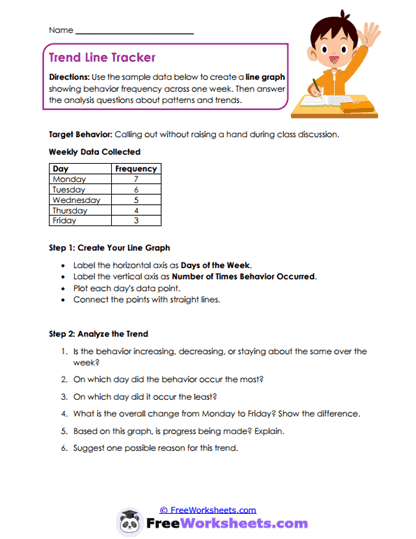
What Kids Do: Students use a five-day frequency table to create a line graph showing calling-out behavior. They label both axes, plot the values, connect the points, and answer questions about the highest day, lowest day, total change, and overall trend.
Target Skill: This activity combines behavior monitoring with data representation and interpretation. Students practice supporting statements about improvement with exact values rather than relying on a general impression of the week.
Trigger Patterns
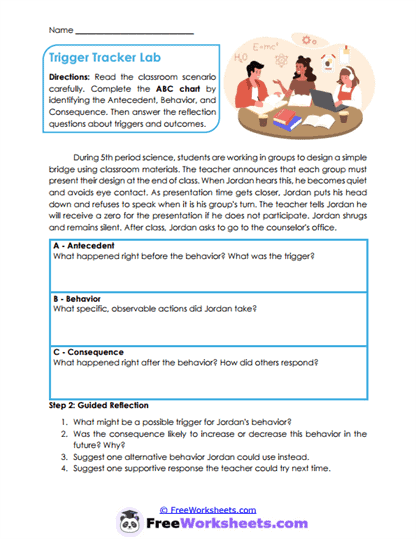
What Kids Do: Students read about Jordan becoming upset during a group science activity and divide the situation into antecedent, behavior, and consequence. They identify possible triggers, examine what happened afterward, and suggest more supportive responses.
Target Skill: This worksheet introduces ABC behavior analysis in clear, student-friendly language. Learners separate what happened before, the visible action itself, and what followed without assuming that every consequence is a punishment.
Weekly Review
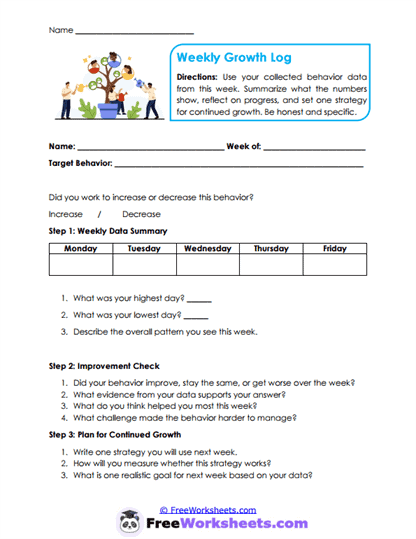
What Kids Do: Students enter one behavior value for each school day, identify the highest and lowest points, and describe whether the overall pattern increased, decreased, or stayed steady. They use the evidence to select a new strategy and measurable goal.
Target Skill: Learners move from collecting isolated numbers to reviewing a full week. The activity develops pattern recognition, evidence-based reflection, realistic goal setting, and the understanding that progress can include occasional harder days.