
Behavior Tracking Worksheets
These behavior tracking worksheets help students monitor choices, recognize patterns, and build more dependable school habits. Every activity is Free, Ready-to-print, available in PDF format, and designed for Immediate classroom use. Students strengthen skills in self-awareness, goal setting, emotional control, organization, and responsible decision-making.
About This Collection of Worksheets
This collection helps students see behavior as a series of choices that can be noticed, measured, and improved. Learners track focus, preparedness, respectful language, emotional reactions, class participation, teamwork, homework habits, and responses to redirection. Instead of describing an entire day as good or bad, students examine specific moments and identify what helped or got in the way.
The worksheets include daily ratings, weekly plans, timed focus logs, trigger charts, teacher-student comparisons, habit streaks, emotion trackers, and growth reflections. Students collect information across class periods or several days, look for repeated patterns, and choose one realistic action to practice. Several pages also connect behavior tracking with graphing, totals, goal measurement, and evidence-based reflection.
These printable resources work well during classroom check-ins, counseling sessions, advisory periods, behavior conferences, intervention plans, and home-school communication. The collection supports CASEL competencies involving self-awareness, self-management, social awareness, relationship skills, and responsible decision-making. Since the worksheets range from simple daily tracking to deeper emotional and behavioral analysis, adults can select the page that best fits the student’s age, independence, and current goal.
Paul’s Teacher Tip
Choose one or two behaviors to track instead of asking students to monitor everything at once. The target should describe something clear, such as bringing materials or beginning work promptly, rather than a broad goal like “behave better.” Review the information with curiosity and begin by naming one success. When a difficult pattern appears, help the student choose a practical strategy that fits the trigger or setting. Honest tracking matters more than perfect scores because useful information is what makes improvement possible.
Worksheet Collection Skill Spotlights
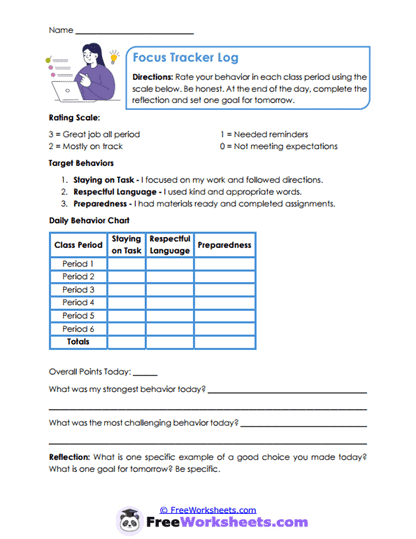
Daily Focus
What Kids Do: Students rate staying on task, using respectful language, and coming prepared during six class periods. They total each category, identify their strongest and most difficult behavior, describe one positive choice, and set a goal for tomorrow.
Target Skill: This activity develops daily self-monitoring and pattern recognition. Students learn that behavior can change by subject or time of day and that every new class period offers another chance to reset.
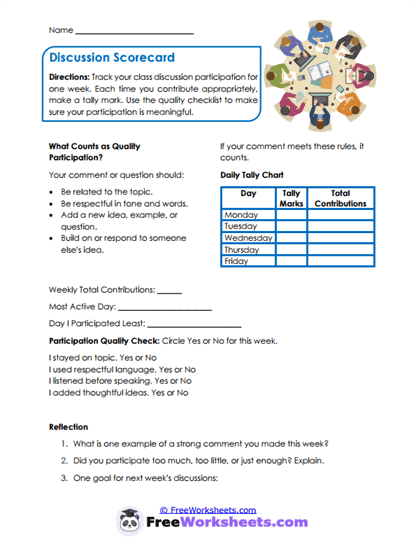
Discussion Growth
What Kids Do: Students tally quality contributions during class discussions from Monday through Friday. They total the week, compare high- and low-participation days, and check whether their comments were relevant, respectful, thoughtful, and based on listening.
Target Skill: Learners distinguish meaningful participation from simply talking often. The worksheet helps students value clear ideas, respectful responses, active listening, and contributions that move a discussion forward.
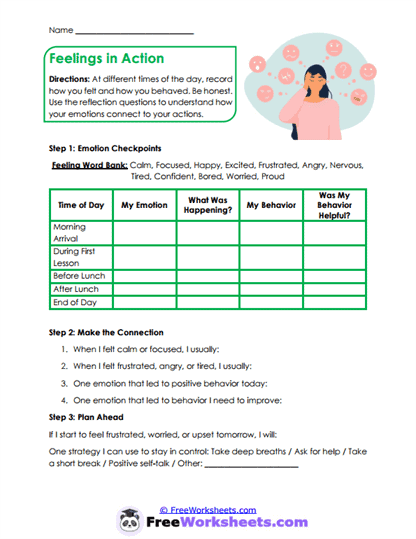
Emotion Patterns
What Kids Do: Students record an emotion, situation, behavior, and result during five daily checkpoints. They then compare what they usually do when calm with how they respond when frustrated, angry, tired, worried, or overwhelmed.
Target Skill: This page strengthens emotional self-awareness and behavior regulation. Students learn to separate the event, feeling, action, and outcome so they can choose a coping strategy before a difficult emotion drives an unhelpful response.
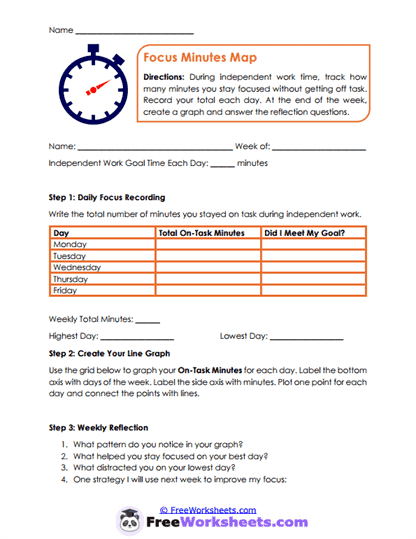
Focus Minutes
What Kids Do: Students record how many minutes they remain on task during independent work each day. They compare the results with a daily goal, calculate weekly totals, create a line graph, and reflect on distractions and helpful supports.
Target Skill: Learners measure attention and build work stamina using real time data. The worksheet combines self-management with graphing and helps students identify which strategies or settings support longer periods of productive focus.
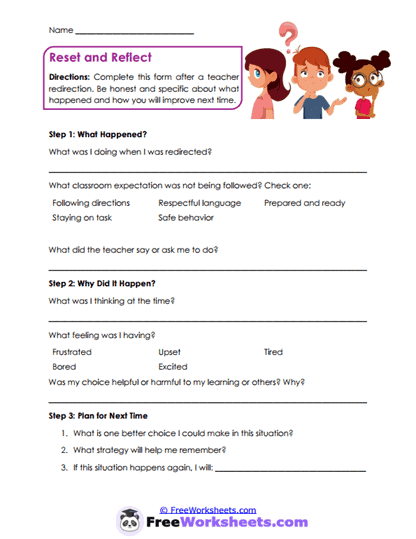
Fresh Start
What Kids Do: Students reflect on a teacher redirection by describing what they were doing, which expectation was missed, what they felt, and what the teacher requested. They then select a reminder strategy and plan a clearer response.
Target Skill: This activity teaches students to treat correction as a chance to reset rather than proof that the whole day is ruined. Learners take responsibility for observable actions while preparing one specific replacement behavior.
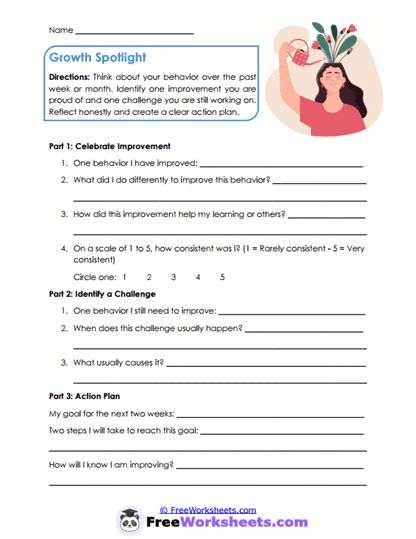
Growth Reflection
What Kids Do: Students celebrate one behavior they improved, explain what they changed, and describe how the improvement affected learning or other people. They also identify one remaining challenge and build a measurable two-week action plan.
Target Skill: Students practice balanced reflection by recognizing progress without ignoring continued needs. The page develops ownership, realistic planning, and the ability to describe behavior growth with clear examples instead of broad labels.
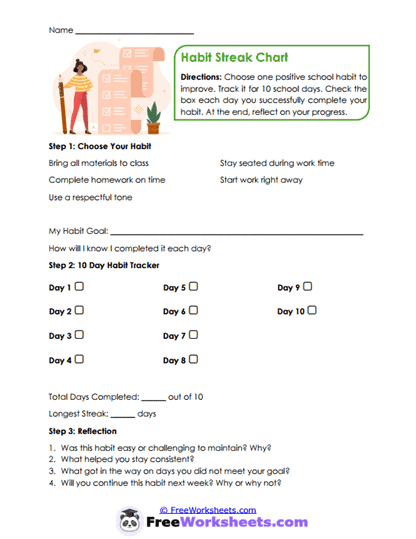
Habit Streak
What Kids Do: Students choose one positive school habit and define exactly what successful completion looks like. They track the habit for ten days, calculate their total and longest streak, and reflect on what helped or interrupted consistency.
Target Skill: This worksheet connects repeated practice with lasting behavior change. Students learn that one missed day does not erase progress and that clear habits are easier to track than broad goals such as being more responsible.
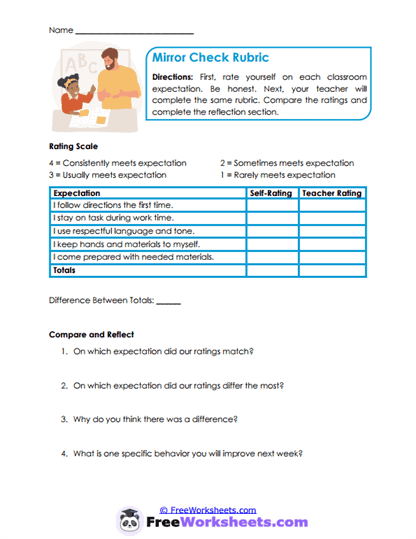
Rating Mirror
What Kids Do: Students and teachers independently rate six classroom expectations with the same four-point rubric. They compare totals, identify where the scores match or differ, discuss possible reasons, and choose one shared improvement goal.
Target Skill: Learners build self-awareness and receive feedback without treating the comparison as a contest. The activity encourages both people to use specific examples and combine viewpoints into a more complete picture.
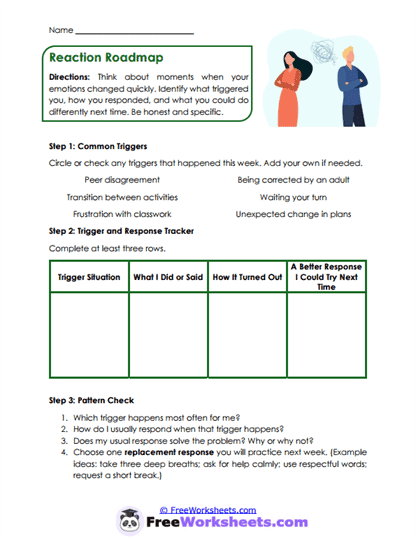
Reaction Roadmap
What Kids Do: Students identify common triggers and record three situations involving the trigger, reaction, outcome, and a better future response. They compare the examples and choose one replacement action to practice during the next week.
Target Skill: This page develops trigger awareness and emotional self-management. Students learn that recognizing what happens before a reaction can help them prepare a calmer, more realistic response before the pattern repeats.
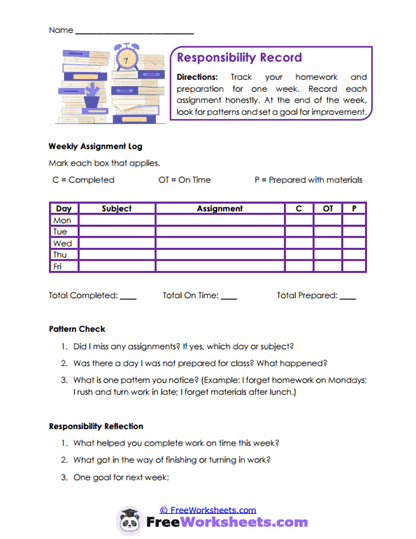
Responsibility Log
What Kids Do: Students record daily assignments and check whether each one was completed, turned in on time, and supported by the correct materials. They total each area, identify repeated problems, and choose one organization goal.
Target Skill: Learners understand that responsibility includes several connected steps. The worksheet helps adults and students locate the exact weak point, such as completion, submission, or preparation, instead of giving a general reminder to try harder.
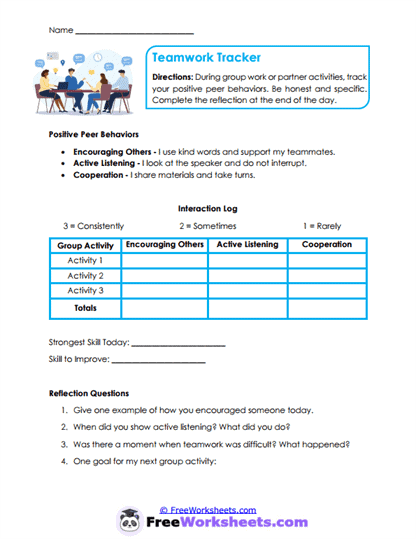
Teamwork Growth
What Kids Do: Students rate encouragement, active listening, and cooperation across three partner or group activities. They total the scores, provide examples, identify their strongest teamwork behavior, and select one area to improve.
Target Skill: This activity turns teamwork into observable actions rather than a general impression. Students recognize that listening, sharing, encouraging, and cooperating matter even when they are not the loudest or most visible group member.
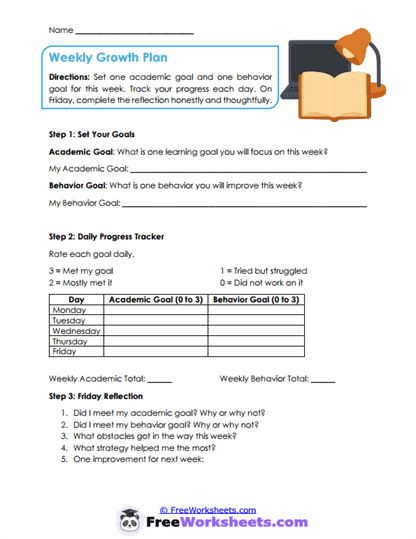
Weekly Goals
What Kids Do: Students choose one academic goal and one behavior goal, then rate progress toward both from Monday through Friday. At the end of the week, they compare totals and reflect on obstacles, useful strategies, and their next step.
Target Skill: Learners see how academic habits and behavior habits influence one another. The worksheet develops consistent effort, weekly reflection, and the ability to adjust a goal without giving up after one difficult day.