
Behavior Rating Scales Worksheets
These K-12 Classroom Behavior Management worksheets help students understand rating systems, compare viewpoints, and use evidence to explain behavior fairly. Every activity is Free, Ready-to-print, available in PDF format, and designed for Immediate classroom use. Students strengthen skills in self-awareness, data interpretation, respectful feedback, fairness, and responsible decision-making.
About This Collection of Worksheets
This collection helps students understand how behavior rating scales work and why clear definitions matter. Learners compare rating levels, study weekly trends, examine teacher and student viewpoints, and practice supporting scores with real examples. The worksheets show that a number by itself is not enough unless everyone understands what the score means and uses the same expectations.
The activities also explore the limits and responsibilities that come with behavior ratings. Students examine how setting, task demands, culture, observer expectations, wording, and hidden bias may affect a score. They compare checklists with rating scales, learn important measurement vocabulary, and consider how private behavior records should be discussed and protected.
These printable resources work well during advisory, counseling groups, behavior-support lessons, data-literacy instruction, special education classes, and student conferences. The collection connects with CASEL competencies involving self-awareness, social awareness, relationship skills, self-management, and responsible decision-making. Since the worksheets range from introductory scale practice to deeper discussions of ethics and bias, adults can choose activities that match each student’s grade level and readiness.
Paul’s Teacher Tip
Never use a behavior rating without first explaining what every score means. Ask students and adults to support ratings with specific examples instead of relying on mood, memory, or labels. When two people disagree, treat the difference as useful information rather than proof that one person is wrong. Consider the setting, task, and observer before making a broad conclusion about the student. Most importantly, keep behavior records private and share them only with people who truly need the information to provide support.
Worksheet Collection Skill Spotlights
Bias Awareness
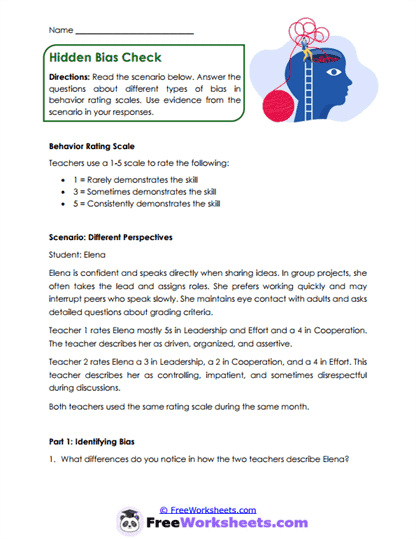
What Kids Do: Students compare two teachers’ descriptions and ratings of Elena’s leadership, cooperation, and effort. They examine how the same direct behavior is described with positive words by one observer and negative labels by another.
Target Skill: This activity develops awareness of hidden bias and judgmental language. Students learn that ratings become fairer when adults use observable examples, shared criteria, and information from more than one setting or observer.
Cultural Context
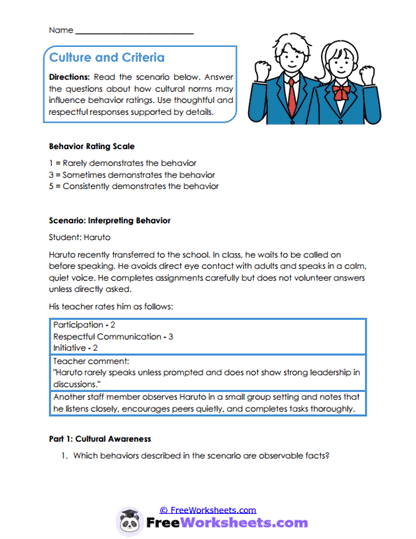
What Kids Do: Students read about Haruto, whose quiet voice, limited eye contact, and careful participation are interpreted differently by different adults. They separate observable facts from judgments and consider whether cultural expectations influenced the ratings.
Target Skill: Learners practice culturally aware behavior assessment without assuming that every difference is caused by culture. The worksheet teaches them to gather fuller evidence before treating one communication style as disrespectful, passive, or lacking leadership.
Privacy Choices
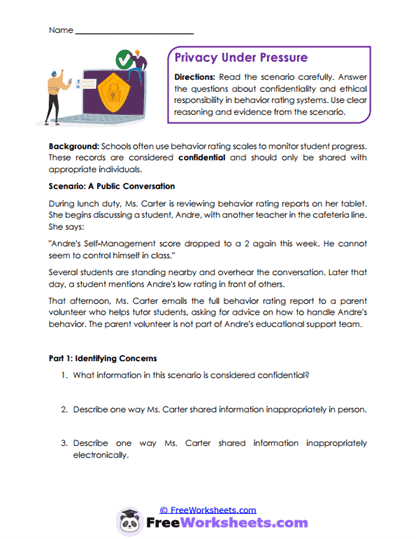
What Kids Do: Students examine a scenario in which a teacher discusses a student’s behavior rating in a public space and shares the full report electronically with someone outside the support team. They identify both spoken and digital privacy concerns.
Target Skill: This page develops ethical judgment and confidentiality awareness. Students learn that helpful intentions do not make public conversations, careless messages, or unnecessary access to private records acceptable.
Progress Patterns
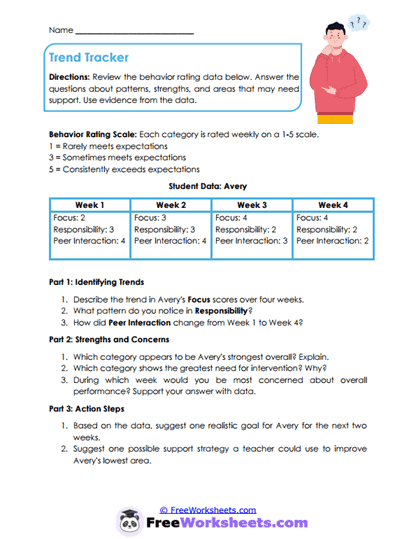
What Kids Do: Students study four weeks of focus, responsibility, and peer-interaction ratings. They describe how each category changes, identify the strongest and weakest areas, and suggest one goal and one support based on the data.
Target Skill: Learners analyze mixed behavior trends instead of assuming every skill improves together. The worksheet strengthens evidence-based goal setting by requiring students to match the support with the area that actually needs help.
Rating Differences
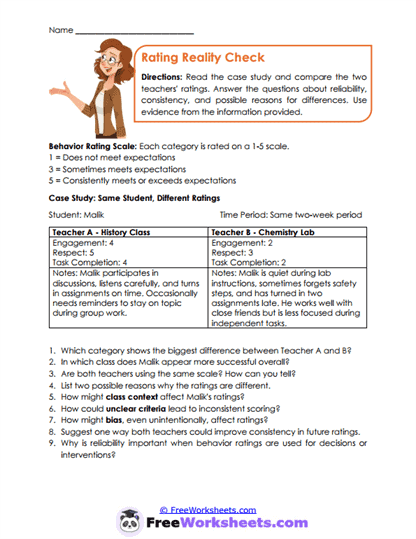
What Kids Do: Students compare behavior ratings from Malik’s history class and chemistry lab. They review scores and teacher notes to decide whether the differences may come from setting, task type, expectations, observation, or scoring reliability.
Target Skill: This activity helps students distinguish real behavior changes across settings from inconsistent ratings. Learners practice considering several explanations before deciding that an observer was unfair or incorrect.
Rating Perspectives
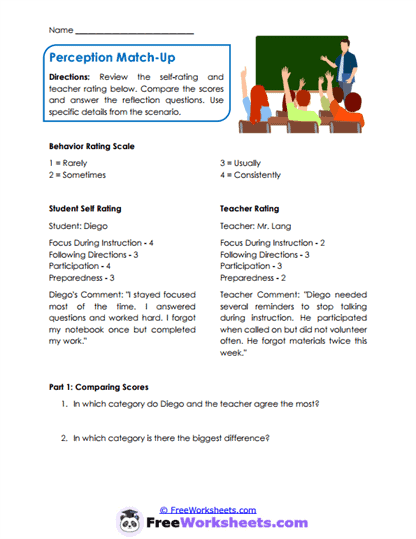
What Kids Do: Students compare Diego’s self-ratings with his teacher’s ratings for focus, directions, participation, and preparedness. They examine both written comments to identify areas of agreement and explain why some scores differ.
Target Skill: Students practice receiving feedback and comparing viewpoints calmly. The worksheet teaches that the student and teacher may each notice different evidence and that both perspectives become more useful when supported with examples.
Report Summary
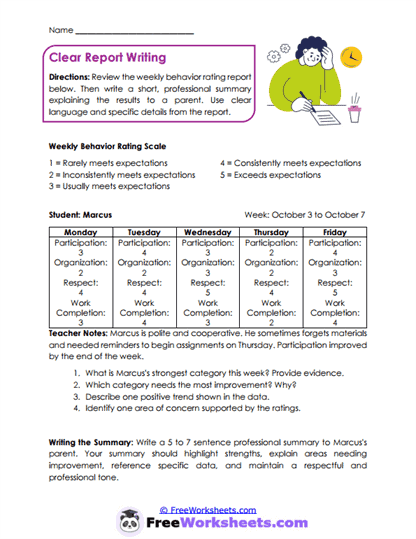
What Kids Do: Students review Marcus’s Monday-through-Friday ratings for participation, organization, respect, and work completion. They identify strengths, concerns, and positive trends before writing a balanced five- to seven-sentence report for a parent.
Target Skill: Learners turn behavior data into clear, respectful communication. The activity develops evidence-based writing and teaches students to include strengths, needs, changes, and useful next steps rather than simply listing scores.
Scale Basics
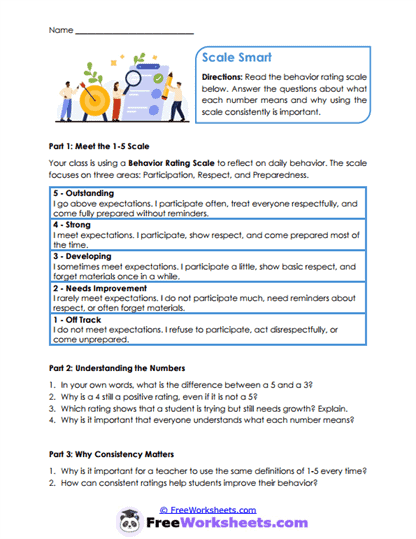
What Kids Do: Students study a five-point behavior scale and explain what each rating means. They compare nearby levels, decide whether a four is still positive, and identify which score represents effort that still requires support.
Target Skill: This introductory worksheet builds consistent scoring habits. Students learn that ratings should reflect shared definitions and evidence rather than whether they like the student or believe anything below the top score is failure.
Scale Vocabulary
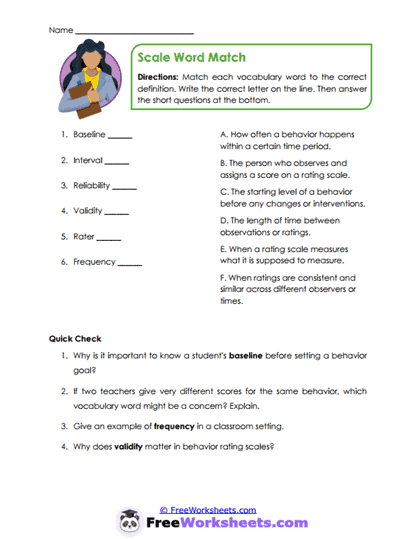
What Kids Do: Students match six behavior-measurement terms with their definitions, including baseline, reliability, validity, rater, frequency, and interval. They then apply the words to classroom examples and rating problems.
Target Skill: This activity develops the language needed to discuss behavior data accurately. Students learn the difference between consistent measurement, accurate measurement, starting information, observation roles, and how often behavior occurs.
Setting Effects
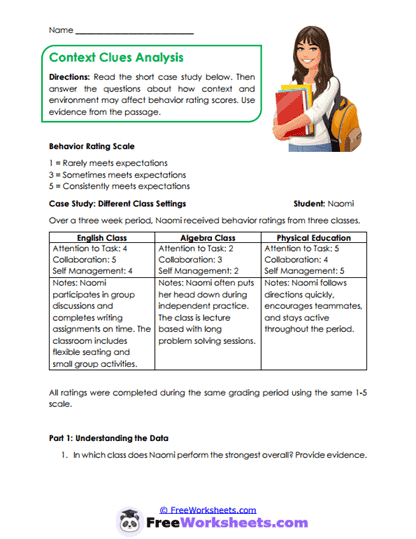
What Kids Do: Students compare Naomi’s attention, collaboration, and self-management ratings across English, algebra, and physical education. They use teacher notes about movement, seating, teamwork, task length, and class structure to explain the differences.
Target Skill: Learners practice interpreting behavior within its environment. The worksheet shows that a student may perform differently across settings and that identifying supportive conditions can guide better planning without excusing the behavior.
Tool Comparison
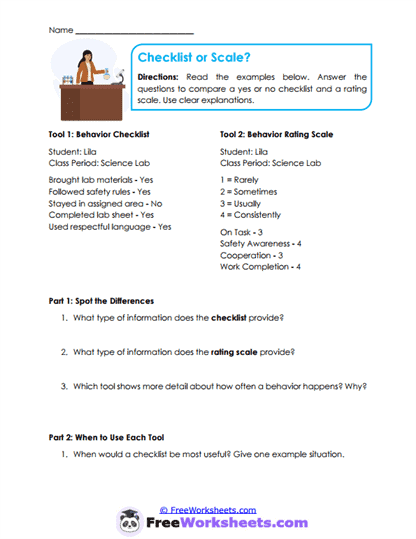
What Kids Do: Students compare a completed yes-or-no checklist with a completed behavior rating scale from the same science-lab setting. They explain what each tool shows and decide when a quick checklist or a detailed scale would be more useful.
Target Skill: This activity teaches students to match the monitoring tool with the question being asked. They learn that checklists show whether an expectation was met, while rating scales can show frequency, consistency, or quality.
Two Perspectives
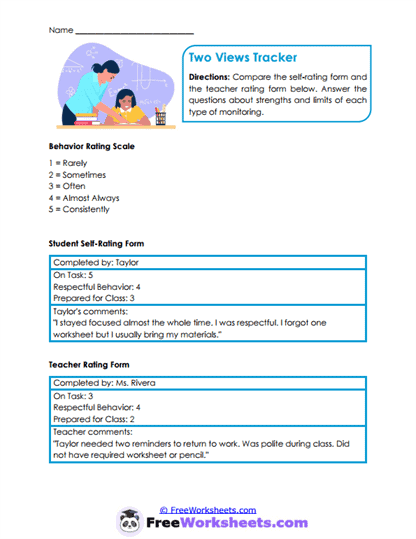
What Kids Do: Students examine Taylor’s self-rating and the teacher’s rating for staying on task, respectful behavior, and preparation. They compare both numbers and comments while considering the strengths and limits of each viewpoint.
Target Skill: Learners understand that no single observer always has the complete picture. The worksheet encourages them to combine personal reflection with outside observation and use written evidence rather than choosing one person as automatically correct.