
About This Worksheet
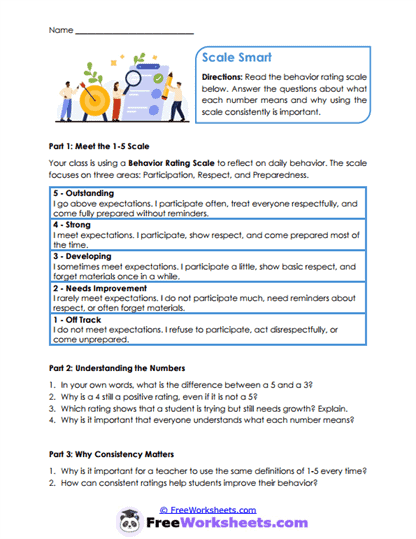
This worksheet introduces students to a five-point behavior rating scale and explains what each number means. It is a good fit for students in grades 5 through 8 who are learning to rate participation, respect, and preparedness in a fair and consistent way. Children compare ratings from outstanding performance to behavior that is off track, then explain how the levels are different. For example, “I had a good day” becomes “I earned a four because I met expectations, participated, and came prepared most of the time.”
Curriculum and Grade Alignment
The main goal is to help students understand that every number on a behavior scale should describe a clear level of performance. Students should already know the basic classroom expectations for respectful behavior, participation, and preparation. The next skill is using the scale honestly to rate real behavior and explain the score with evidence. This worksheet supports CASEL self-awareness, self-management, and responsible decision-making because students learn to judge behavior using shared expectations instead of mood or personal opinion.
Student Tasks
On this worksheet, students will read the meaning of each rating from one through five. They compare nearby scores, including the difference between a three and a four, and explain whether a four is still a positive result. Students also decide which rating shows that a learner is trying but still needs support. The final questions ask why teachers should use the same definitions each time and how steady ratings can help students improve.
Common Challenges and Misconceptions
Some students may believe that anything below a five is a poor score. Others may focus on only one part of the description and ignore participation, respect, or preparedness. Children can also choose ratings based on whether they like the student instead of the behavior shown. Teachers can help by reviewing one example for every number and asking students to point to the exact words that support each choice.
Implementation Guidance
Teachers can use this worksheet before introducing a classroom behavior scale or student self-rating routine. It works well as a whole-class lesson because students can discuss how the numbers should be understood by everyone. Parents and homeschool educators can use the page to create a shared rating system for lessons, routines, or responsibilities at home. Adults should keep the definitions visible whenever the scale is used so ratings remain steady and fair.
Details and Features
The worksheet presents all five rating levels inside one clearly organized chart. Each level includes specific descriptions of participation, respectful behavior, preparation, and meeting expectations. Two groups of questions check students’ understanding of both the numbers and the need for consistency. The page provides a strong starting point before students begin rating their own behavior or reviewing someone else’s data.