
Behavior Checklist Worksheets
These K-12 classroom behavior management worksheets help students notice their choices, reflect honestly, and work toward realistic improvement goals. Every activity is Free, Ready-to-print, available in PDF format, and designed for Immediate classroom use. Students strengthen skills in self-monitoring, organization, respectful communication, emotional control, and responsible decision-making.
About This Collection of Worksheets
This collection gives students clear and manageable ways to review the behaviors that help a classroom run smoothly. Learners track focus, participation, transitions, homework routines, technology use, teamwork, and respectful speaking. Instead of simply being told to “behave better,” students see the exact actions they are working on and identify one practical next step.
The worksheets use daily checklists, weekly rating scales, behavior tallies, self-reflection questions, and personal goal-setting prompts. Students examine how often they follow directions, use learning time wisely, bring needed materials, communicate respectfully, and manage strong emotions. Several pages also help children notice what went well so behavior monitoring does not become focused only on mistakes.
These printable resources can support whole-class routines, individual behavior plans, student conferences, home-school communication, counseling sessions, and homeschool learning. The collection connects closely with CASEL competencies involving self-awareness, self-management, social awareness, relationship skills, and responsible decision-making. Since the activities cover a broad range of ages and classroom needs, adults can choose the page that best matches the student’s grade, independence, and current goal.
Paul’s Teacher Tip
Begin each review by naming one behavior the student handled well. Honest reflection is more likely when children know the checklist is a learning tool rather than a punishment. Keep goals small and specific, such as beginning work within two minutes or waiting for a classmate to finish speaking. Avoid trying to correct every behavior at once, since one clear goal is easier to remember and practice. When possible, let the student help choose the strategy so the plan feels supportive rather than imposed.
Worksheet Collection Skill Spotlights
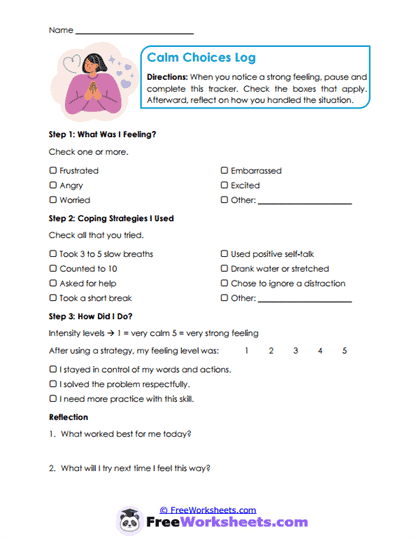
Calm Responses
What Kids Do: Students identify a strong emotion, check which coping tools they tried, and rate how intense the feeling remains. They then reflect on whether their response was safe and respectful and choose one strategy to use during a similar moment.
Target Skill: This activity develops emotional awareness, self-management, and practical coping. Students learn that a strategy does not need to erase a feeling completely; it only needs to help them regain enough control to make a safer choice.
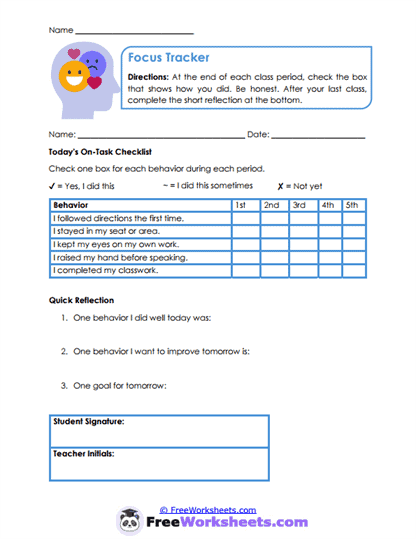
Focus Check
What Kids Do: Students review five classroom behaviors after each class period, including following directions, staying in their area, looking at their work, raising a hand, and completing assignments. They finish by naming one success and setting a goal.
Target Skill: Learners build daily self-monitoring and personal responsibility. The worksheet helps them view behavior as a group of specific choices that can be noticed and improved rather than as a fixed label about who they are.
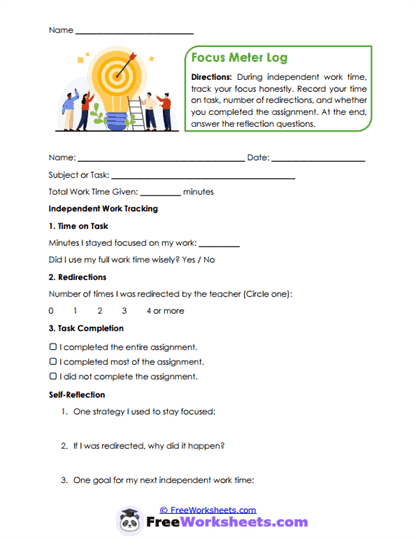
Focus Meter
What Kids Do: Students record the task, available work time, focused minutes, teacher redirections, and amount of work completed. They identify which strategy helped, why they became distracted, and what they will try during the next independent work period.
Target Skill: This page connects attention with work completion and helps students recognize their own focus patterns. Learners examine effort, redirection, pacing, and strategy use instead of judging success only by whether they finished.
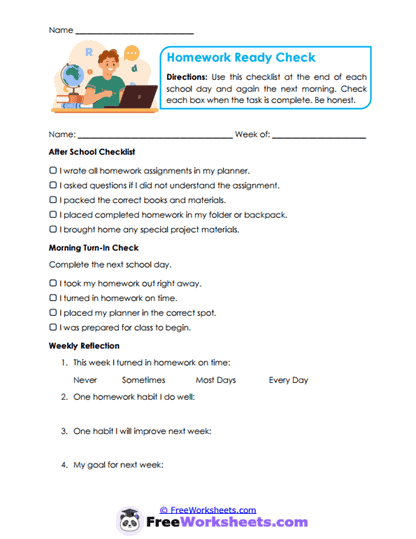
Homework Habits
What Kids Do: Students check the steps they complete before leaving school and after returning the next morning. They review assignment recording, packing, folder use, material preparation, timely submission, and readiness to begin class.
Target Skill: Students develop dependable homework routines and organizational independence. The activity shows that responsibility includes recording, completing, packing, transporting, and submitting work rather than merely finishing it at home.
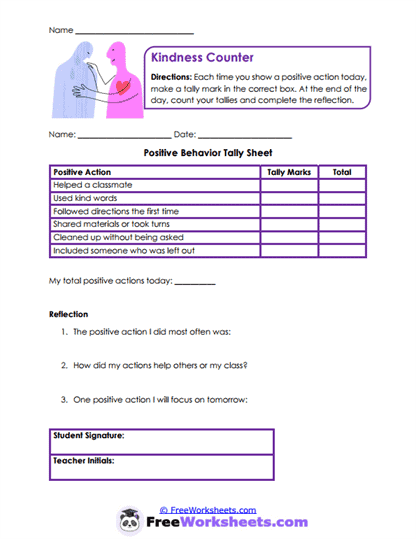
Kindness Count
What Kids Do: Students add tally marks whenever they help, share, clean up, follow directions, include someone, or use kind words. At the end of the day, they total their actions and explain how one choice helped another person.
Target Skill: This activity increases awareness of positive behavior and its effect on the classroom community. Students learn that everyday kindness can be practiced intentionally without turning the tally total into a competition.
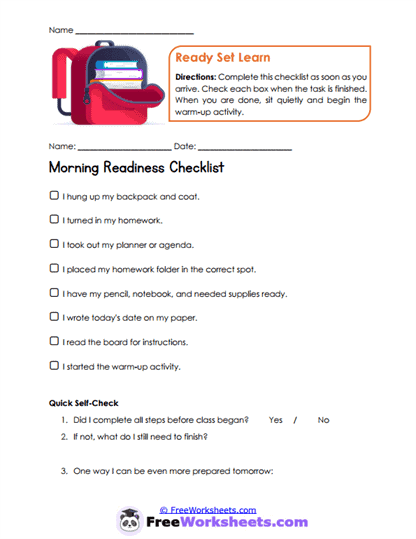
Morning Readiness
What Kids Do: Students move through eight arrival tasks, including unpacking, turning in work, organizing folders, preparing supplies, checking the board, and starting the warm-up. They then identify any delay and plan a smoother morning.
Target Skill: Learners practice organization, time management, and independent routine-following. The checklist helps adults identify the exact step that is being forgotten rather than describing the child broadly as unprepared.
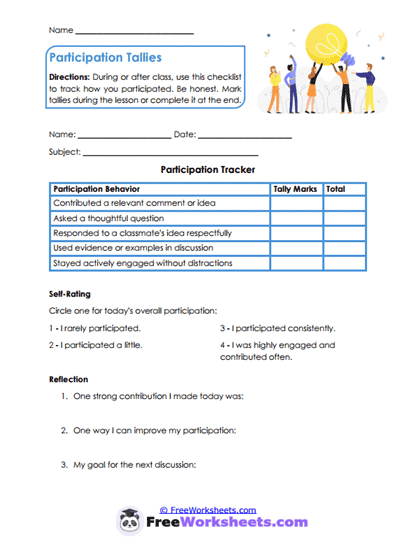
Participation Tracker
What Kids Do: Students tally meaningful class contributions such as relevant comments, thoughtful questions, respectful responses, supporting evidence, and active attention. They rate their overall participation and set one discussion goal.
Target Skill: This worksheet expands the meaning of participation beyond speaking often. Students learn that listening, asking useful questions, using evidence, and staying engaged can be just as valuable as volunteering an answer.
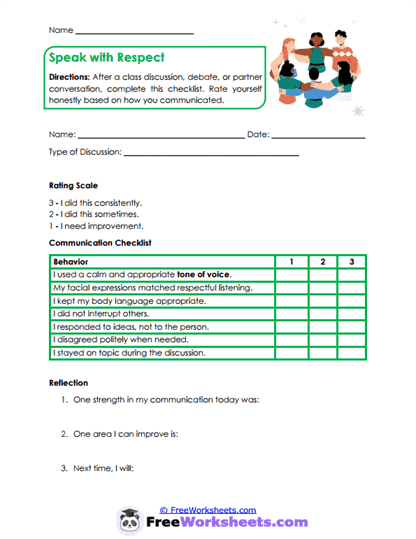
Respectful Speaking
What Kids Do: Students rate their words, tone, facial expressions, body language, listening, responses to other ideas, and ability to stay on topic. They identify one communication strength and one habit to improve.
Target Skill: Learners analyze the full message they send during conversations. The activity helps them understand that respectful communication includes how they listen and respond, not simply whether they avoid obviously rude words.
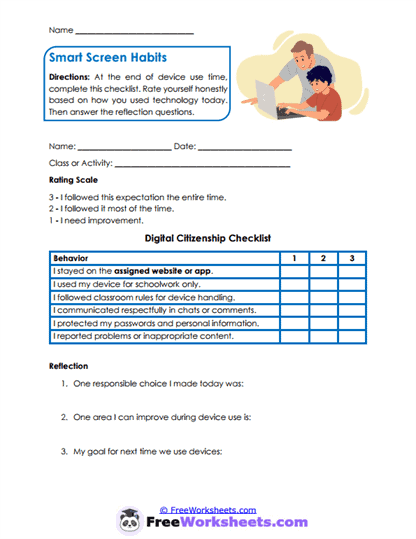
Screen Choices
What Kids Do: Students review six technology behaviors involving staying on the assigned site, completing schoolwork, handling devices correctly, communicating respectfully, protecting passwords, and reporting unsafe content. They then set a digital-use goal.
Target Skill: This page develops digital responsibility, privacy awareness, and independent decision-making. Students learn that appropriate technology use includes both staying on task and protecting themselves and others online.
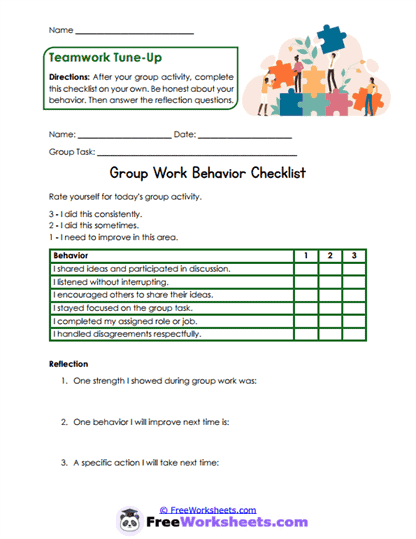
Teamwork Skills
What Kids Do: Students rate how well they shared ideas, listened, encouraged classmates, stayed focused, completed their role, and handled disagreements during group work. They describe a strength and select one concrete action for next time.
Target Skill: Learners see that successful teamwork involves more than completing one assigned part. The worksheet develops listening, cooperation, respectful disagreement, shared responsibility, and awareness of how personal choices affect the whole group.
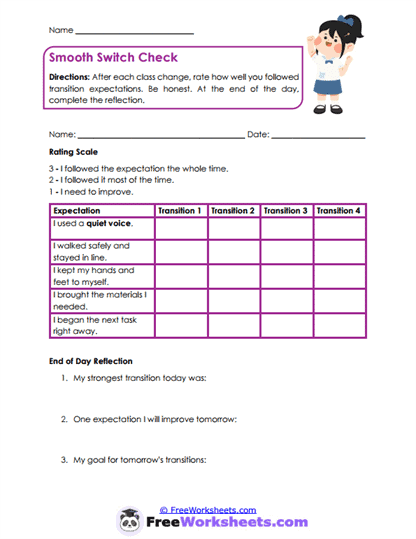
Transition Control
What Kids Do: Students rate five expected behaviors across four classroom transitions. They review voice level, safe walking, personal space, materials, and how quickly they begin the next task before choosing one transition goal.
Target Skill: This activity helps students manage their bodies, belongings, attention, and time during changing routines. It also makes clear that a successful transition includes arriving prepared and beginning promptly, not only moving quietly.
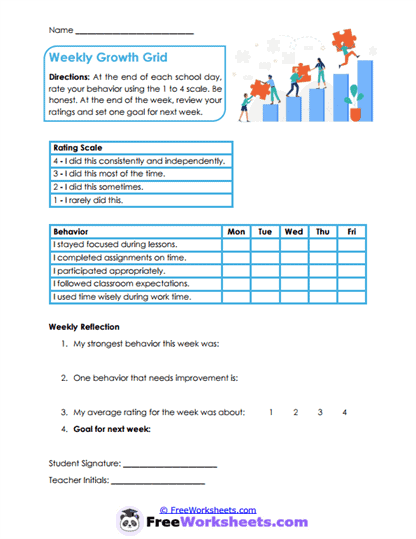
Weekly Growth
What Kids Do: Students rate five learning behaviors from Monday through Friday using a four-point scale. At the end of the week, they identify their strongest habit, notice a pattern that needs work, and create one goal for the next week.
Target Skill: Students practice looking at behavior across several days instead of judging themselves by one good or difficult moment. The page develops self-awareness, pattern recognition, goal-setting, and a healthier view of gradual growth.