
About This Worksheet
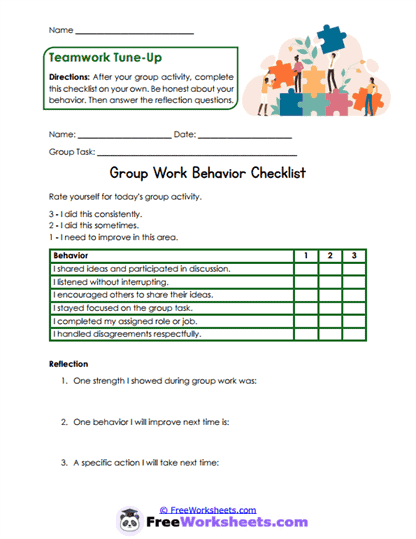
This worksheet is a group-work behavior checklist that helps students think about how they acted while working with classmates. It is best for students in grades 3 through 6 who are learning how to cooperate, listen, share ideas, and complete a group responsibility. Students rate themselves on six teamwork behaviors and then explain what went well and what they want to improve. For example, “I talked over my group” becomes “I will wait until my classmate finishes before I respond.”
Curriculum and Grade Alignment
The main goal is to help students understand that successful group work depends on more than finishing the assignment. Children should already know basic rules for taking turns, listening, and speaking respectfully. The next step is learning how to use those skills during longer projects, discussions, and problem-solving tasks. This worksheet connects with the CASEL skills of relationship building, responsible decision-making, and self-management because students review how their choices affected the whole group.
Student Tasks
On this worksheet, students will rate their behavior after taking part in a group activity. They decide whether they shared ideas, listened without interrupting, encouraged others, stayed focused, completed their role, and handled disagreements respectfully. Each behavior is scored with a one, two, or three based on how often the student showed it. Students then describe one teamwork strength, choose one behavior to improve, and write a specific action they will try next time.
Common Challenges and Misconceptions
Some students may believe they were good team members simply because they completed their own part of the task. Others may confuse being a leader with controlling the discussion or making every decision. Quiet students may give themselves a low rating even when they listened carefully and supported the group in useful ways. Teachers can help by explaining that teamwork includes speaking, listening, encouraging, helping, and solving problems calmly.
Implementation Guidance
Teachers can use this worksheet after a science project, partner activity, classroom discussion, or cooperative learning task. It works especially well when students complete it before the teacher gives feedback because it encourages honest self-reflection. Parents and homeschool educators can use the page after sibling projects, learning games, or shared household tasks. Adults should discuss one strong behavior first and then help the child choose one small improvement for the next group activity.
Details and Features
The page includes a simple three-point rating scale that students can understand quickly. Six clear teamwork behaviors appear in a chart with spaces for students to record their ratings. The reflection section moves students from general thoughts to one specific action they can use in the future. The one-page printable design makes the worksheet easy to use after many different kinds of group activities.