
Behavior Progress Monitoring Worksheets
These K-12 behavior progress monitoring worksheets help students review progress, recognize useful supports, and make thoughtful plans for continued improvement. Every activity is Free, Ready-to-print, available in PDF format, and designed for Immediate classroom use. Students strengthen skills in self-awareness, self-management, goal setting, reflection, and responsible decision-making.
About This Collection of Worksheets
This collection helps students understand that behavior growth happens through repeated practice rather than one perfect day. Learners track goals, compare daily ratings, count positive choices, and study how behavior changes across a week. The worksheets encourage children to use clear examples and simple evidence instead of relying on broad statements such as “I did better.”
The activities include weekly checklists, beginning-and-end comparisons, positive-choice tallies, rating scales, reward trackers, goal reviews, and personal reflections. Students identify successful days, examine challenges, recognize support from others, and decide whether a goal should continue, change, or become more specific. Several pages also guide learners in connecting improvement with the exact strategy, reminder, or choice that made success possible.
These printable behavior resources work well during classroom check-ins, counseling sessions, progress conferences, individual support plans, advisory periods, and home-school communication. The collection supports CASEL competencies involving self-awareness, self-management, relationship skills, and responsible decision-making. Since the worksheets range from simple yes-or-not-yet tracking to more detailed weekly planning, adults can select pages that match each student’s grade, independence, and current behavior goal.
Paul’s Teacher Tip
Keep each behavior goal small enough for the student to understand and practice every day. A target such as following directions during reading group is easier to monitor than a broad goal like behaving better. Review progress with the student calmly and connect ratings or totals with real examples. When a goal is not working, adjust the plan instead of treating the result as failure. Celebrate the strategy and effort behind improvement so the student understands how to repeat the success.
Worksheet Collection Skill Spotlights
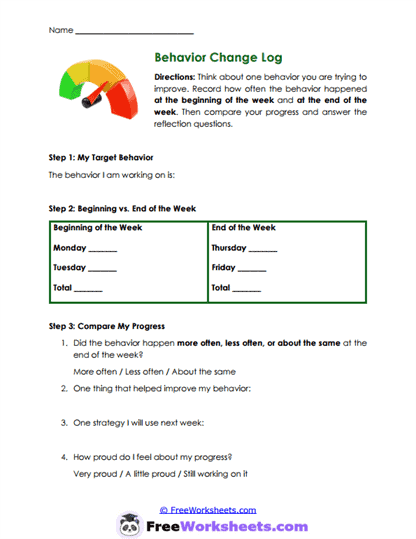
Change Check
What Kids Do: Students choose one target behavior and compare totals from Monday and Tuesday with totals from Thursday and Friday. They determine whether the behavior increased, decreased, or stayed similar and identify what may have helped.
Target Skill: This activity develops simple progress comparison and evidence-based reflection. Students learn that a lower number only shows improvement when the target is a behavior they are trying to reduce, while positive behaviors may need to increase.
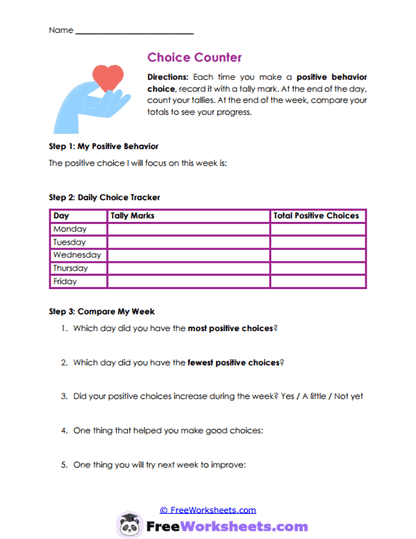
Choice Counts
What Kids Do: Students choose one positive behavior and record daily tally marks from Monday through Friday. They compare totals, identify the highest and lowest days, describe the weekly direction, and choose one action for continued growth.
Target Skill: Learners use frequency data to recognize whether a helpful behavior is becoming more common. The worksheet directs attention toward successful choices and the reminders, settings, or supports that helped those choices happen.
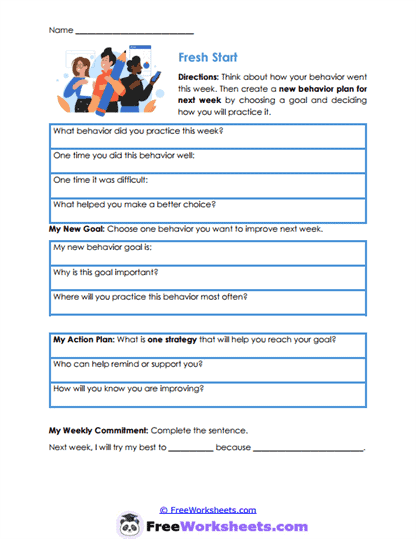
Fresh Plan
What Kids Do: Students review one success, one difficult moment, and one helpful support from the past week. They then create a new goal with a practice setting, strategy, support person, progress sign, and personal commitment.
Target Skill: This page turns reflection into a practical action plan. Students learn to use what happened previously to create a measurable goal instead of making a broad promise that offers no clear way to judge progress.
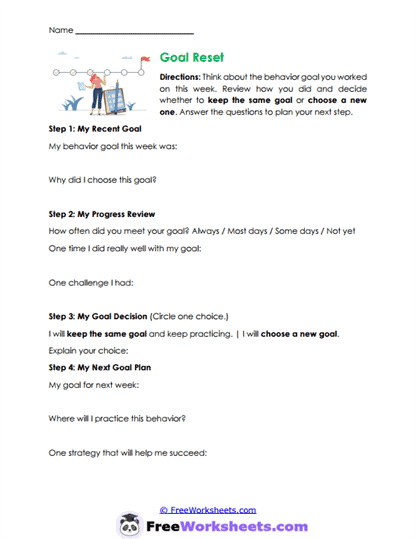
Goal Reset
What Kids Do: Students examine a recent behavior goal, explain why they selected it, and rate how often they met it. They identify one success and one challenge before deciding whether to keep, adjust, or replace the goal.
Target Skill: Learners understand that changing a goal is a normal part of improvement rather than proof of failure. The activity develops honest evaluation and helps students connect the next goal with a specific setting and useful strategy.
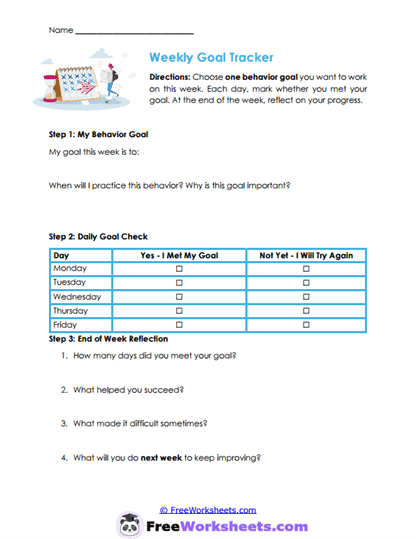
Goal Review
What Kids Do: Students write one weekly behavior goal, explain why it matters, and identify when they will practice it. They complete a daily yes-or-not-yet check and reflect on success, barriers, support, and next week’s plan.
Target Skill: This worksheet develops consistent goal monitoring and responsible planning. Students learn that not yet means the behavior is still being practiced and that daily examples make the end-of-week review more accurate.
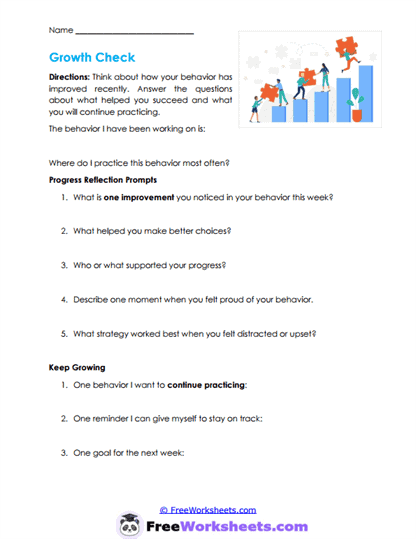
Growth Reflection
What Kids Do: Students identify a behavior they have practiced and describe a specific improvement. They explain what helped, who supported them, when they felt proud, and which successful strategy they want to continue using.
Target Skill: Learners connect behavior growth with personal choices, reminders, and relationships. The page encourages students to recognize genuine progress without expecting perfection and to turn that success into one clear future goal.
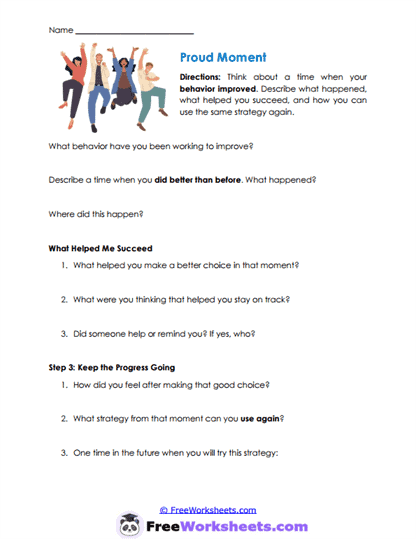
Proud Progress
What Kids Do: Students describe one time they handled a familiar behavior challenge better than before. They examine what they did differently, which thoughts or reminders helped, how support affected the outcome, and when the strategy may be useful again.
Target Skill: This activity helps students study the reason behind a successful choice. Learners discover that progress still counts when someone offered support and that effective strategies can be practiced in other settings.
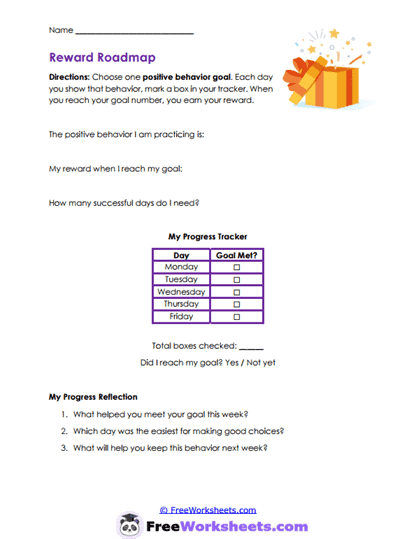
Reward Path
What Kids Do: Students choose one positive behavior, select a reasonable reward, and decide how many successful days are needed. They check progress from Monday through Friday and reflect on the hardest day and the support that helped.
Target Skill: This worksheet develops delayed gratification and consistent effort. Students connect the reward with one clearly defined behavior while learning that the habit should continue even after the weekly reward has been earned.
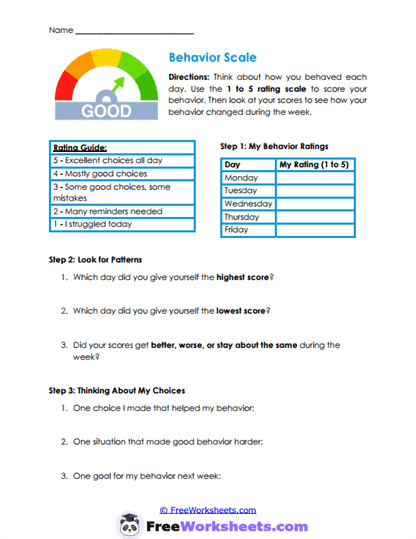
Score Patterns
What Kids Do: Students rate each school day on a five-point scale, then identify the highest and lowest scores and describe the overall pattern. They connect the numbers with helpful choices, difficult situations, and one goal for next week.
Target Skill: Learners practice using rating scales with evidence rather than choosing a number based on one short event. The worksheet supports pattern recognition and helps students identify which situations or choices influenced the weekly change.
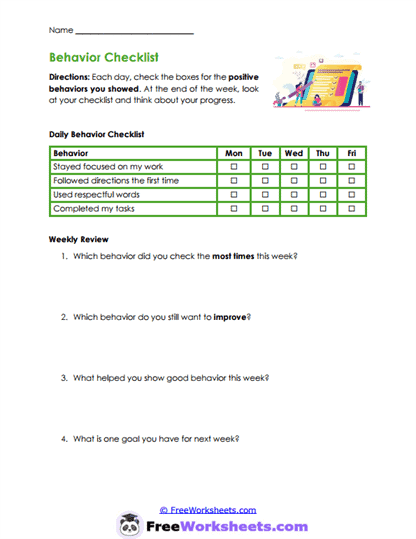
Weekly Checklist
What Kids Do: Students monitor focus, direction following, respectful language, and task completion from Monday through Friday. They review which habit appeared most consistently, which still needs work, and what supported their strongest choices.
Target Skill: This activity helps students notice consistency across several classroom expectations. The checklist turns broad behavior feedback into four observable habits and guides the learner toward one manageable goal instead of many corrections.
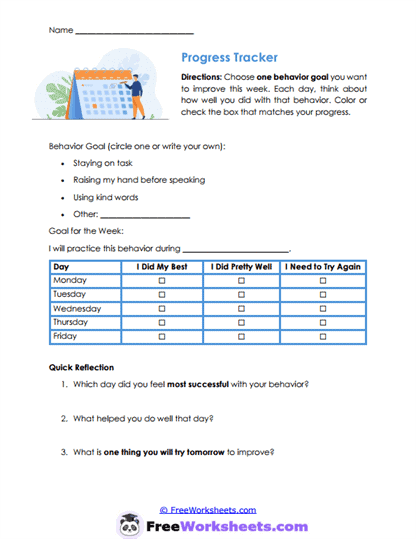
Weekly Progress
What Kids Do: Students choose one behavior goal and rate their effort each school day using three simple choices. At the end of the week, they identify their most successful day, explain what helped, and plan one next action.
Target Skill: This page builds early progress monitoring and a growth-focused view of behavior. Students learn that repeated practice matters more than perfect results and that honest ratings reveal which supports should continue.
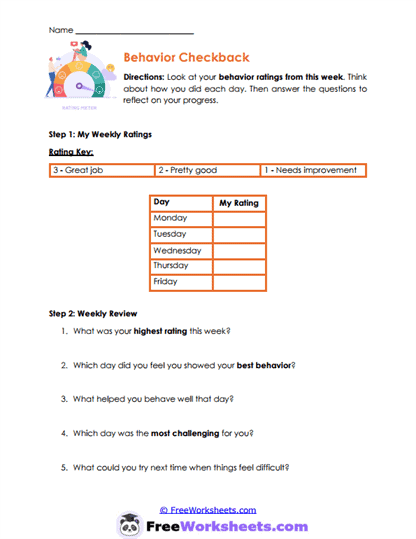
Weekly Ratings
What Kids Do: Students record a one, two, or three for each school day and then compare all five ratings. They identify their strongest and most difficult days, explain what influenced those results, and prepare a response for a similar challenge.
Target Skill: Learners examine behavior across the full week instead of judging progress from one moment. The activity strengthens self-awareness and encourages students to repeat strategies that worked during stronger days.