
Behaviors Frequency Tracking Worksheets
These K-12 behavior frequency tracking worksheets help students count specific actions, compare results, and make practical behavior changes. Every activity is Free, Ready-to-print, available in PDF format, and designed for Immediate classroom use. Students strengthen skills in self-monitoring, pattern recognition, respectful participation, goal setting, and responsible decision-making.
About This Collection of Worksheets
This collection teaches students how to replace broad behavior descriptions with clear frequency data. Instead of saying they interrupted often, listened well, or showed kindness several times, learners use tally marks and totals to record what actually happened. This makes it easier for students and adults to discuss behavior calmly and choose support based on evidence.
The worksheets cover hand raising, listening, participation, kindness, classroom rules, positive choices, interruptions, and personal behavior goals. Students track one behavior during a lesson, compare two behaviors at the same time, or review frequency across several periods and school days. Reflection questions help them move beyond the number by considering what supported success, when a challenge occurred, and what strategy may help next.
These printable behavior resources work well during classroom lessons, counseling groups, individual support plans, behavior conferences, homeschool routines, and positive reinforcement programs. The collection supports CASEL competencies involving self-awareness, self-management, social awareness, relationship skills, and responsible decision-making. Since the activities range from one simple tally box to weekly pattern analysis, adults can choose a worksheet that matches each learner’s age, tracking ability, and current goal.

Paul’s Teacher Tip
Choose a target behavior that can be clearly seen or heard before asking a student to count it. A goal such as “be more respectful” is too broad, while “wait until another person finishes speaking” can be tracked fairly. Explain exactly when one tally should be added so the same action is not counted several times. Keep the tone calm when reviewing totals, especially when the number is higher or lower than expected. The purpose is to learn from the pattern and choose one useful next step, not to reward perfect numbers or punish an honest result.
Worksheet Collection Skill Spotlights
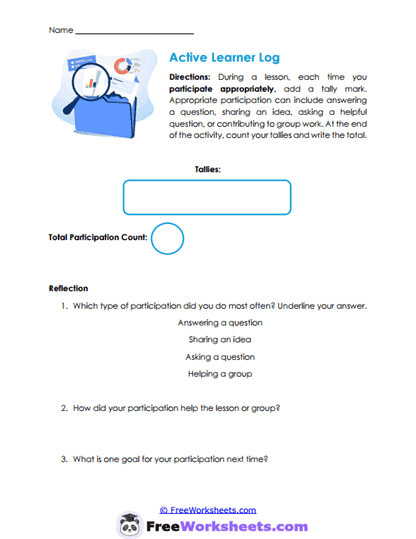
Active Participation
What Kids Do: Students add a tally each time they participate appropriately by answering, asking a question, sharing an idea, or helping their group. They total the contributions, identify which type they used most often, and set one goal for the next lesson.
Target Skill: This activity broadens students’ understanding of classroom participation. Learners practice recognizing contributions that support the lesson while separating useful involvement from interruptions, off-topic comments, or speaking simply to increase the total.
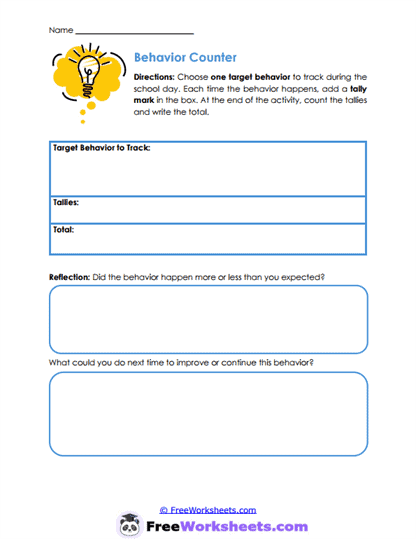
Behavior Count
What Kids Do: Students choose one clearly defined behavior and add a tally every time it happens during a lesson, activity, or part of the day. They count the final total and compare the result with what they expected.
Target Skill: This introductory page builds accurate frequency tracking and honest self-reflection. Students learn that observable actions can be counted and that the resulting number provides information for improvement rather than a judgment about personal worth.
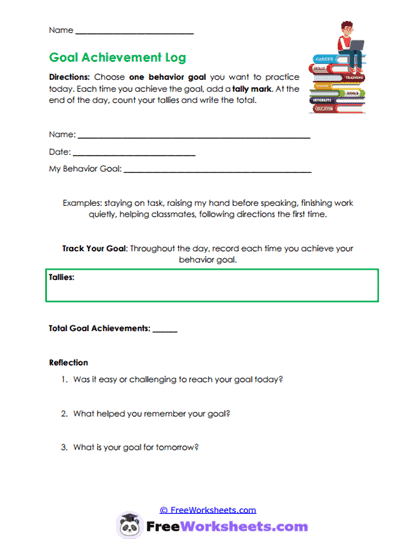
Goal Counts
What Kids Do: Students select one positive behavior goal, such as following directions the first time or raising a hand before speaking. They tally every successful example, total the day, and reflect on difficulty, reminders, and tomorrow’s goal.
Target Skill: Learners turn a broad goal into a specific and countable action. The worksheet develops self-management and helps students decide whether to continue the same goal, adjust it, or make it more challenging.
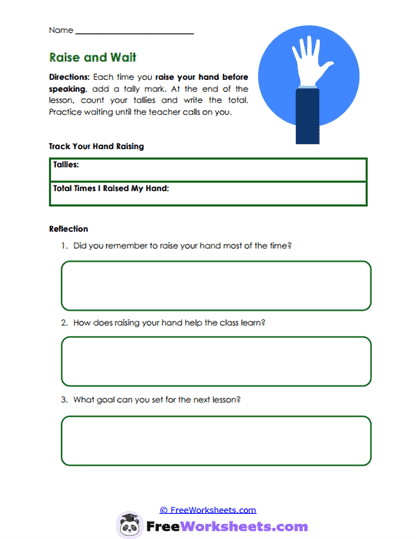
Hand Raising
What Kids Do: Students record one tally every time they raise their hand before speaking during a lesson. They total the marks, reflect on how consistently they remembered, explain why turn-taking helps the class, and create a future participation goal.
Target Skill: This activity develops patience, body control, and respectful participation. Students learn that raising a hand does not guarantee being called on but does support fair turn-taking and calmer classroom discussion.
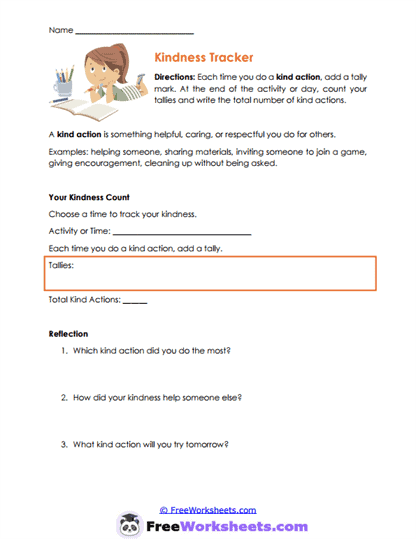
Kindness Tally
What Kids Do: Students select a school activity or part of the day and tally each caring action they complete. They identify the kindness behavior used most often, explain how one choice helped another person, and choose a new caring action to practice.
Target Skill: Learners see kindness as a collection of specific actions, including helping, sharing, encouraging, including, and cleaning up. The page keeps attention on the effect of those choices instead of treating the final tally as a competition.
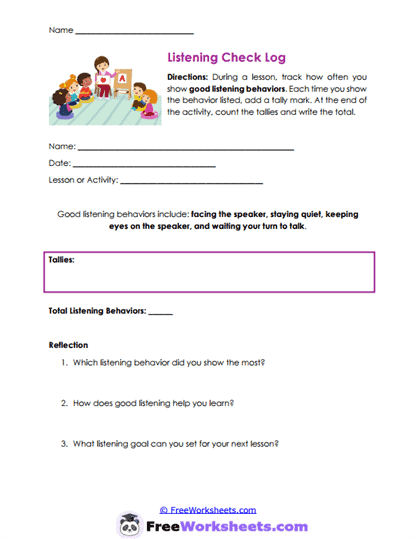
Listening Tally
What Kids Do: Students tally visible listening behaviors such as facing the speaker, staying quiet, watching, and waiting for a turn. They record a final total, identify their strongest listening habit, and select one listening goal for the next activity.
Target Skill: This worksheet makes careful listening easier to understand by describing what it can look like. Students learn that silence alone does not always mean attention and that listening supports learning, trust, and respectful communication.
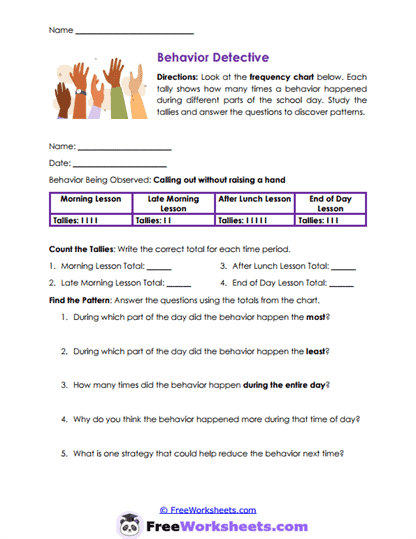
Pattern Detective
What Kids Do: Students count completed tally marks for calling out across four lesson periods. They calculate the separate totals and full-day frequency, identify the highest and lowest periods, and suggest one possible cause and one helpful strategy.
Target Skill: Learners move from counting behavior to analyzing when it occurs. The activity teaches them to separate what the data clearly proves from possible explanations that still need more information.
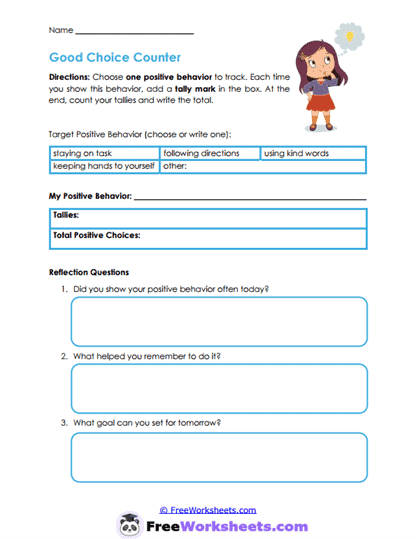
Positive Choices
What Kids Do: Students choose one positive action, such as staying focused, following directions, using kind words, or keeping hands to themselves. They tally every success, total the behavior, and reflect on what helped them remember.
Target Skill: This page directs attention toward behavior students want to increase rather than only tracking mistakes. Learners recognize useful supports and create a clear next-day goal based on honest frequency data.
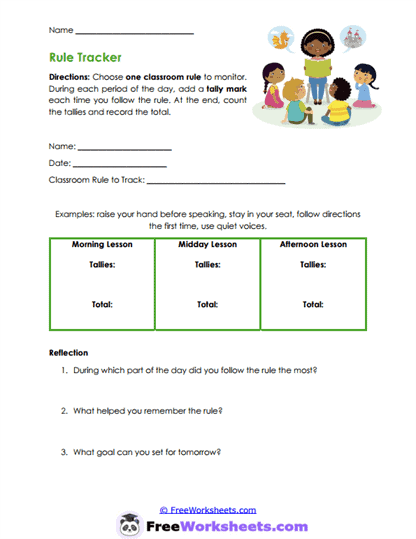
Rule Tracking
What Kids Do: Students select one classroom rule and tally each successful example during morning, midday, and afternoon lessons. They compare the three totals, identify the strongest period, and describe what helped them follow the rule.
Target Skill: Students learn that the same behavior may be easier or harder depending on the time, setting, or activity. The worksheet supports pattern recognition while reminding learners to consider differences in lesson length and structure.
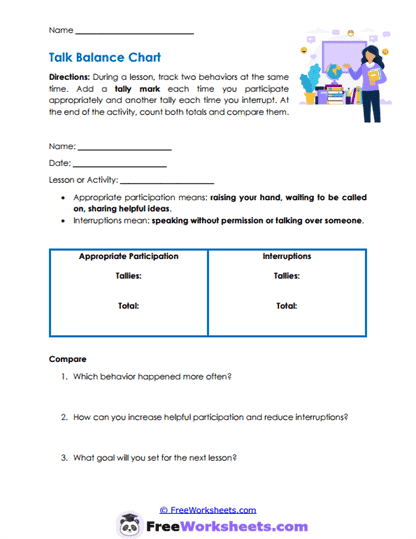
Talk Balance
What Kids Do: Students tally appropriate participation in one section and interruptions in another during the same lesson. They compare both totals, explain which behavior occurred more often, and plan how to increase helpful speaking while reducing talking out of turn.
Target Skill: This activity teaches that the goal is balanced communication rather than silence. Students practice distinguishing respectful contributions from interruptions and choosing a realistic waiting or hand-raising strategy.
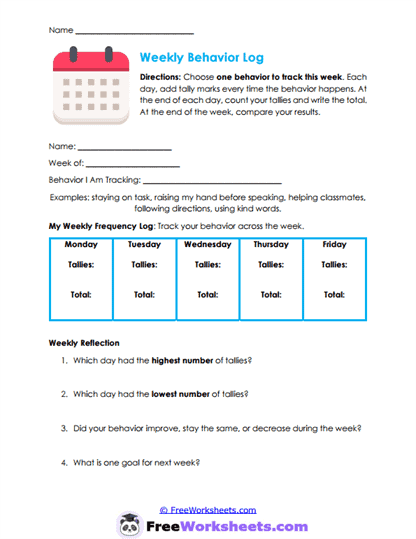
Weekly Patterns
What Kids Do: Students track the same behavior from Monday through Friday using separate tally boxes and daily totals. At week’s end, they identify the highest and lowest days, describe the overall direction, and create a data-based goal.
Target Skill: Learners use several days of information to recognize a pattern that one isolated result may not reveal. They also learn to mark whether a positive behavior should increase or a challenging behavior should decrease before judging progress.
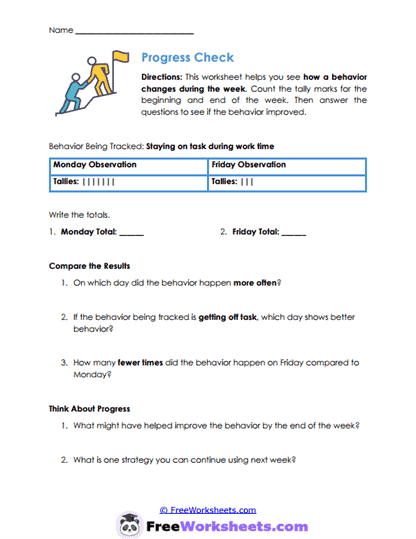
Weekly Progress
What Kids Do: Students compare completed Monday and Friday tally charts for off-task behavior. They calculate both totals, find the amount of change, describe whether improvement occurred, and identify a possible support worth continuing.
Target Skill: This page introduces simple before-and-after progress monitoring. Students practice subtracting frequency totals correctly while recognizing that the data shows what changed but may not prove exactly why it changed.