
Daily Behavior Charts Worksheets
These K-12 daily behavior charts help students notice daily choices, celebrate progress, and practice one clear behavior goal at a time. Every activity is Free, Ready-to-print, available in PDF format, and designed for Immediate classroom use. Students strengthen skills in self-awareness, self-management, respectful communication, responsibility, and goal setting.
About This Collection of Worksheets
This collection gives students simple and encouraging ways to review their behavior throughout the school day. Learners track listening, direction following, focus, kindness, preparation, participation, safe body choices, and classroom-rule use. The charts turn broad ideas such as “having a good day” into specific actions children can recognize and practice.
The worksheets include stars, stickers, facial symbols, color ratings, yes-or-not-yet choices, goal checks, rule lists, and short end-of-day reflections. Students compare morning and afternoon behavior, examine choices across subjects, count positive actions, and select one skill to improve tomorrow. Many of the charts give children several chances to reset so one difficult activity does not define the entire day.
These printable resources work well during classroom check-ins, individual behavior plans, dismissal routines, home-school communication, homeschool lessons, and positive reinforcement programs. The collection supports CASEL competencies involving self-awareness, self-management, social awareness, relationship skills, and responsible decision-making. Since the pages use clear visuals and short reflections, they are especially approachable for younger learners while remaining useful as simple supports across the K-12 range.
Paul’s Teacher Tip
Connect every star, sticker, check, or color with the exact behavior the student showed. This helps children understand that the symbol is feedback, not simply a prize. Avoid taking away marks that were already earned, since the chart should show an honest picture of progress across the day. When a box remains blank or receives a lower rating, describe it as a skill that still needs practice rather than a failure. Finish each review by celebrating one success and choosing only one realistic goal for tomorrow.
Worksheet Collection Skill Spotlights
Behavior Colors
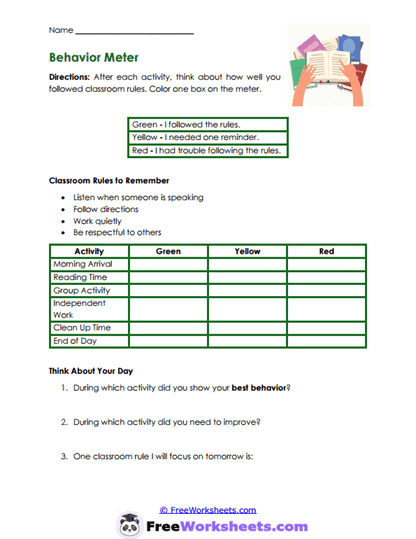
What Kids Do: Students color a green, yellow, or red box after six daily activities, including arrival, reading, group work, independent work, cleanup, and dismissal. They identify their easiest and hardest settings and choose one classroom rule to practice tomorrow.
Target Skill: This visual activity builds self-monitoring and pattern recognition. Students learn to connect behavior with a particular setting while understanding that yellow or red signals a need for support, not a judgment about who they are.
Class Choices
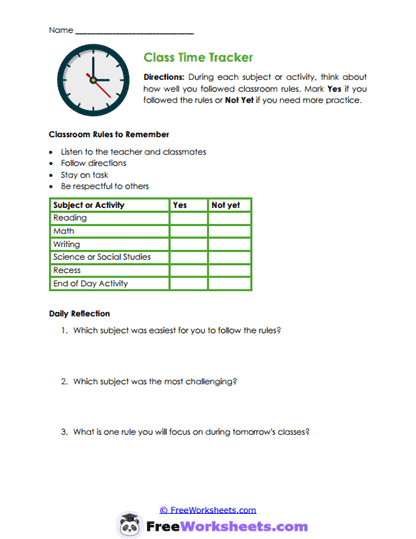
What Kids Do: Students mark yes or not yet after reading, math, writing, science or social studies, recess, and the end of the day. They consider listening, following directions, focus, and respect during each activity.
Target Skill: Learners notice that behavior may change across subjects and levels of structure. The worksheet helps them identify one successful setting and think about how the same helpful choices could be carried into a more difficult class.
Daily Check
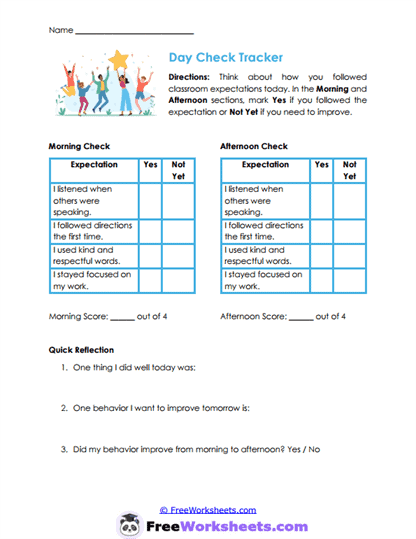
What Kids Do: Students review four classroom expectations during the morning and again during the afternoon. They calculate a score out of four for each half of the day, name a strength, and decide whether their behavior improved.
Target Skill: This page teaches students that behavior can reset and improve during the same day. The phrase not yet supports a growth-focused view in which a developing skill can be practiced again rather than treated as a permanent failure.
Day Reflection
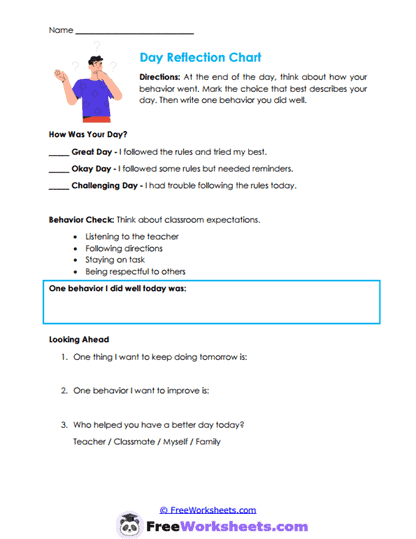
What Kids Do: Students choose whether the day felt great, okay, or challenging, then describe one behavior they handled well. They identify one habit to continue, one skill to improve, and someone who helped them.
Target Skill: This activity develops balanced reflection and help-seeking awareness. Students learn to consider the full day, recognize support from others, and avoid judging themselves entirely by one difficult moment.
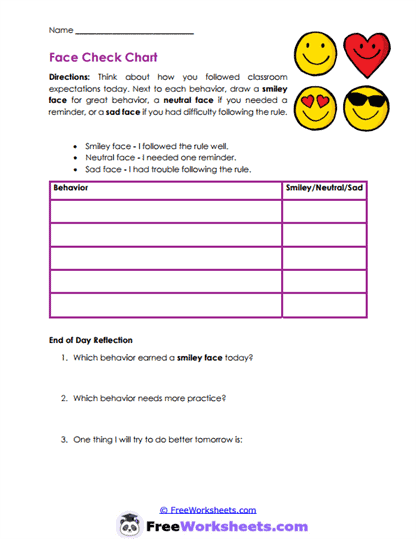
Face Feedback
What Kids Do: Students rate classroom behaviors using smiley, neutral, or sad facial symbols. They explain one successful rating, identify one behavior that needs more practice, and choose a next-day improvement.
Target Skill: This visual scale helps younger learners connect familiar symbols with levels of behavior success. Students also learn that a face describes one choice or period and does not label the whole child as good or bad.
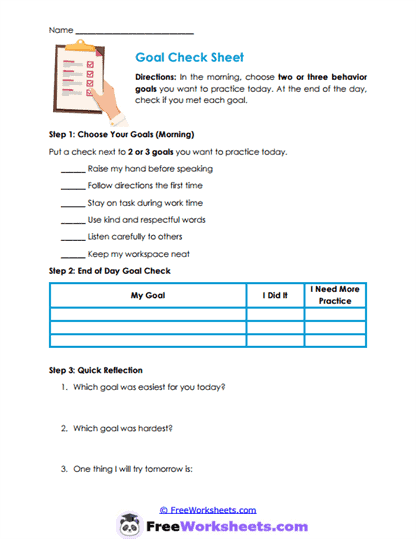
Goal Check
What Kids Do: Students choose two or three classroom behaviors to practice, such as raising a hand, following directions, listening, staying focused, or using respectful words. At day’s end, they review each goal and plan one action for tomorrow.
Target Skill: Learners practice selecting a small number of clear goals instead of trying to change everything at once. The worksheet develops planning, self-review, and the ability to connect a goal with one practical action.
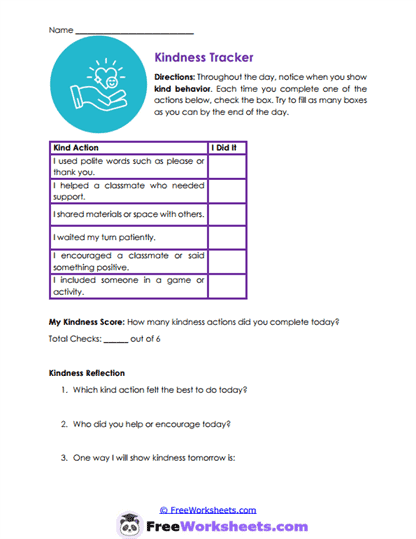
Kindness Count
What Kids Do: Students check whether they used polite words, helped someone, shared, waited patiently, encouraged another person, and included someone during the day. They total the actions and reflect on whom they supported.
Target Skill: This page turns kindness into observable and repeatable behavior. Students focus on the effect of their choices rather than treating the final score as a competition or counting an action they only intended to complete.
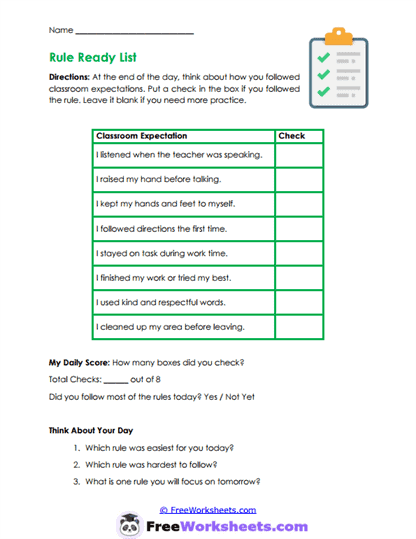
Rule Check
What Kids Do: Students review eight classroom expectations involving listening, hand raising, safe body behavior, directions, focus, work completion, respectful words, and cleanup. They total the checks and choose one rule for tomorrow.
Target Skill: Learners connect classroom rules with specific actions they can control. The checklist helps children identify the exact expectation needing practice instead of receiving a broad reminder to behave better.
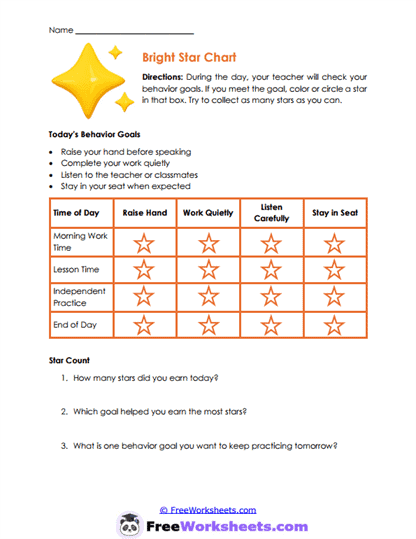
Star Goals
What Kids Do: Students work toward stars for raising a hand, working quietly, listening carefully, and staying seated during four parts of the day. They count their stars, identify their strongest goal, and choose one behavior to continue practicing.
Target Skill: This activity supports attention, patience, body control, and respectful participation. Repeated opportunities across the day help students understand that a missed star in one period does not prevent success later.
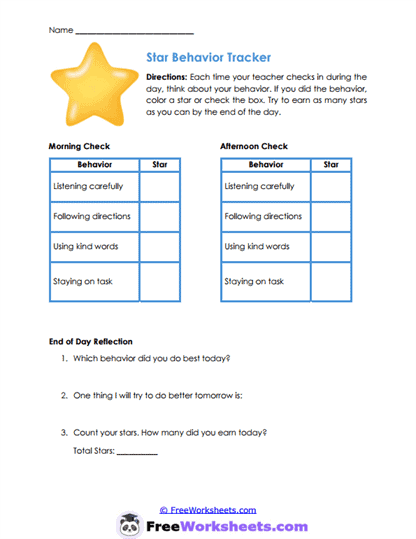
Star Success
What Kids Do: Students earn morning and afternoon stars for listening, following directions, using kind words, and staying on task. They compare both halves of the day, count the total, and name one success and one next step.
Target Skill: This chart builds early self-management through immediate, positive feedback. Students learn to connect each visual reward with a named action rather than seeing the star as something earned simply for finishing an activity.
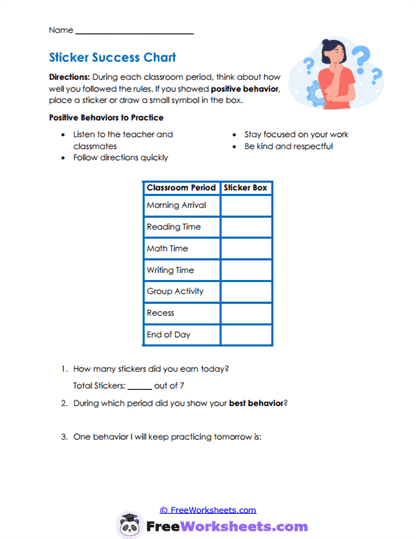
Sticker Success
What Kids Do: Students earn a sticker or drawn symbol during seven school periods when they demonstrate positive classroom behavior. They total the stickers, identify their strongest period, and choose one skill to practice the next day.
Target Skill: Learners monitor behavior across a full day while receiving feedback close to the moment it occurs. The chart supports daily resets and helps children find which activities bring out their strongest choices.
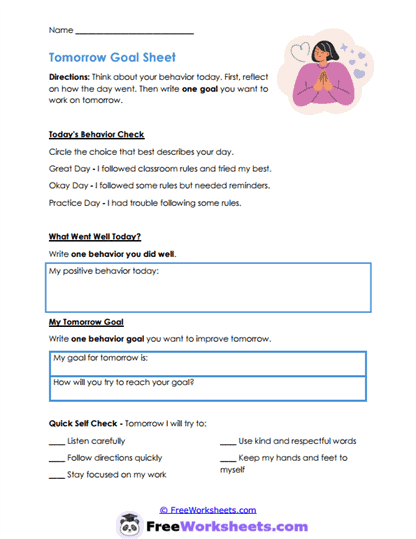
Tomorrow Plan
What Kids Do: Students rate the overall day, describe one positive behavior, and choose one specific goal for tomorrow. They explain how they will work toward it and select a matching action from a short behavior list.
Target Skill: This worksheet moves children from reflection into preparation. Students practice replacing broad promises such as “do better” with a memorable goal tied to a situation and an action they can actually use.