
Behavior Logs Worksheets
These K-12 behavior logs help students review their choices, notice patterns, and plan more helpful responses. Every activity is Free, Ready-to-print, available in PDF format, and designed for Immediate classroom use. Students strengthen skills in self-monitoring, emotional awareness, communication, goal setting, and responsible decision-making.
About This Collection of Worksheets
This collection gives students a clear way to look back at their behavior without reducing the day to “good” or “bad.” Learners review focus, participation, social interactions, emotional reactions, classroom rules, and conflicts across different times and situations. The logs help students connect what happened, how they responded, and what they could try next.
The worksheets use daily ratings, weekly reviews, ABC behavior logs, trigger maps, goal trackers, student-teacher comparisons, and reflection prompts. Students study both positive and challenging moments, identify patterns, and create small plans for improvement. Several pages also help them separate feelings from actions so they can take responsibility without treating emotions as wrong.
These printable resources work well during check-ins, behavior conferences, counseling sessions, restorative conversations, advisory periods, and home-school communication. The collection supports CASEL competencies involving self-awareness, self-management, social awareness, relationship skills, and responsible decision-making. Since the worksheets range from simple daily routines to deeper conflict and trigger analysis, adults can choose the page that best matches the student’s age, independence, and current need.
Paul’s Teacher Tip
Use behavior logs after the student is calm enough to think clearly. Begin with one success before discussing a challenge so the page feels balanced and useful. Ask for specific examples instead of accepting broad statements such as “I was bad” or “Everyone bothered me.” Keep goals focused on one action the student can control, and review the plan again before the next likely challenge. The log should help the student understand patterns, not feel punished for having a difficult moment.
Worksheet Collection Skill Spotlights
Behavior Clues
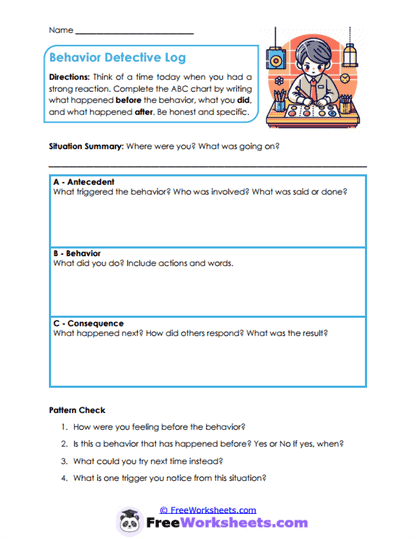
What Kids Do: Students describe a strong reaction by recording what happened before it, what they said or did, and what followed. They then look for repeated triggers, feelings, consequences, and a healthier response for a similar situation.
Target Skill: This activity builds ABC behavior analysis and personal responsibility. Students learn to separate the trigger, visible behavior, and consequence without treating the consequence as punishment or blaming another person for every part of the event.
Conflict Repair
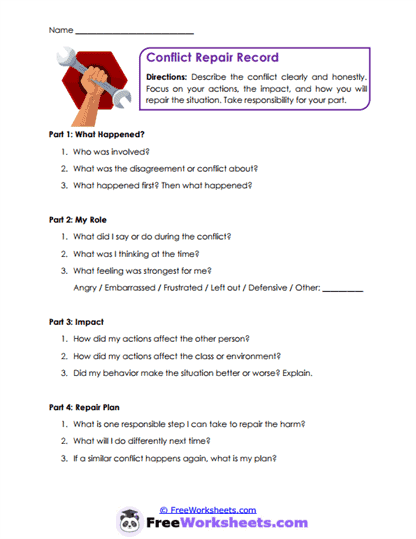
What Kids Do: Students explain a disagreement from beginning to end, identify their own words and actions, and consider how those choices affected other people or the classroom. They then create a specific repair step and a better plan for next time.
Target Skill: Learners practice accountability, empathy, and relationship repair. The worksheet helps them focus on the part they controlled without assuming responsibility for everything the other person did.
Daily Focus
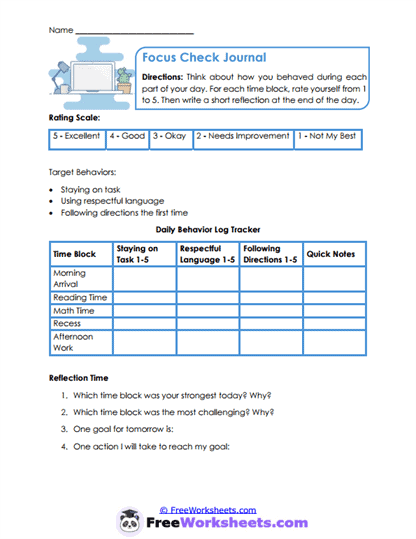
What Kids Do: Students rate staying on task, respectful language, and first-time direction following during five parts of the school day. They add short notes, identify their strongest and hardest time blocks, and plan one action for tomorrow.
Target Skill: This page develops daily self-monitoring and pattern recognition. Students learn that behavior may change by subject, time, structure, or setting and that one difficult period does not erase the rest of the day.
Emotion Choices
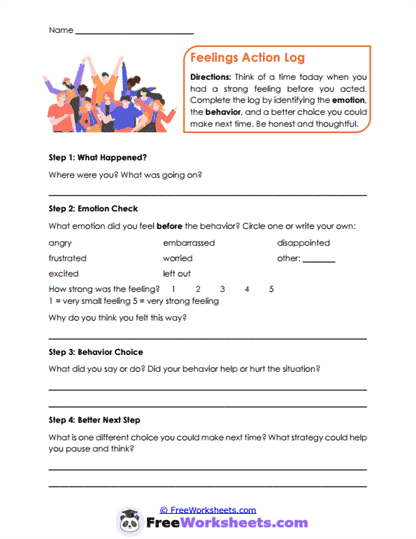
What Kids Do: Students name a strong emotion, rate its intensity, explain what caused it, and describe the action that followed. They decide whether the behavior helped or hurt and choose a coping tool and better response.
Target Skill: This activity helps learners separate normal emotions from unsafe or unhelpful actions. Students practice noticing the pause between feeling and behavior and selecting a strategy that supports a more thoughtful choice.
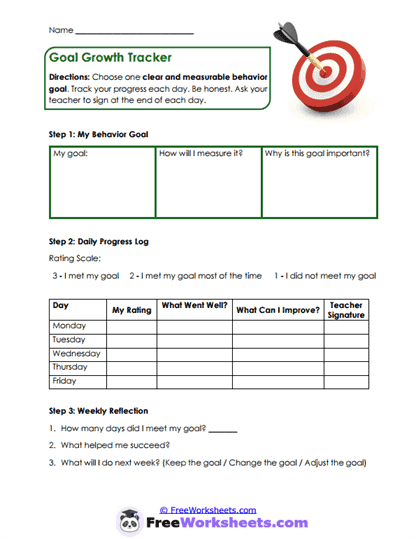
Goal Growth
What Kids Do: Students write one measurable behavior goal, explain how it will be tracked, and rate daily progress from Monday through Friday. They record successes, challenges, teacher feedback, and a weekly decision about whether to keep or adjust the goal.
Target Skill: Learners develop measurable goal setting and honest progress review. The worksheet shows that improvement does not require perfect performance every day and that goals may need to change when the evidence suggests a different plan.
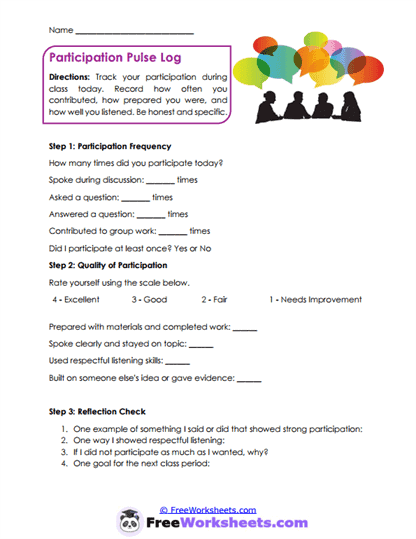
Participation Pulse
What Kids Do: Students count how often they ask questions, answer, speak during discussion, and contribute to group work. They also rate preparation, clarity, respectful listening, and use of examples or evidence.
Target Skill: This page separates participation quantity from participation quality. Students learn that one thoughtful contribution, good preparation, and active listening may be more valuable than speaking many times without relevance or respect.
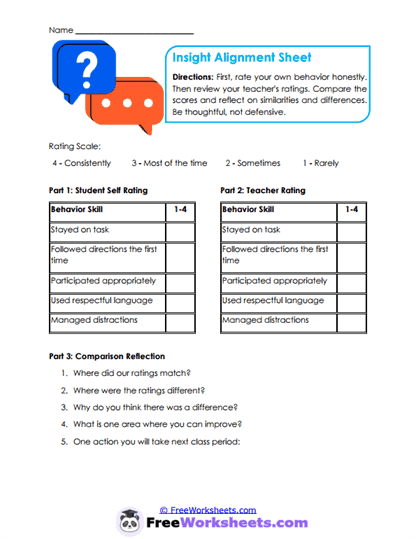
Rating Match
What Kids Do: Students rate five classroom behaviors before comparing their scores with a teacher’s ratings. They identify agreements and differences, discuss possible reasons, and choose one action for the next class period.
Target Skill: Learners practice accepting feedback and comparing viewpoints without turning the activity into a contest. The worksheet supports shared problem-solving by using specific examples to create a clearer picture of behavior.
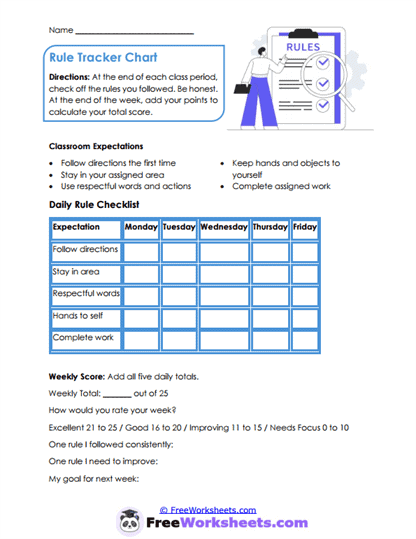
Rule Routine
What Kids Do: Students track five classroom expectations from Monday through Friday, total the week out of twenty-five, and compare the result with a simple performance guide. They identify one consistent strength and one rule to improve.
Target Skill: This activity turns broad classroom rules into observable daily actions. Students practice steady self-monitoring while learning that the pattern behind the total matters more than the score alone.
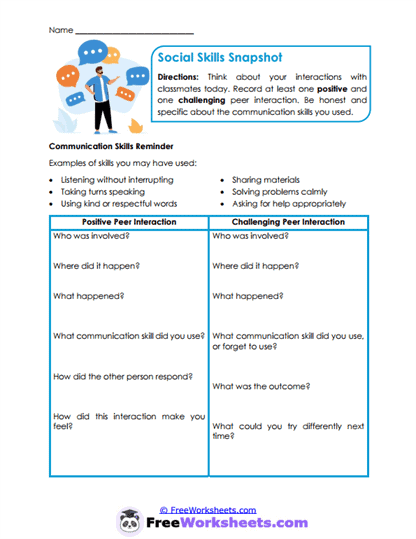
Social Snapshot
What Kids Do: Students compare one positive interaction with one challenging interaction. They describe the setting, communication choices, feelings, other person’s response, and how each situation ended.
Target Skill: Learners study the exact social behaviors that support or weaken relationships. The worksheet develops listening, turn-taking, problem-solving, perspective-taking, and awareness of how tone and words affect an interaction.
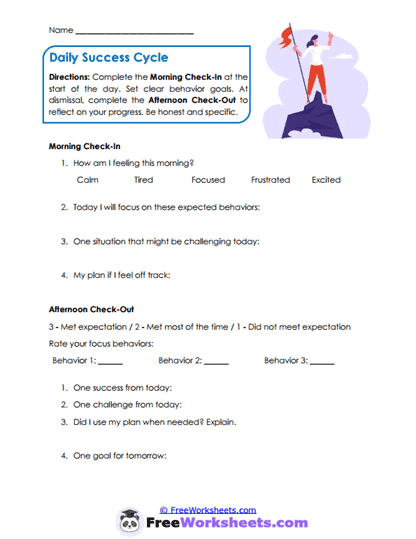
Success Cycle
What Kids Do: Students begin the day by naming a feeling, predicting one challenge, and planning a coping response. In the afternoon, they rate their behavior, review whether the plan was used, and set a goal for tomorrow.
Target Skill: This page connects preparation with reflection. Students learn to anticipate likely difficulties, choose one practical strategy in advance, and judge whether that plan helped when the challenge actually appeared.
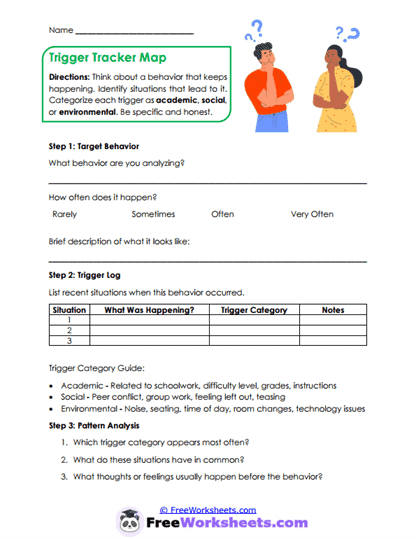
Trigger Map
What Kids Do: Students choose one target behavior and record three recent situations that came before it. They classify each trigger as academic, social, or environmental and then identify the strongest pattern.
Target Skill: Learners strengthen self-awareness by studying what often happens before a repeated behavior. The worksheet helps them choose support that matches the trigger while still taking responsibility for the response.
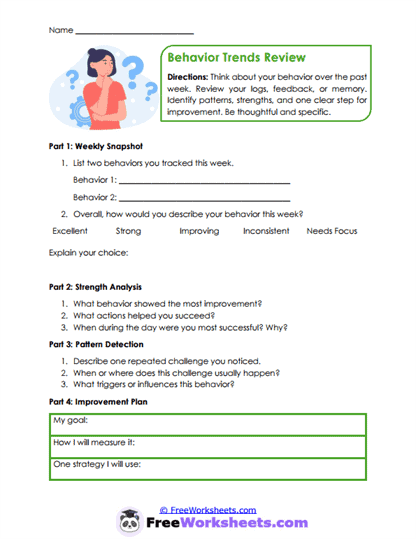
Weekly Trends
What Kids Do: Students review one or two tracked behaviors, describe the overall week, identify their strongest improvement, and examine when problems occurred most often. They use the pattern to create one measurable goal and strategy.
Target Skill: This activity moves students from isolated daily reflections to weekly analysis. Learners use specific evidence to recognize growth, identify recurring challenges, and avoid treating a trigger as an excuse.