
About This Worksheet
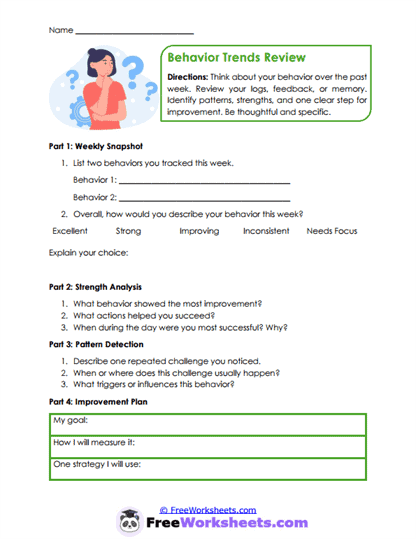
This worksheet is a weekly behavior-review log that helps students look for patterns across several days. It is designed for students in grades 5 through 8 who have already tracked one or two behaviors during the week. Children describe their overall progress, identify their strongest behavior, and think about when challenges happened most often. For example, “My behavior was inconsistent” becomes “I followed directions well in the morning but struggled more after lunch.”
Curriculum and Grade Alignment
The main goal is to help students use weekly information to make a thoughtful behavior plan. Students should already know how to track a behavior with ratings, checklists, or simple notes. The next skill is comparing several weeks to see whether a strategy is creating steady improvement. This worksheet supports CASEL self-awareness, self-management, and responsible decision-making because students study strengths, triggers, patterns, and possible next steps.
Student Tasks
On this worksheet, students will name two behaviors they tracked and choose a phrase that best describes their week. They explain their overall rating and identify the behavior that showed the most improvement. Students also describe which actions helped them succeed and when they were most successful. The final sections ask them to notice repeated challenges, possible triggers, and one measurable goal with a strategy for the next week.
Common Challenges and Misconceptions
Some students may choose an overall rating without explaining what evidence supports it. Others may focus only on mistakes and overlook real progress made during the week. Children can also name a trigger as an excuse instead of thinking about how they can respond differently. Teachers can help by asking students to connect each answer with a specific time, action, or result from the week.
Implementation Guidance
Teachers can use this worksheet during a Friday conference, advisory period, counseling session, or behavior-support meeting. It works best when students can look back at daily logs, checklists, or teacher feedback while answering. Parents and homeschool educators can use it to review routines, homework habits, emotional reactions, or respectful communication. Adults should guide students toward one clear goal rather than asking them to improve every difficult behavior at once.
Details and Features
The worksheet is divided into four sections covering the weekly snapshot, strengths, patterns, and improvement planning. Guided questions help students study both successful moments and repeated challenges. A final planning box includes spaces for a goal, measurement method, and one useful strategy. The organized one-page format makes the activity easy to repeat at the end of each week.