
About This Worksheet
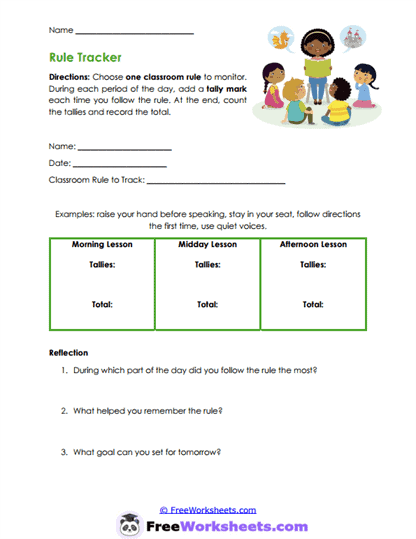
This worksheet is a classroom-rule frequency tracker that helps students count how often they follow one chosen expectation during different parts of the day. It is designed for students in grades 2 through 5 who are learning to focus on one behavior at a time. Children collect separate tally totals during the morning, middle, and afternoon lessons so they can see when the rule is easiest or hardest to follow. For example, “I followed the rule most of the day” becomes “I followed it six times during the morning lesson and three times during the afternoon lesson.”
Curriculum and Grade Alignment
The main goal is to help students understand that the same classroom rule may be followed differently depending on the time or activity. Students should already know how to make tally marks and describe one clear rule, such as raising a hand, staying seated, following directions, or using a quiet voice. The next skill is comparing the three totals and deciding what support may improve the lowest period. This worksheet supports CASEL self-awareness and self-management because students monitor their choices, notice patterns, and create a goal.
Student Tasks
On this worksheet, students will choose one classroom rule to track during the school day. They add a tally mark each time they follow that rule during the morning, midday, and afternoon lessons. Students count the marks in each section and write a separate total for every part of the day. The reflection questions ask when they followed the rule most, what helped them remember it, and what goal they can set for tomorrow.
Common Challenges and Misconceptions
Some students may choose a rule that is too broad, such as “behave well.” Others may add a tally every few minutes rather than each time the chosen behavior clearly occurs. Children can also compare the periods without considering that one lesson may be longer than another. Teachers can help by defining exactly what earns a tally and explaining that the totals should be discussed along with the classroom situation.
Implementation Guidance
Teachers can use this worksheet when one behavior needs to be practiced throughout several parts of the school day. The student may complete the tallies independently or receive quiet reminders from an adult at first. Parents and homeschool educators can replace the three lessons with morning work, afternoon learning, and evening homework. Adults should review the totals with curiosity and help the child identify what made the strongest period successful.
Details and Features
The worksheet includes spaces for the student’s name, date, and selected classroom rule. Three large tracking boxes separate morning, midday, and afternoon data. Each section provides room for tally marks and a final total. Three reflection questions help students compare results, identify a helpful reminder, and plan for tomorrow.