
About This Worksheet
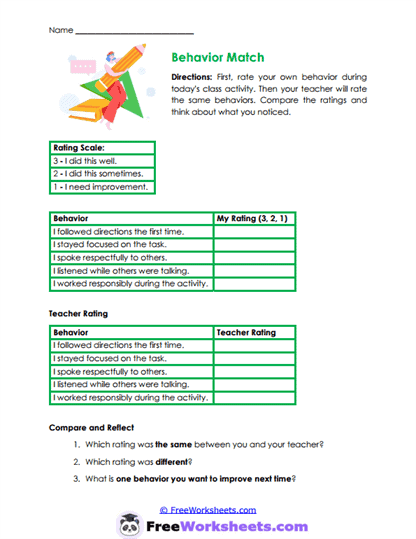
This worksheet is a student-and-teacher behavior comparison that helps learners see where two ratings agree and where they differ. It is designed for students in grades 3 through 6 who are learning to reflect honestly and accept helpful feedback. Children rate five behaviors, then compare their answers with ratings completed by the teacher. For example, “I thought I listened well” becomes “My teacher gave a lower score because I spoke while another student was talking.”
Curriculum and Grade Alignment
The main goal is to help students understand that their own view may not always match what another person observes. Students should already understand the five classroom behaviors and know how to use a three-point scale. The next skill is discussing differences calmly and choosing one behavior to improve. This worksheet supports CASEL self-awareness, relationship skills, and responsible decision-making because students compare viewpoints and use feedback to plan growth.
Student Tasks
On this worksheet, students will rate themselves on following directions, staying focused, speaking respectfully, listening, and working responsibly. The teacher completes a second rating for the same five behaviors. Students compare both sets of scores and identify one rating that matched and one that differed. They then choose one behavior they want to improve next time.
Common Challenges and Misconceptions
Some students may see the activity as a contest between themselves and the teacher. Others may change their own ratings because they want both columns to match. Children can also assume that a different rating means someone is being unfair. Teachers can help by sharing one specific example and explaining that two people may notice different parts of the same activity.
Implementation Guidance
Teachers can use this worksheet after a lesson, group activity, or independent work period. The student should complete the self-rating before viewing the teacher’s answers. Parents and homeschool educators can use the same method after home lessons or routines by comparing the child’s view with an adult observation. Adults should begin with an area of agreement and then discuss one difference in a calm and supportive way.
Details and Features
The worksheet includes a simple three-point scale ranging from did this well to need improvement. Matching student and teacher tables make the ratings easy to compare. Five common classroom behaviors appear in both sections. Three reflection questions guide students through agreement, difference, and goal setting.