
About This Worksheet
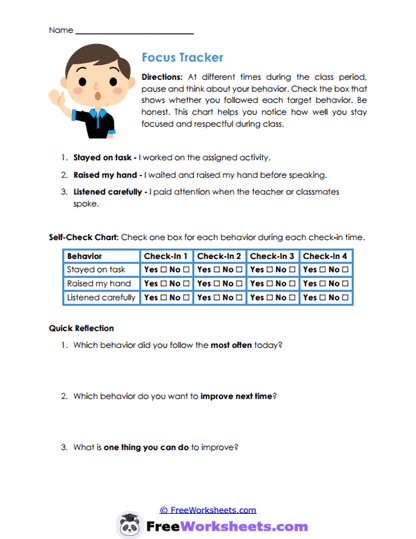
This worksheet is a classroom self-monitoring chart that helps students check how well they stay focused, raise their hand, and listen carefully. It is designed for students in grades 2 through 5 who are learning to pause and think about their behavior several times during one class period. Children make a yes-or-no choice at four checkpoints, which helps them notice whether their behavior remains steady or changes as the lesson continues. For example, “I had trouble focusing today” becomes “I stayed on task during the first two checkpoints but needed help during the last two.”
Curriculum and Grade Alignment
The main goal is to help students notice and adjust their behavior while learning is still taking place. Students should already understand what working on the assigned task, waiting before speaking, and listening to others look like. The next skill is using the check-in results to select one action that may improve the lowest-rated behavior. This worksheet supports CASEL self-awareness and self-management because children monitor their choices, recognize patterns, and make a simple improvement plan.
Student Tasks
On this worksheet, students will review three target behaviors at four different times during a class period. They mark yes or no to show whether they stayed on task, raised their hand before speaking, and listened carefully. After the final checkpoint, students decide which behavior they followed most often and which one they want to improve. They finish by naming one specific action that could help them make a stronger choice next time.
Common Challenges and Misconceptions
Some students may mark yes automatically because they believe that is the answer the teacher wants. Others may think that one difficult checkpoint means they did poorly during the entire lesson. Children can also confuse sitting quietly with staying focused on the assigned task. Teachers can help by reviewing each behavior with a clear example and reminding students that honest answers are used to support growth.
Implementation Guidance
Teachers can use a quiet signal, visual timer, or natural lesson break to remind students when each checkpoint occurs. The worksheet may be especially helpful during longer lessons in which attention and participation change over time. Parents and homeschool educators can use the same chart during reading, homework, or another activity that requires sustained focus. Adults should review the pattern calmly and help the child choose one manageable action rather than trying to improve all three behaviors at once.
Details and Features
The worksheet includes short definitions of staying on task, raising a hand, and listening carefully. A four-checkpoint chart provides separate yes-or-no choices for each behavior. Three reflection questions guide students through identifying a strength, selecting a challenge, and planning an improvement. The repeated check-in format gives children several chances to reset instead of waiting until the end of the lesson.