
About This Worksheet
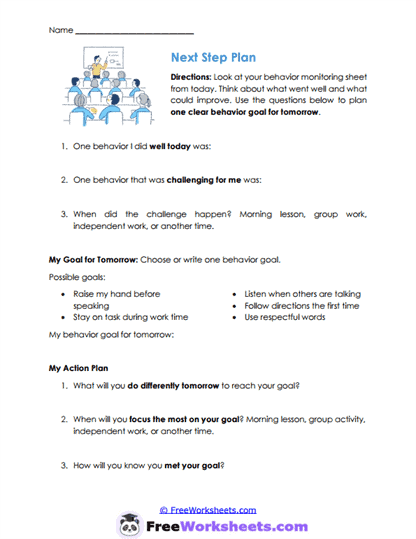
This worksheet is a behavior goal-planning page that helps students turn a daily challenge into one clear plan for tomorrow. It is designed for students in grades 3 through 6 who have already completed a behavior-monitoring activity. Children identify one successful behavior, one difficult behavior, and the setting where the challenge occurred before choosing a new goal. For example, “I need to focus more” becomes “I will begin independent work right away and keep my materials on my desk.”
Curriculum and Grade Alignment
The main goal is to help students create a specific behavior goal based on what happened during the day. Students should already be able to recognize one strength and one challenge from a recent activity. The next skill is choosing an action, practice setting, and success measure that make the goal easier to follow. This worksheet supports CASEL self-awareness, self-management, and responsible decision-making because students reflect on earlier choices and prepare a better response.
Student Tasks
On this worksheet, students will describe one behavior they handled well and one behavior that felt challenging. They identify when the challenge happened, such as during a lesson, group activity, or independent work period. Students then choose or write one behavior goal for tomorrow. The action-plan questions ask what they will do differently, when they will focus on the goal most, and how they will know they succeeded.
Common Challenges and Misconceptions
Some students may choose a goal that is too broad, such as “behave better tomorrow.” Others may select several possible goals instead of focusing on one manageable skill. Children can also describe success without deciding how it will be measured or recognized. Teachers can help by turning the goal into one visible action and asking what the student will be doing when the goal is met.
Implementation Guidance
Teachers can use this worksheet after a daily checklist, behavior conference, or challenging classroom activity. It works especially well when the completed plan can be reviewed briefly the following morning. Parents and homeschool educators can use it to prepare for homework, lessons, outings, or family routines that have been difficult. Adults should help the child rehearse the chosen action so the plan feels familiar before the next challenge begins.
Details and Features
The worksheet begins with three prompts covering a strength, a challenge, and the setting where it occurred. A list of possible goals gives students clear examples involving participation, focus, listening, directions, and respectful language. Three action-plan questions guide children toward a specific response, practice time, and measure of success. The page turns reflection into a practical plan that can be used the very next day.