
About This Worksheet
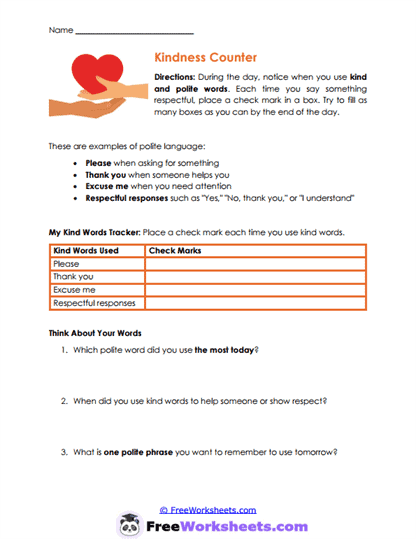
This worksheet is a polite-language tracker that helps students notice how often they use respectful words throughout the day. It is designed for students in grades 1 through 4 who are learning that kindness can be shown through simple and thoughtful language. Children add checkmarks for saying please, thank you, excuse me, and other respectful responses. For example, “I was polite today” becomes “I said thank you when a classmate handed me a pencil.”
Curriculum and Grade Alignment
The main goal is to help students practice polite language until it becomes a regular habit. Students should already recognize common respectful phrases and understand when each one is appropriate. The next skill is choosing polite words without needing an adult reminder and using them in different situations. This worksheet supports CASEL social awareness and relationship skills because students think about how their words affect classmates and adults.
Student Tasks
On this worksheet, students will add a checkmark each time they use one of four kinds of polite language. They track the words please, thank you, excuse me, and respectful responses such as “Yes,” “No, thank you,” or “I understand.” At the end of the day, students identify which phrase they used most often and describe a time when their words helped someone or showed respect. They also choose one polite phrase they want to remember to use tomorrow.
Common Challenges and Misconceptions
Some students may add checkmarks for words they planned to use instead of words they actually said. Others may use a polite phrase with an unkind tone and assume the words alone make the response respectful. Children can also focus on filling the chart rather than understanding how the language affects others. Teachers can help by modeling how polite words, facial expressions, and tone of voice work together.
Implementation Guidance
Teachers can place the worksheet on a student’s desk or clipboard so checkmarks can be added during the day. It may be used with an individual student, a small group, or the whole class during a kindness lesson. Parents and homeschool educators can use it during meals, lessons, sibling activities, or community outings. Adults should ask the child to describe one meaningful example rather than focusing only on which row has the most checks.
Details and Features
The worksheet begins with a short list of polite-language examples and explains when each phrase may be used. A four-row tracking chart provides plenty of room for repeated checkmarks. Three reflection questions connect the collected marks with frequency, impact, and future practice. The simple format helps younger students see that respectful language can be noticed and strengthened every day.