
Literary Devices Worksheets
These worksheets help students understand how authors use language to create meaning and emotion. These free, ready-to-print PDF worksheets are designed for immediate classroom use or easy at-home learning. Students build skills like analyzing figurative language, identifying tone, and explaining symbolism.
About This Collection of Worksheets
This collection helps students explore how authors use literary devices to make writing more vivid and meaningful. Through short passages, quotes, and full texts, students practice identifying devices like metaphor, simile, imagery, and symbolism. These activities guide students to look beyond literal meaning and understand how language shapes ideas and emotions.
Students are encouraged not only to recognize literary devices but also to explain their purpose and effect. Many worksheets require written responses where students connect specific examples to larger ideas like theme or tone. This helps them build stronger analytical thinking and prepares them for more advanced literary discussions and writing tasks.
The worksheets are designed to move from basic identification to deeper analysis and creative application. Students begin by naming devices, then progress to explaining meaning and even using devices in their own writing. These resources align with Grade 9 standards and support both reading comprehension and writing development.
Paul’s Teacher Tip
When teaching literary devices, it’s helpful to move slowly from recognition to explanation. Start by having students find examples, then guide them to explain what those examples mean and why they matter. Encourage them to use sentence starters like “This shows…” or “This helps the reader feel…” to build stronger responses. It also helps to connect devices to real-life experiences so students can better understand abstract ideas. Over time, students will become more confident in both analyzing and using literary techniques.
Worksheet Collection Skill Spotlights
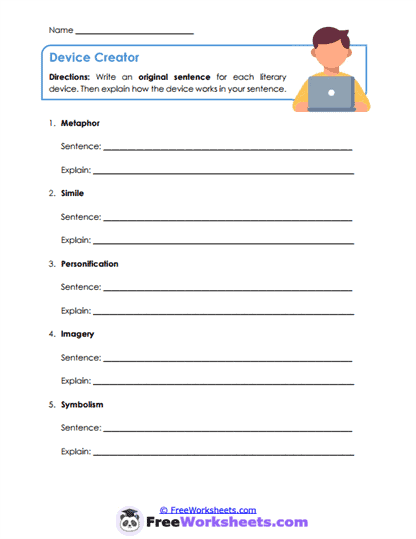
Device Creator
- What Kids Do:
Students create their own examples of literary devices like metaphor, simile, and personification, then explain how each one works. They must think carefully about both the sentence and its meaning, connecting creativity with clear explanation. This activity pushes them beyond recognition into true understanding. - Target Skill:
Students develop the ability to apply literary devices in original writing while explaining their purpose. They learn to connect figurative language to meaning and effect. This supports both analytical thinking and expressive writing skills.
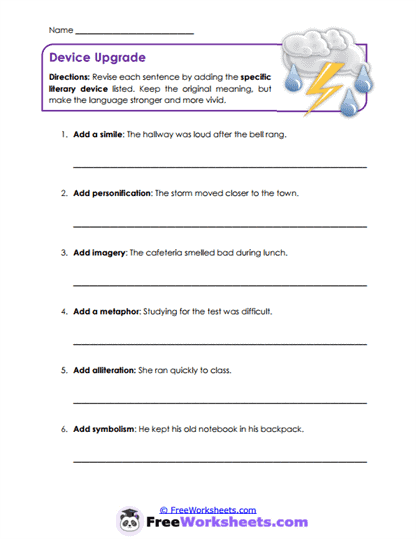
Device Upgrade
- What Kids Do:
Students take simple sentences and revise them using literary devices to make them more vivid and engaging. They experiment with similes, metaphors, and imagery while keeping the original meaning intact. This helps them see how small changes can improve writing. - Target Skill:
Students strengthen writing skills by applying figurative language to enhance clarity and description. They learn how literary devices improve tone and imagery. This supports creative expression and stronger communication.
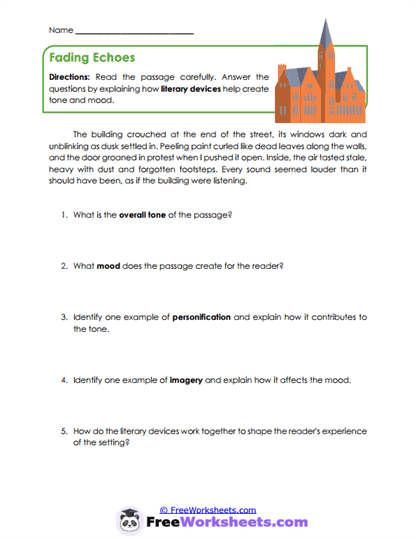
Fading Echoes
- What Kids Do:
Students read a descriptive passage and analyze how tone and mood are created through word choice. They identify examples of imagery and personification, then explain how these details shape the reader’s experience. This encourages deeper emotional understanding of the text. - Target Skill:
Students build skills in analyzing tone and mood by connecting literary devices to emotional impact. They learn to support their ideas with evidence from the text. This strengthens comprehension and interpretive thinking.
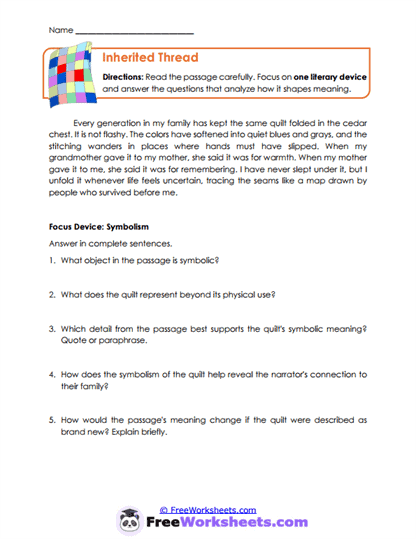
Inherited Thread
- What Kids Do:
Students read a passage and identify a symbolic object, then explain what it represents using evidence. They connect the object to larger ideas like memory or identity. This helps them move beyond surface-level reading. - Target Skill:
Students develop the ability to analyze symbolism and explain deeper meaning in texts. They practice using evidence to support interpretations. This supports critical thinking and literary analysis.
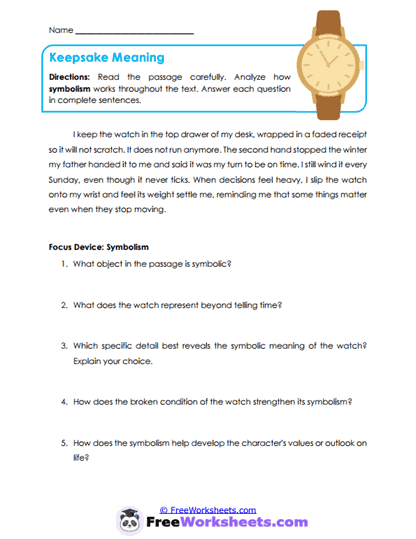
Keepsake Meaning
- What Kids Do:
Students read a narrative about a meaningful object and explore how it represents more than its basic function. They explain how details in the passage build symbolic meaning. This encourages thoughtful reading and interpretation. - Target Skill:
Students strengthen skills in identifying and explaining symbolism within a text. They learn to connect specific details to broader themes. This supports deeper comprehension and analysis.
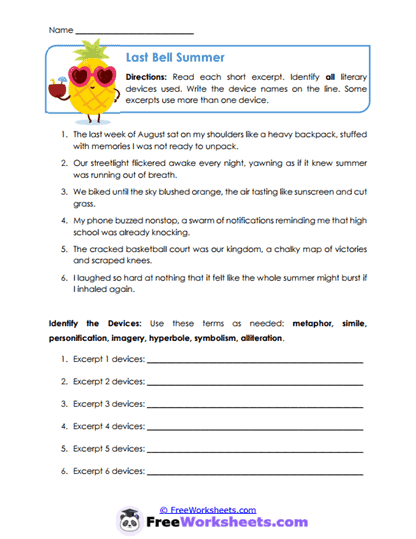
Last Bell Summer
- What Kids Do:
Students read short excerpts and identify literary devices such as metaphor, simile, and imagery. They must carefully examine how language is used in each example. This builds strong recognition skills through repeated practice. - Target Skill:
Students improve their ability to identify and label literary devices in context. They learn to recognize patterns in figurative language. This supports foundational analysis skills in reading.
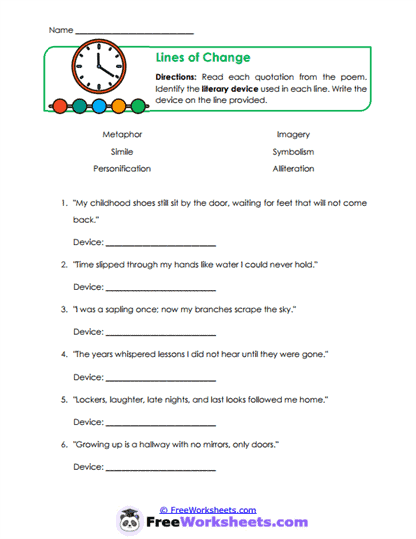
Lines of Change
- What Kids Do:
Students read short lines that feel like poetry and quickly identify the literary devices used. They focus on recognizing patterns such as alliteration, symbolism, and simile. This builds speed and confidence in identifying techniques. - Target Skill:
Students develop fluency in recognizing literary devices across different text types. They learn to identify how language is used creatively. This supports both comprehension and analysis.
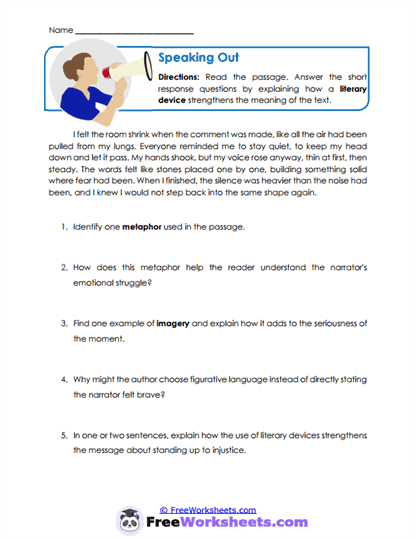
Speaking Out
- What Kids Do:
Students read a personal narrative and identify examples of metaphor and imagery. They explain how these devices help show emotion and meaning in the passage. This helps them connect language to feeling. - Target Skill:
Students strengthen their ability to analyze how figurative language conveys emotion and meaning. They practice explaining how specific devices impact the reader. This builds deeper comprehension and writing skills.
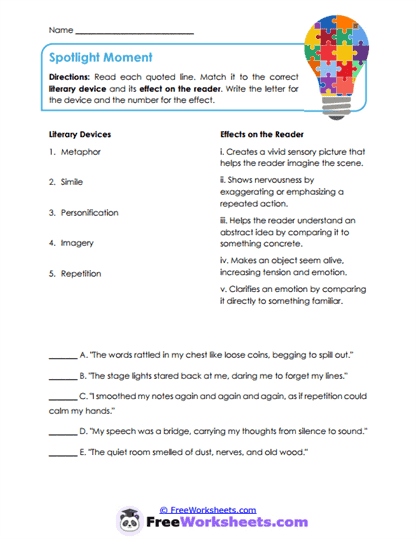
Spotlight Moment
- What Kids Do:
Students match literary devices to their effects on the reader. They analyze how different techniques shape understanding and emotion. This helps them see not just what a device is, but why it matters. - Target Skill:
Students build skills in connecting literary devices to their purpose and effect. They learn how authors use language to influence readers. This supports advanced analysis and interpretation.
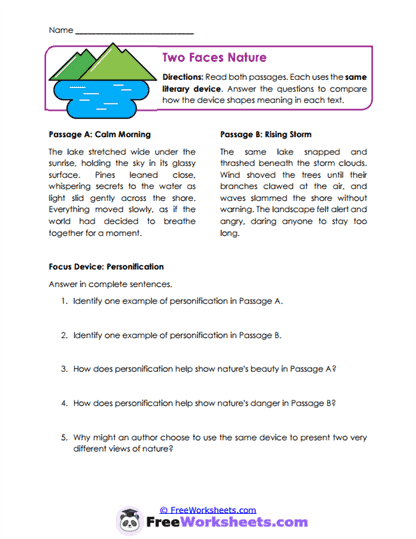
Two Faces Nature
- What Kids Do:
Students compare two passages that use personification in different ways. They identify examples and explain how each creates a different tone or mood. This encourages careful comparison and deeper thinking. - Target Skill:
Students develop comparison skills by analyzing how the same device can create different effects. They learn to evaluate tone and meaning across texts. This supports higher-level reading comprehension.
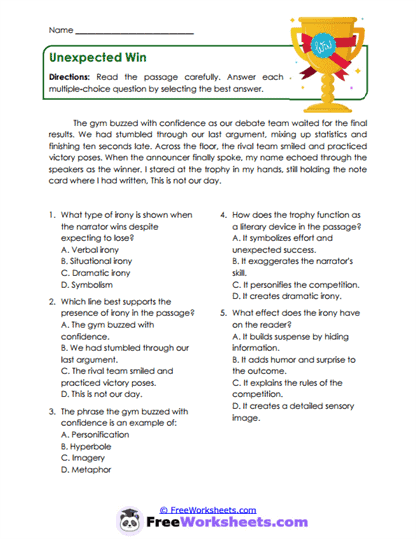
Unexpected Win
- What Kids Do:
Students read a passage and answer multiple-choice questions about literary devices like irony and symbolism. They must choose the best answer based on evidence from the text. This builds confidence with assessment-style questions. - Target Skill:
Students strengthen their ability to identify literary devices and understand their purpose in context. They practice using evidence to support answers. This supports test readiness and analytical thinking.
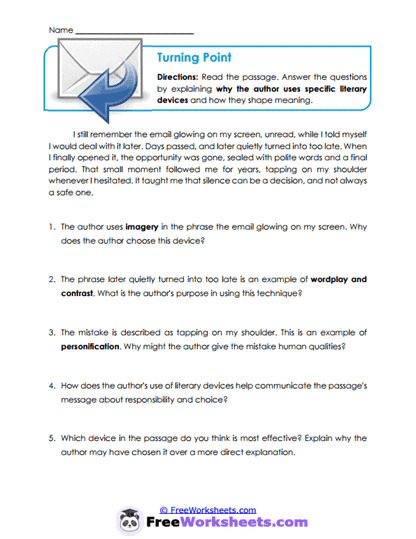
Turning Point
- What Kids Do:
Students read a reflective passage and explain how literary devices contribute to meaning and theme. They write thoughtful responses that connect details to larger ideas. This builds deeper comprehension and writing skills. - Target Skill:
Students improve their ability to explain how literary devices shape meaning and message. They practice connecting specific examples to broader themes. This supports advanced literary analysis.