
Novel Study Worksheets
These worksheets help students explore characters, themes, and author choices in meaningful ways. These free, ready-to-print PDF worksheets are designed for immediate classroom use or easy at-home learning. Students build skills like analyzing plot, tracking themes, and explaining how stories create meaning.
About This Collection of Worksheets
This collection supports students as they read full novels and think more deeply about what they mean. Each worksheet focuses on a different part of literary analysis, from understanding plot and setting to exploring theme, symbolism, and author’s message. Students are guided to move beyond retelling the story and begin explaining how and why events matter.
Many of the activities ask students to reflect, compare, and support their thinking with evidence from the text. This helps build strong habits for discussion and writing, especially when working with longer texts. Students also connect ideas across chapters and even across different books, which prepares them for essays and more advanced analysis.
The worksheets are designed to follow the flow of a novel study, from pre-reading reflection to final analysis. Students begin by thinking about big ideas, then track characters and themes as they read, and finally reflect on the author’s message. These resources align with Grade 9 standards and support both comprehension and critical thinking.
Paul’s Teacher Tip
When working through a novel, it helps to pause often and talk about what’s happening instead of waiting until the end. Encourage students to ask, “Why did the character do that?” or “What does this moment show?” as they read. Writing short responses along the way can make a big difference in understanding. It’s also helpful to connect the story to real-life ideas so students see why it matters. Over time, students will become more confident in explaining their thinking.
Worksheet Collection Skill Spotlights
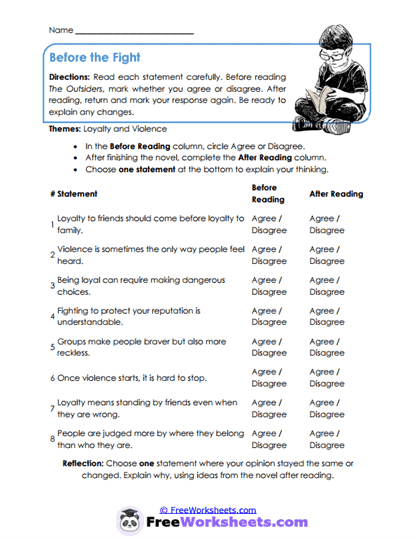
Before the Fight
- What Kids Do:
Students reflect on theme-based statements before and after reading a novel, then explain how their thinking changed. They connect their personal opinions to events and ideas in the story. This helps them engage more deeply with the text. - Target Skill:
Students build skills in analyzing themes and reflecting on how reading influences thinking. They learn to connect personal ideas to literature. This supports deeper comprehension and discussion.
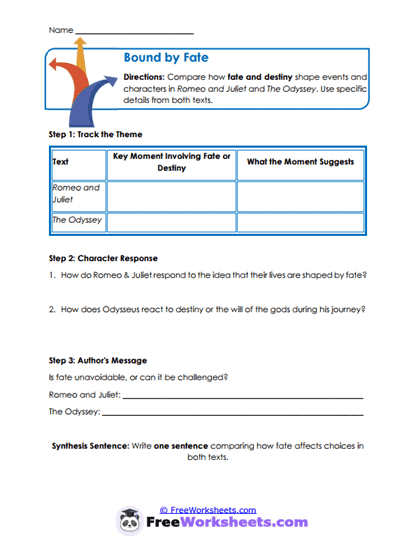
Bound by Fate
- What Kids Do:
Students compare how two different texts explore the idea of fate. They identify key moments and explain what each suggests about destiny. This encourages thoughtful comparison across stories. - Target Skill:
Students develop comparison skills by analyzing themes across texts. They learn how similar ideas can be presented in different ways. This supports advanced literary analysis.
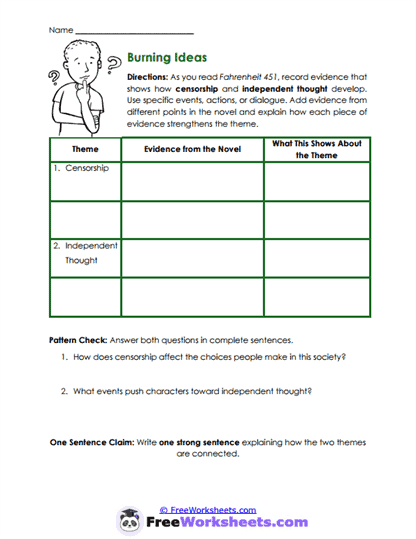
Burning Ideas
- What Kids Do:
Students track themes across a novel by collecting evidence and explaining what it shows. They connect specific moments to larger ideas. This helps them see how themes develop over time. - Target Skill:
Students strengthen their ability to analyze theme development using text evidence. They learn to connect details to abstract ideas. This supports essay writing and deeper comprehension.
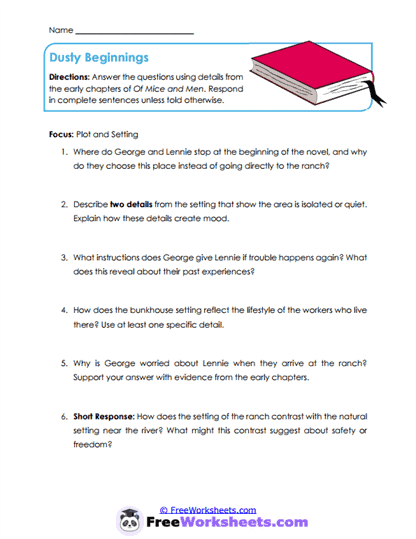
Dusty Beginnings
- What Kids Do:
Students analyze the opening chapters of a novel, focusing on setting and early character decisions. They explain how these details shape mood and direction. This builds strong understanding from the start. - Target Skill:
Students develop skills in analyzing plot and setting. They learn how beginnings set up important ideas in a story. This supports comprehension and analysis.
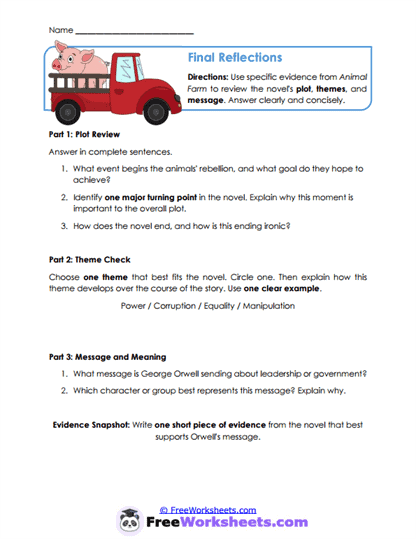
Final Reflections
- What Kids Do:
Students review key events, themes, and messages from a novel and explain their importance. They connect details to larger ideas about the story. This helps them organize their understanding. - Target Skill:
Students build summarizing and analysis skills by reflecting on a complete text. They learn to explain themes and support them with evidence. This supports final assessments and writing tasks.
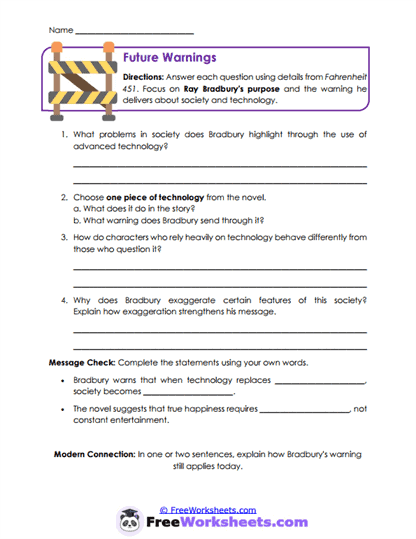
Future Warnings
- What Kids Do:
Students analyze how an author uses a story to send a message or warning about society. They connect details from the text to real-world ideas. This encourages critical thinking. - Target Skill:
Students develop skills in analyzing author’s purpose and message. They learn how stories communicate ideas beyond the plot. This supports deeper literary understanding.
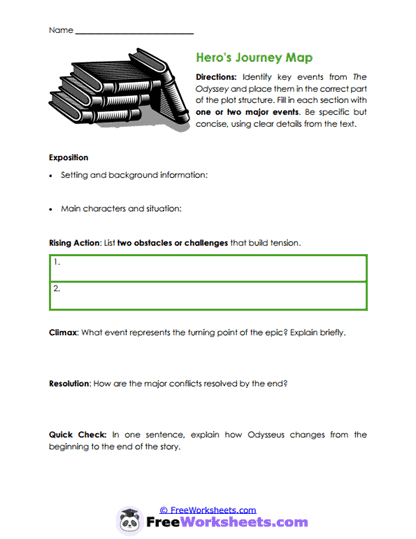
Hero’s Journey Map
- What Kids Do:
Students map out the structure of a story by identifying key events like exposition, climax, and resolution. They track how the story develops over time. This helps them see the big picture. - Target Skill:
Students strengthen understanding of plot structure and story development. They learn how events connect and build meaning. This supports narrative analysis.
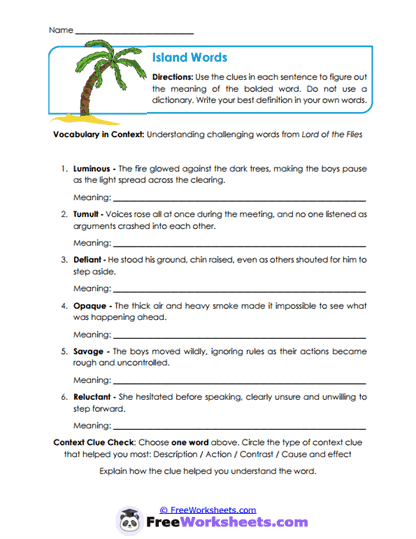
Island Words
- What Kids Do:
Students use context clues from a novel to determine the meaning of challenging vocabulary words. They explain how they figured out each meaning. This builds independence in reading. - Target Skill:
Students improve vocabulary skills by using context clues. They learn to determine meaning without relying on outside tools. This supports comprehension of complex texts.
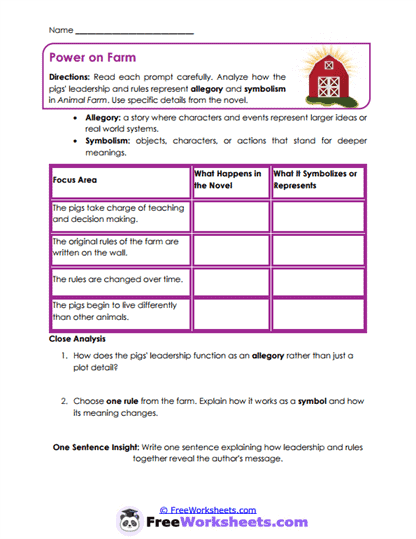
Power on Farm
- What Kids Do:
Students analyze how characters and events represent larger ideas in an allegory. They connect story details to real-world meaning. This builds deeper understanding of symbolism. - Target Skill:
Students develop skills in analyzing allegory and symbolism. They learn how stories represent broader ideas. This supports advanced literary analysis.
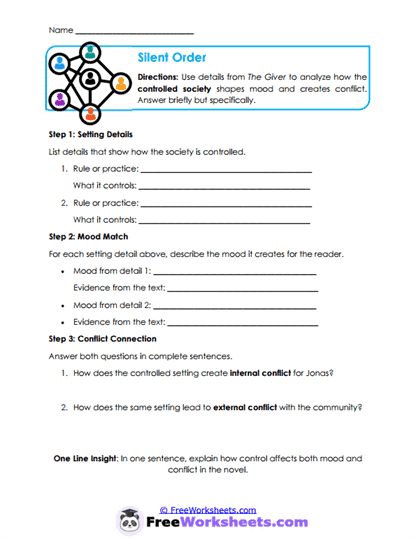
Silent Order
- What Kids Do:
Students explore how setting influences mood and conflict in a story. They connect details about a controlled society to character experiences. This deepens understanding of story elements. - Target Skill:
Students strengthen their ability to analyze how setting shapes mood and conflict. They learn how different elements work together. This supports comprehension and analysis.
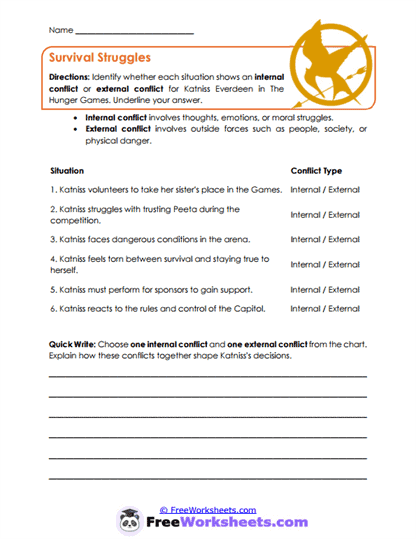
Survival Struggles
- What Kids Do:
Students identify examples of internal and external conflict in a novel. They explain how these conflicts affect character decisions. This helps them understand character development. - Target Skill:
Students build skills in analyzing conflict and its impact on a story. They learn how struggles shape characters and events. This supports deeper reading comprehension.
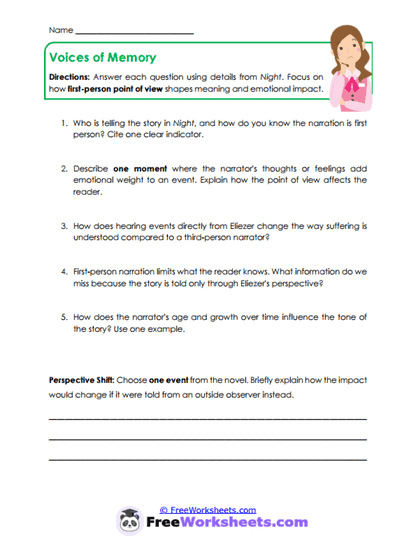
Voices of Memory
- What Kids Do:
Students analyze how first-person narration shapes a story. They explore how perspective affects meaning and emotion. This helps them understand how stories are told. - Target Skill:
Students develop skills in analyzing point of view and narration. They learn how perspective influences understanding. This supports critical reading and analysis.