
Audience, Purpose, and Tone Worksheets
These worksheets help students analyze real-world texts with clarity and confidence. These free, ready-to-print PDF worksheets are designed for immediate classroom use or simple at-home support. Students strengthen skills like identifying author's purpose, analyzing tone, and evaluating audience perspective in meaningful ways.
About This Collection of Worksheets
This collection brings together engaging, real-world reading tasks that help students move beyond surface-level understanding. Each worksheet asks students to think carefully about why a text was written, who it is meant for, and how word choices shape meaning. From speeches and editorials to reviews and memoirs, students explore a wide range of text types that feel relevant to their lives.
Students are guided to support their thinking with evidence, often using structured formats like CER (Claim, Evidence, Reasoning). This helps them build strong habits of explaining their ideas clearly instead of simply giving answers. As they work through the activities, they begin to see patterns in how authors communicate messages and influence readers. These are critical skills for both academic success and everyday media awareness.
The worksheets are designed to grow with students, starting with identifying basic purpose and moving toward deeper analysis of tone, audience, and persuasive techniques. They align closely with Grade 9 standards, helping students prepare for more advanced reading tasks. Whether used in class discussions, small groups, or independent work, these resources support thoughtful and meaningful learning.
Paul’s Teacher Tip
When working on audience, purpose, and tone, try modeling your thinking out loud first so students can hear how you break down a text. For example, pause and ask, “What is the writer trying to get me to believe or do?” and then show how you find proof in the text. Encourage students to underline or highlight key words that reveal tone, since word choice is often the strongest clue. It also helps to compare two texts on the same topic so students can see how purpose and tone can shift. If your child or students get stuck, remind them that it’s okay to start with a simple idea and build from there using evidence. Over time, this process becomes much more natural and confident.
Worksheet Collection Skill Spotlights
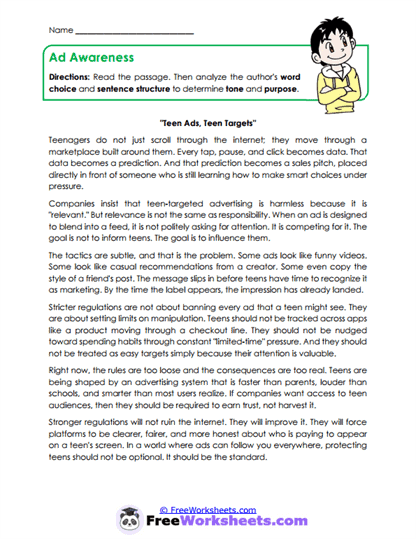
Ad Awareness
- What Kids Do:
Students read a passage about teen-targeted advertising and carefully examine how language and structure are used to influence readers. They break down sentences, notice persuasive wording, and connect ideas to real-life examples they see online or on social media. This helps them move from just reading ads to truly understanding how those messages are designed to affect their choices. - Target Skill:
Students strengthen their ability to analyze tone and purpose in persuasive texts, focusing on how specific language choices guide reader thinking. They practice identifying subtle persuasion techniques and explaining their impact using text evidence. This aligns with deeper comprehension goals where students evaluate how meaning is shaped, not just what is stated.
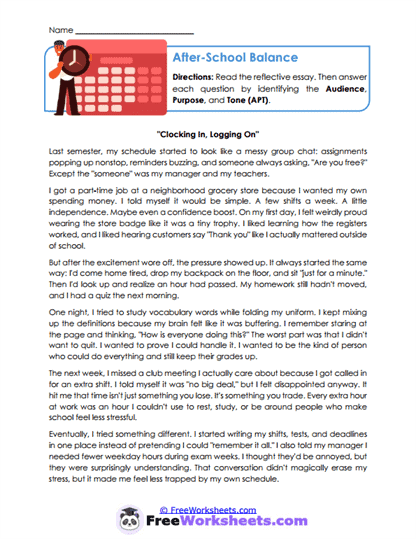
After-School Balance
- What Kids Do:
Students read a reflective essay about managing school and work responsibilities, then explore how the writer’s experiences shape the message. They answer questions about audience, purpose, and tone while connecting ideas to their own lives. This activity encourages thoughtful reflection and helps students see how personal writing still communicates a clear message. - Target Skill:
Students develop the ability to analyze multiple elements of a text together, including audience, purpose, and tone. They practice supporting their thinking with evidence while explaining how these elements interact. This builds a stronger foundation for understanding complex texts and prepares students for more advanced literary and informational analysis.
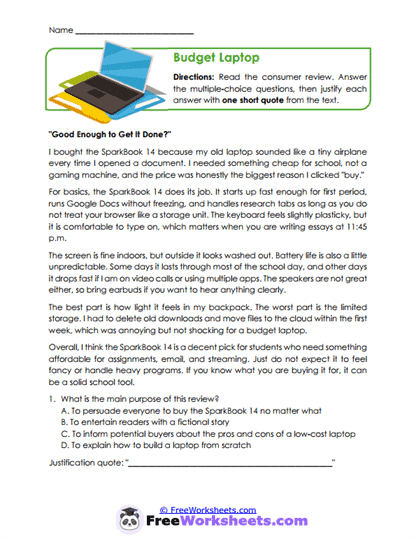
Budget Laptop
- What Kids Do:
Students read a realistic product review and determine what the writer is trying to accomplish. They answer questions about the author’s purpose and support their answers with specific quotes. This activity helps them think critically about online content they encounter every day, especially reviews and recommendations. - Target Skill:
Students learn to identify whether a text is informing, persuading, or explaining, while using evidence to justify their thinking. They practice connecting key details to a broader purpose and explaining their reasoning clearly. This strengthens their ability to analyze informational texts and evaluate credibility.
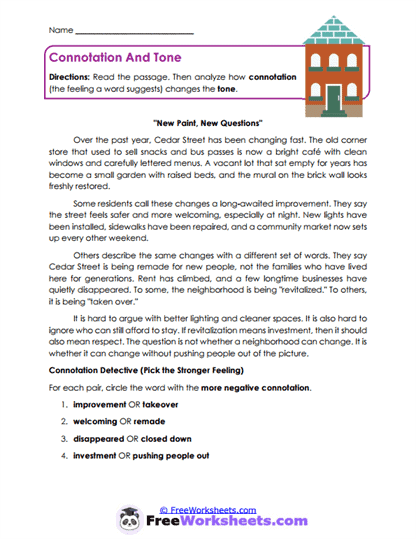
Connotation And Tone
- What Kids Do:
Students read a short passage and compare pairs of words to decide which carries a stronger negative or emotional meaning. They reflect on how these choices change the tone and overall impression of the text. This activity builds awareness of how even small word changes can influence meaning in powerful ways. - Target Skill:
Students develop a deeper understanding of connotation and its role in shaping tone. They practice analyzing how word choice affects reader perception and emotional response. This supports vocabulary development and helps students interpret texts with greater precision and insight.
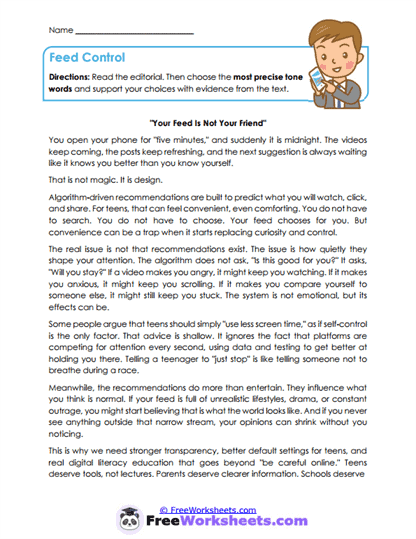
Feed Control
- What Kids Do:
Students read an editorial about social media and analyze the author’s tone by selecting precise descriptive words. They support their choices with evidence and explain why those words best capture the writer’s attitude. This encourages careful reading and thoughtful vocabulary use. - Target Skill:
Students refine their ability to identify and describe tone in argumentative writing using strong, specific language. They practice supporting interpretations with textual evidence and explaining how tone influences meaning. This strengthens both analytical reading and academic writing skills.
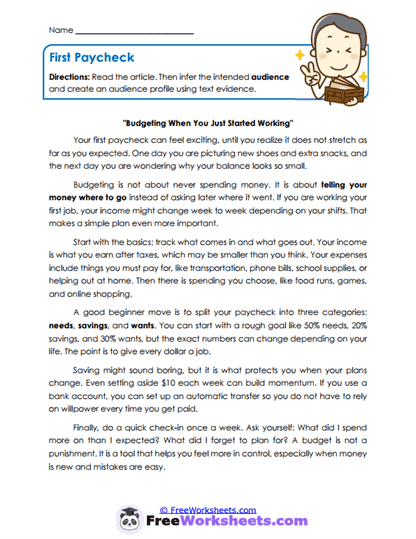
First Paycheck
- What Kids Do:
Students read an article about budgeting after receiving a first paycheck and identify who the text is written for. They create an audience profile using clues from the text and explain their reasoning with evidence. This helps them connect reading to real-life financial situations. - Target Skill:
Students build skills in identifying intended audience by analyzing word choice, examples, and tone. They learn how authors adjust writing based on who they are addressing. This supports deeper comprehension of how texts are structured to meet specific reader needs.
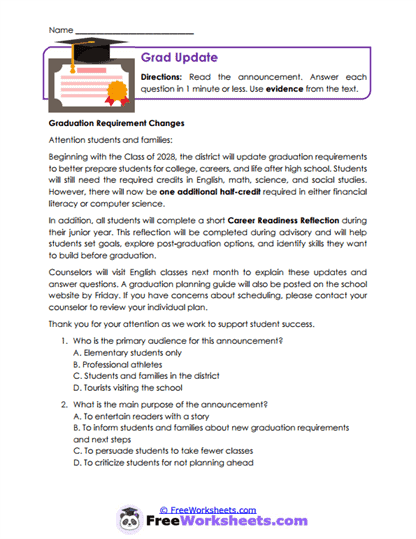
Grad Update
- What Kids Do:
Students read a school announcement and answer questions about who the message is meant for and why it was written. They carefully examine wording and details to avoid rushing to conclusions. This reinforces the importance of close reading in real-world texts. - Target Skill:
Students practice identifying both audience and purpose in formal informational texts. They learn to use specific details as evidence and avoid overly broad answers. This builds accuracy and confidence in analyzing everyday communication.
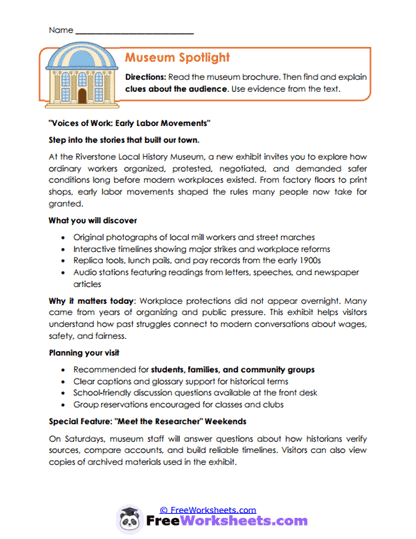
Museum Spotlight
- What Kids Do:
Students explore a museum brochure and look for clues that reveal who it is targeting and what it hopes to achieve. They analyze features like descriptions and highlights to understand how the text attracts visitors. This makes reading feel connected to real-world experiences. - Target Skill:
Students strengthen their ability to analyze how informational texts both inform and persuade. They identify audience and purpose using structural and language clues. This supports critical thinking about how texts are designed to engage readers.
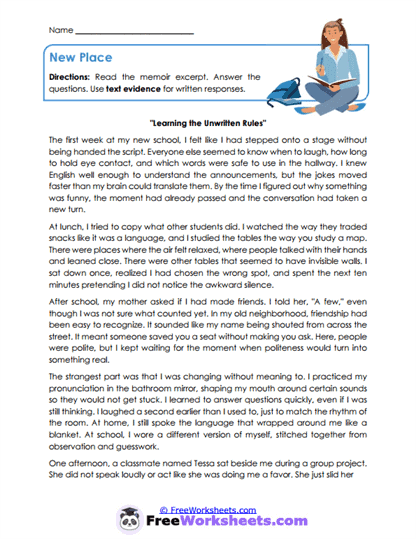
New Place
- What Kids Do:
Students read a memoir about starting at a new school and identify how the writer feels at different points in the story. They use details to explain tone and connect emotional shifts to specific events. This helps them engage more deeply with personal narratives. - Target Skill:
Students develop the ability to analyze tone in literary texts by focusing on emotional expression and supporting details. They practice using evidence to explain how tone develops over time. This builds stronger comprehension and empathy in reading.
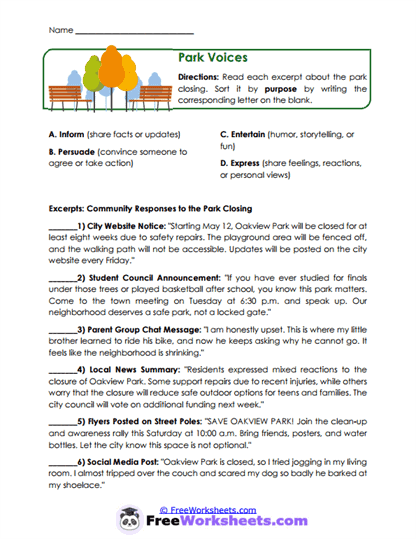
Park Voices
- What Kids Do:
Students read several short excerpts about a park closing and sort each one based on its purpose. They compare how different texts approach the same topic in different ways. This encourages careful reading and thoughtful comparison. - Target Skill:
Students learn to distinguish between purposes such as informing, persuading, and expressing. They analyze language and tone to support their decisions. This strengthens their ability to evaluate multiple texts and understand communication strategies.
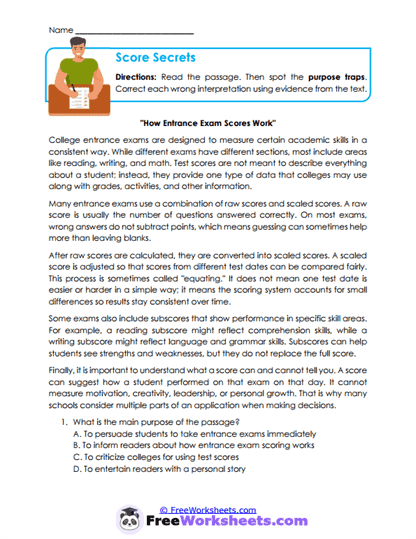
Score Secrets
- What Kids Do:
Students read an informational passage explaining how test scores work and determine the author’s main purpose. They focus on understanding the explanation and using details to support their thinking. This builds confidence with more complex informational texts. - Target Skill:
Students practice identifying when a text is explaining rather than persuading or entertaining. They analyze how information is presented and use evidence to support conclusions. This improves comprehension of structured, fact-based writing.
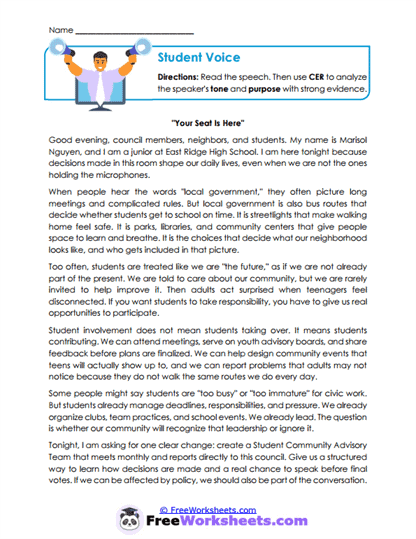
Student Voice
- What Kids Do:
Students read a speech and analyze what the speaker is trying to achieve and how they feel about the topic. They use a structured CER approach to explain their thinking with strong evidence. This encourages them to think like investigators as they read. - Target Skill:
Students develop skills in identifying speaker’s purpose and tone while supporting their ideas with clear reasoning. They practice connecting evidence to interpretation in a structured way. This builds strong analytical reading and writing habits aligned to high school expectations.