
Main Idea Worksheets
These Worksheets help students identify central ideas and understand how details support them. These free, ready-to-print PDF worksheets are designed for immediate classroom use or easy at-home learning. Students develop skills like summarizing, analyzing structure, and connecting evidence to key ideas.
About This Collection of Worksheets
This collection focuses on helping students clearly identify the central idea in a variety of informational texts. Each worksheet gives students practice pulling out the most important message while separating it from smaller details. By working with real-world topics like technology, environment, and community issues, students learn how to read with purpose and clarity.
Students are guided to go beyond just finding the main idea and begin explaining how it is supported. Many activities ask them to sort details, match evidence, or write clear summary sentences. This helps them build strong habits for both reading comprehension and writing. Over time, students become more confident in understanding complex texts and expressing ideas clearly.
The worksheets are designed to build skills step-by-step, from identifying simple main ideas to analyzing multiple texts and combining ideas across paragraphs. They align with Grade 9 standards and prepare students for more advanced reading and writing tasks. These resources work well for classroom instruction, homework, or independent practice.
Paul’s Teacher Tip
When teaching main idea, it helps to remind students that the goal is to say what the text is mostly about in the clearest, simplest way possible. Encourage them to ask, “What is the one thing the author wants me to understand?” before writing anything down. It’s also helpful to practice saying the idea out loud first before turning it into a sentence. If students struggle, guide them to group similar details together and then turn that group into one big idea. Over time, this process becomes much more natural.
Worksheet Collection Skill Spotlights
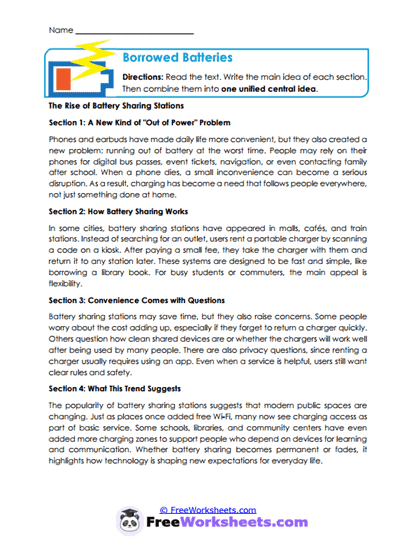
Borrowed Batteries
- What Kids Do:
Students read a text divided into sections and identify the main idea of each part. They then combine those ideas into one clear overall message. This helps them see how different parts of a text connect. - Target Skill:
Students build skills in synthesizing information across sections. They learn to combine ideas into one central idea. This supports deeper comprehension of structured texts.
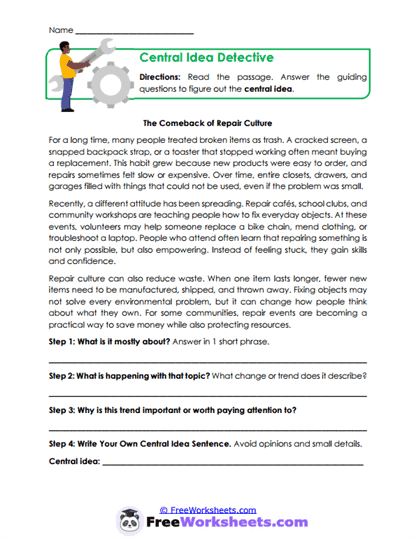
Central Idea Detective
- What Kids Do:
Students answer guided questions about a passage before writing the main idea. They think through what the text is about step by step. This makes the process more manageable and clear. - Target Skill:
Students strengthen their ability to identify central ideas through guided reasoning. They learn to connect key details to the main point. This supports independent reading skills.
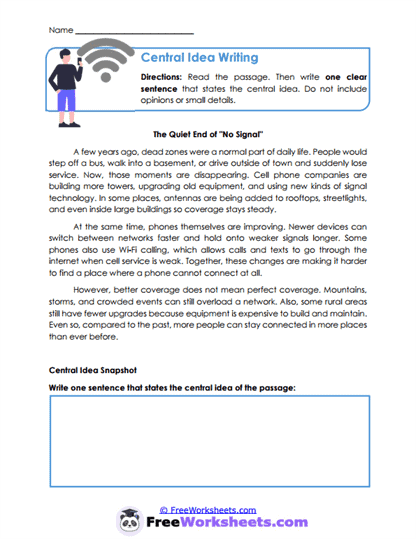
Central Idea Writing
- What Kids Do:
Students read an informational passage and write one sentence that explains the central idea. They must avoid extra details and keep their response clear and focused. This builds concise thinking. - Target Skill:
Students develop summarizing skills by expressing the main idea in a single sentence. They learn to separate big ideas from small details. This supports clear communication and comprehension.
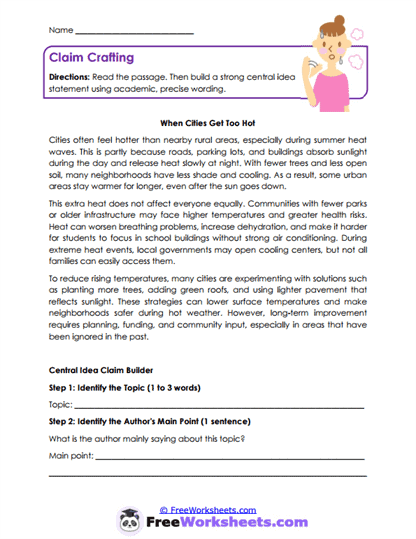
Claim Crafting
- What Kids Do:
Students read a passage and turn the main idea into a clear, academic claim. They focus on using precise language to express the author’s point. This connects reading to writing. - Target Skill:
Students build skills in writing strong claims based on text evidence. They learn to express central ideas clearly and formally. This supports argument writing and analysis.
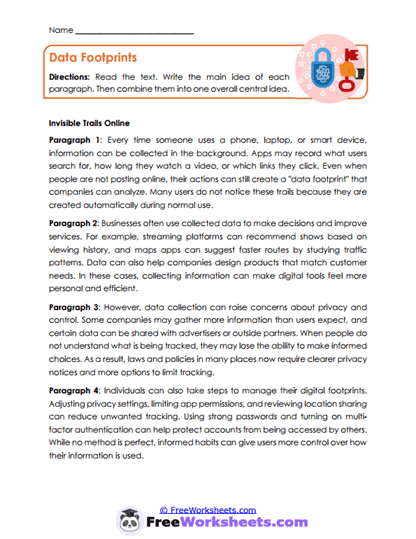
Data Footprints
- What Kids Do:
Students read a multi-paragraph text and write the main idea of each paragraph. They then combine those ideas into one overall central idea. This helps them understand how ideas build across a text. - Target Skill:
Students develop synthesis skills by combining multiple ideas into one clear statement. They learn to track how central ideas develop. This supports advanced comprehension.
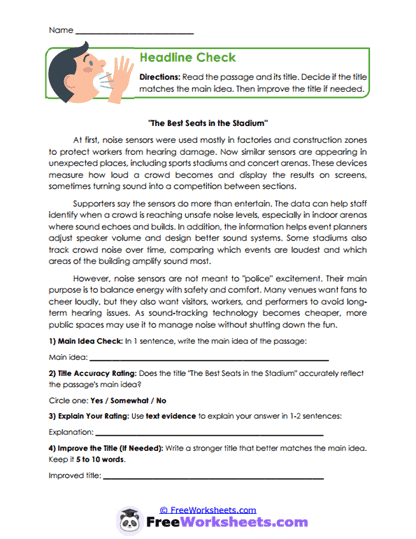
Headline Check
- What Kids Do:
Students evaluate whether a title matches the main idea of a passage. If needed, they create a better title that clearly reflects the text. This encourages critical thinking. - Target Skill:
Students strengthen their ability to connect central ideas to text structure. They learn to evaluate and revise titles based on meaning. This supports deeper text analysis.
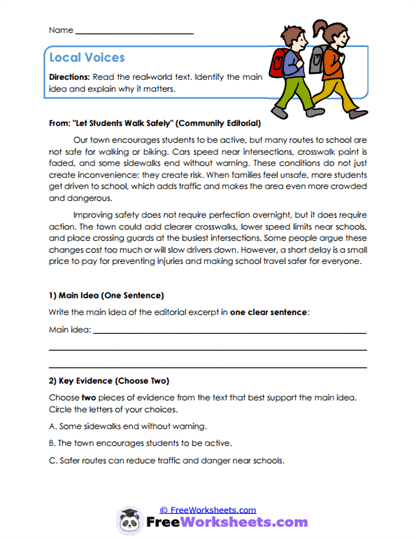
Local Voices
- What Kids Do:
Students read an editorial and write the main idea, then choose evidence that supports it. They must think carefully about which details matter most. This builds reasoning skills. - Target Skill:
Students improve their ability to support central ideas with strong evidence. They learn to connect details directly to the main point. This supports analytical reading and writing.
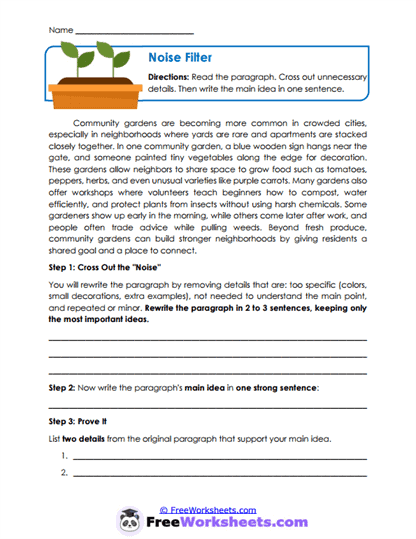
Noise Filter
- What Kids Do:
Students remove unnecessary details from a passage and rewrite it in a shorter form. They then write a clear main idea sentence. This helps them focus on what matters most. - Target Skill:
Students build summarizing and editing skills by identifying essential information. They learn to simplify complex texts. This supports comprehension and clarity.
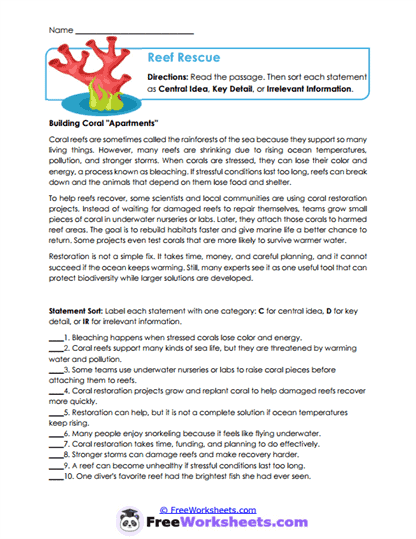
Reef Rescue
- What Kids Do:
Students sort statements into central ideas, key details, or irrelevant information. They must think carefully about how each idea fits. This strengthens understanding of text structure. - Target Skill:
Students develop skills in distinguishing between main ideas and supporting details. They learn how information connects within a text. This supports critical reading.
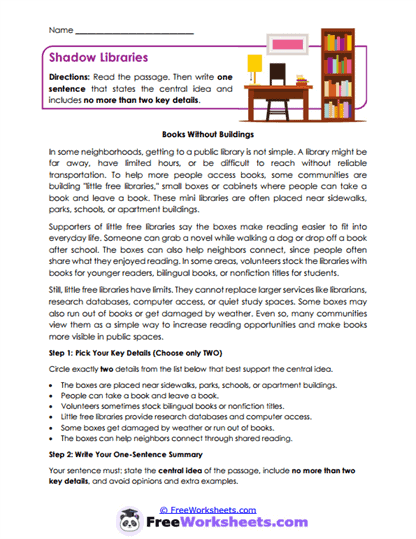
Shadow Libraries
- What Kids Do:
Students select key details that best support a central idea and write a one-sentence summary. They must limit their choices and stay focused. This builds clear thinking. - Target Skill:
Students strengthen summarizing skills by selecting only the most relevant information. They learn to combine ideas into one clear statement. This supports comprehension and writing.
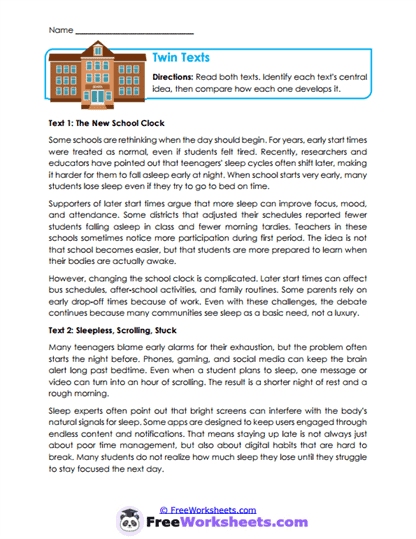
Twin Texts
- What Kids Do:
Students read two passages and identify the central idea of each one. They then compare how the ideas are similar or different. This builds deeper understanding across texts. - Target Skill:
Students develop comparison and analysis skills by evaluating central ideas across multiple texts. They learn to connect and contrast ideas. This supports advanced reading comprehension.
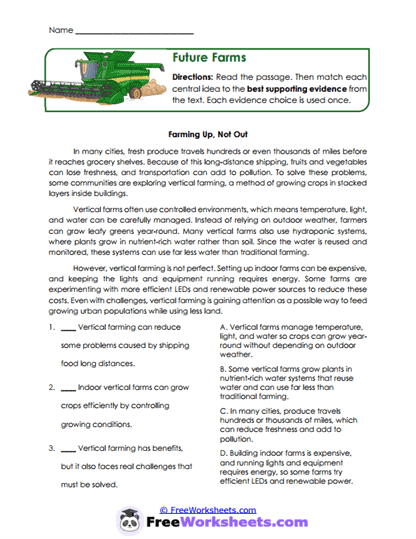
Future Farms
- What Kids Do:
Students match central ideas with the best supporting evidence from a passage. They must carefully connect ideas and details. This strengthens understanding of how texts are built. - Target Skill:
Students improve their ability to connect central ideas with supporting evidence. They learn how details strengthen meaning. This supports analytical reading and reasoning.