
Graphic Organizers Worksheets
These worksheets help students organize ideas and understand texts more clearly. These free, ready-to-print PDF worksheets are designed for immediate classroom use or easy at-home support. Students build skills like analyzing structure, identifying main ideas, and comparing perspectives with confidence.
About This Collection of Worksheets
This collection gives students powerful tools to visually organize their thinking while reading. Each worksheet focuses on a different structure, such as sequencing events, mapping cause and effect, or comparing ideas side by side. These organizers help students break complex texts into smaller, manageable parts so they can understand them more clearly.
Students are encouraged to move beyond just reading and start actively working with the information. By writing, sorting, and connecting ideas, they develop stronger comprehension and retention. These activities also support clearer thinking when students explain ideas or prepare for writing tasks. Over time, students become more independent and organized learners.
The worksheets are designed to support a wide range of reading skills, from basic comprehension to deeper analysis. They align with Grade 9 standards and prepare students for more advanced academic tasks. Whether used for guided lessons, independent work, or review, these organizers provide meaningful support for understanding texts.
Paul’s Teacher Tip
Graphic organizers work best when students understand why they are using them, not just how to fill them out. Before handing one out, quickly model how to complete a section using a shared text. Encourage students to keep their answers short and focused so they don’t feel overwhelmed. It’s also helpful to revisit completed organizers and use them as a guide for discussion or writing. Over time, students will begin to use these structures naturally when thinking through ideas.
Worksheet Collection Skill Spotlights
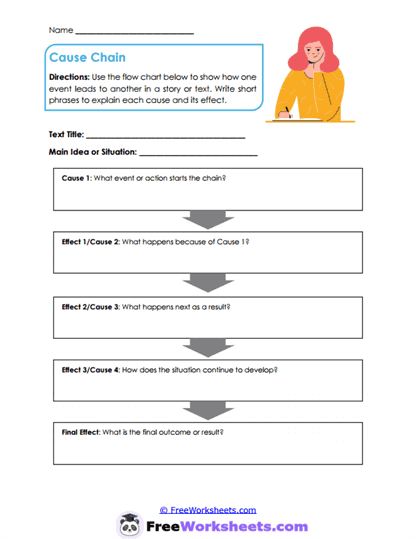
Cause Chain
- What Kids Do:
Students map out a chain of events by identifying how one action leads to another. They begin with an initial cause and continue adding effects that follow step by step. This helps them clearly see how events are connected instead of viewing them as separate ideas. - Target Skill:
Students strengthen their understanding of cause-and-effect relationships by organizing events in a logical sequence. They learn to explain how actions lead to outcomes using clear connections. This supports deeper comprehension of both informational and narrative texts.
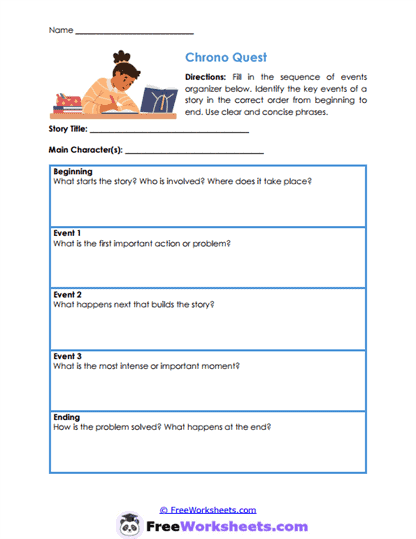
Chrono Quest
- What Kids Do:
Students break a story into clear parts, starting with the beginning and moving through key events to the ending. They list important moments in order and explain how the story develops. This helps them keep track of what happens and why it matters. - Target Skill:
Students develop sequencing skills by organizing events in chronological order. They learn how plot unfolds over time and how each event contributes to the whole. This supports understanding of narrative structure and comprehension.
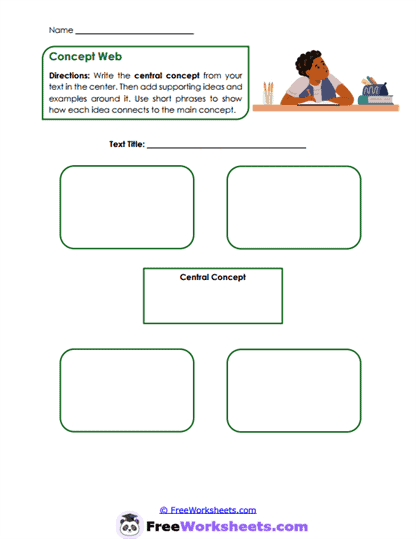
Concept Web
- What Kids Do:
Students place the central idea of a text in the middle of a web and add supporting details around it. They connect each idea back to the main concept using short phrases. This visual approach helps them see relationships between ideas. - Target Skill:
Students build skills in identifying central ideas and organizing supporting details. They learn how concepts connect within a text. This strengthens comprehension and prepares them for summarizing and analysis.
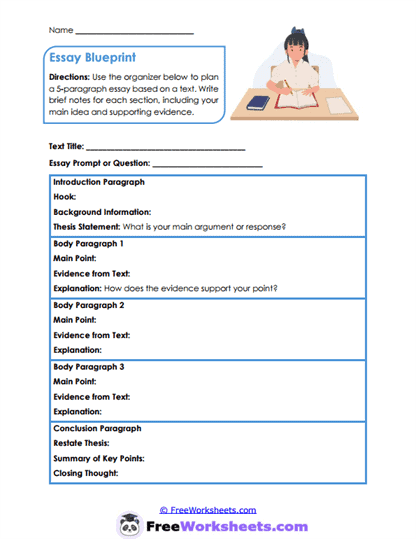
Essay Blueprint
- What Kids Do:
Students plan an essay by outlining key parts like the introduction, body paragraphs, and conclusion. They write a thesis and organize supporting ideas before beginning to write. This helps them approach writing with a clear plan. - Target Skill:
Students develop writing organization skills by structuring ideas before drafting. They learn how to create clear arguments and support them with evidence. This supports effective and coherent writing aligned to academic standards.
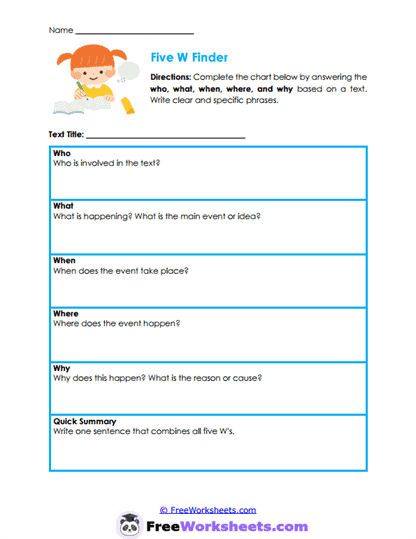
Five W Finder
- What Kids Do:
Students answer questions about who, what, when, where, and why based on a text. They then combine these answers into a short summary. This helps them gather and organize important information quickly. - Target Skill:
Students strengthen comprehension by identifying key details and organizing them logically. They learn to extract essential information from a text. This supports summarizing and deeper understanding.
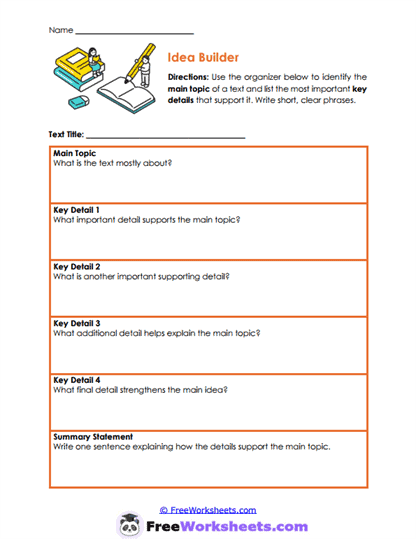
Idea Builder
- What Kids Do:
Students identify the main idea of a passage and list supporting details that explain it. They then write a summary sentence connecting everything together. This helps them focus on what matters most. - Target Skill:
Students improve their ability to distinguish between main ideas and supporting details. They learn to organize information clearly and explain it in their own words. This builds strong comprehension skills.
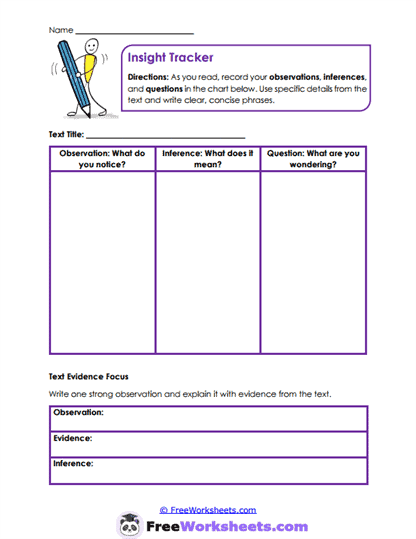
Insight Tracker
- What Kids Do:
Students record what they notice, what they think, and what they wonder as they read. They track their thinking step by step and support ideas with evidence. This keeps them actively engaged with the text. - Target Skill:
Students develop active reading strategies by making observations, inferences, and questions. They learn to support ideas with evidence. This strengthens critical thinking and comprehension.
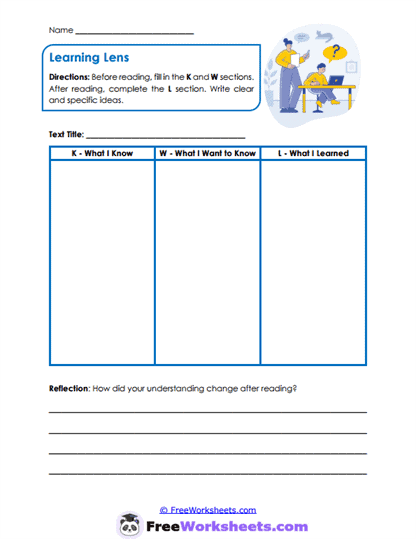
Learning Lens
- What Kids Do:
Students use a K-W-L chart to track what they know, what they want to learn, and what they learned after reading. They reflect on how their understanding changes over time. This helps them stay engaged throughout the reading process. - Target Skill:
Students build metacognitive skills by monitoring their own learning. They learn to reflect on knowledge before and after reading. This supports deeper comprehension and independent learning.
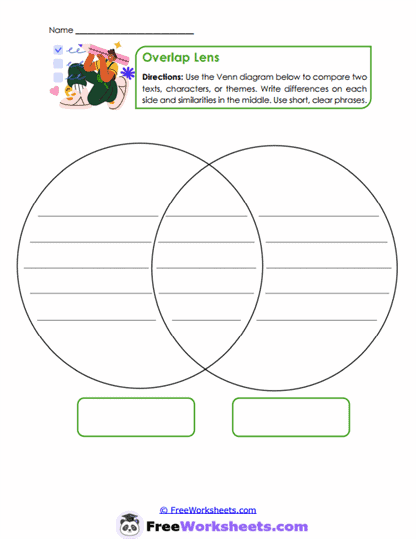
Overlap Lens
- What Kids Do:
Students use a Venn diagram to compare two ideas, characters, or texts. They list differences on each side and similarities in the middle. This helps them clearly see relationships between ideas. - Target Skill:
Students strengthen compare-and-contrast skills by organizing similarities and differences visually. They learn to analyze relationships between texts or ideas. This supports deeper comprehension and analysis.
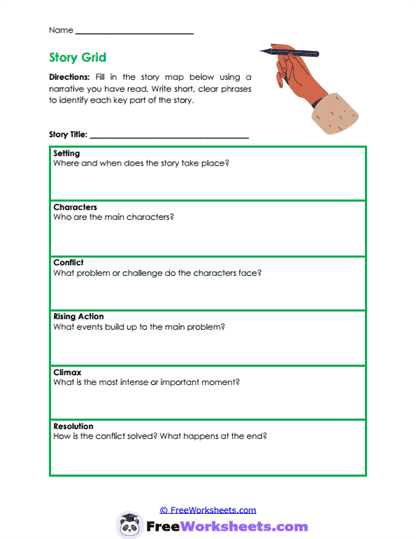
Story Grid
- What Kids Do:
Students break a story into parts like setting, characters, conflict, and resolution. They fill in each section to understand how the story is built. This helps them see how all elements work together. - Target Skill:
Students develop understanding of story structure by identifying key elements and their roles. They learn how events and characters connect. This supports narrative comprehension and analysis.
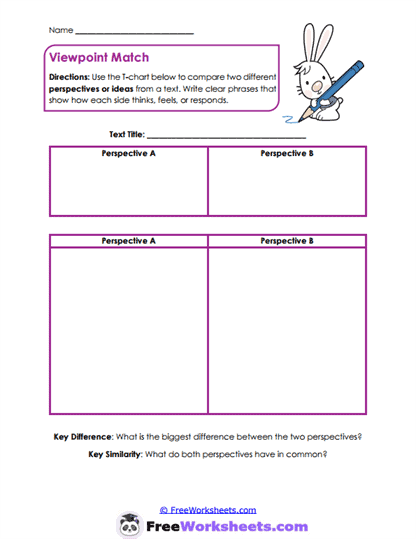
Viewpoint Match
- What Kids Do:
Students compare two perspectives by listing ideas from each side and identifying similarities and differences. They use short phrases to organize their thinking. This helps them understand multiple viewpoints. - Target Skill:
Students build skills in analyzing and comparing perspectives within texts. They learn how different viewpoints shape meaning. This supports critical thinking and comprehension of informational texts.
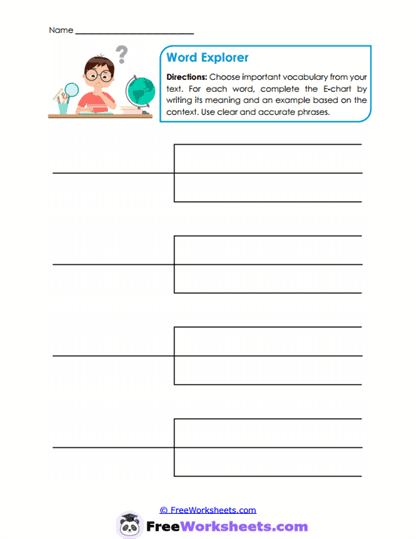
Word Explorer
- What Kids Do:
Students choose important vocabulary words from a text and explain them in their own words. They also provide examples based on the text. This helps them connect vocabulary to meaning. - Target Skill:
Students strengthen vocabulary understanding by defining and applying words in context. They learn to explain meaning clearly and accurately. This supports both comprehension and language development.