
Analyzing Literature Worksheets
These worksheets help students dig deeper into texts and understand meaning beyond the surface. These free, ready-to-print PDF worksheets are designed for immediate classroom use or simple at-home practice. Students build skills like analyzing theme, interpreting figurative language, and evaluating character development aligned to curriculum standards.
About This Collection of Worksheets
This collection is designed to help high school students move from basic comprehension to deeper literary analysis. Each worksheet focuses on a key skill, such as understanding theme, tracking character growth, or analyzing how structure shapes meaning. The passages are engaging and relatable, helping students stay interested while practicing complex thinking.
The worksheets gradually guide students from identifying elements in a story to explaining how those elements work together. Students are encouraged to use evidence, explain their thinking clearly, and connect details to bigger ideas. This structure supports both independent work and meaningful classroom discussion.
Teachers and parents will find these worksheets flexible and easy to use. They print cleanly, require little prep, and can be used for guided lessons, homework, or review. Whether used in class or at home, they help build confident, thoughtful readers.
Paul’s Teacher Tip
When teaching literary analysis, slow the process down and focus on thinking, not just answers. Model how to turn a simple detail into a bigger idea by asking questions like, “What does this show us?” or “Why does this matter?” Encourage students to explain their reasoning out loud before writing it down. This helps them organize their thoughts and build confidence. It’s also helpful to revisit the same text more than once, each time with a different focus. Over time, students will begin to naturally look for deeper meaning without being prompted.
Worksheet Collection Skill Spotlights
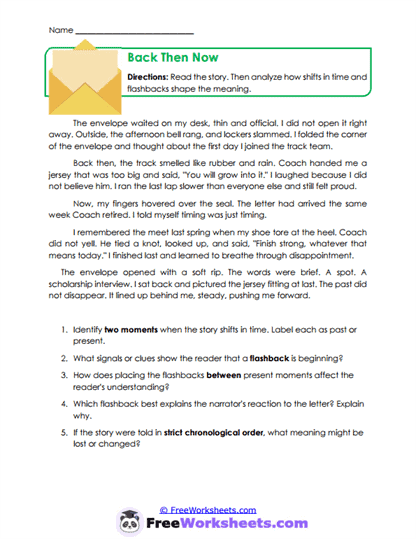
Back Then Now
- What Kids Do:
Students read a story that moves between past and present, then identify where the shifts happen and explain what is going on in each part. They look for clues like changes in language or tone to spot flashbacks and organize events in a clear sequence. - Target Skill:
Students develop the ability to analyze text structure by tracking time shifts and understanding how authors use flashbacks to add meaning. This aligns with Common Core RL.9-10.5, focusing on how structure contributes to overall meaning.
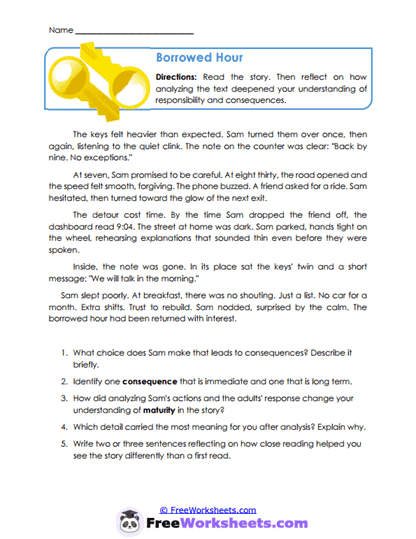
Borrowed Hour
- What Kids Do:
Students examine a character’s key decision and follow the consequences that come after it. They describe both immediate and long-term outcomes, thinking carefully about how one choice can affect multiple parts of the story. - Target Skill:
Students strengthen their understanding of cause and effect within literature, analyzing how events unfold and connect. This supports RL.9-10.3 by focusing on how actions shape plot and influence character development.
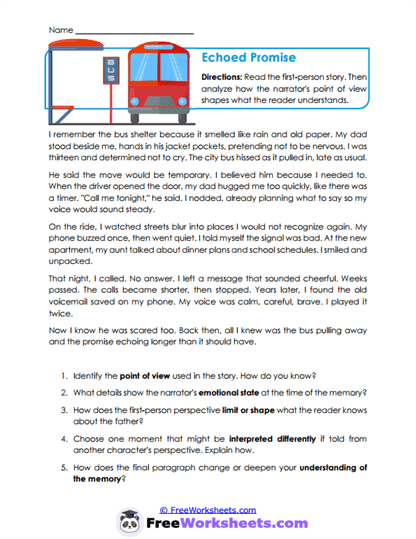
Echoed Promise
- What Kids Do:
Students read a first-person narrative and explore how the narrator’s thoughts and feelings shape the story. They consider how the same events might feel different if told from another perspective. - Target Skill:
Students analyze point of view and how perspective influences meaning and tone. This aligns with RL.9-10.6, helping students understand bias, voice, and how narration affects interpretation.
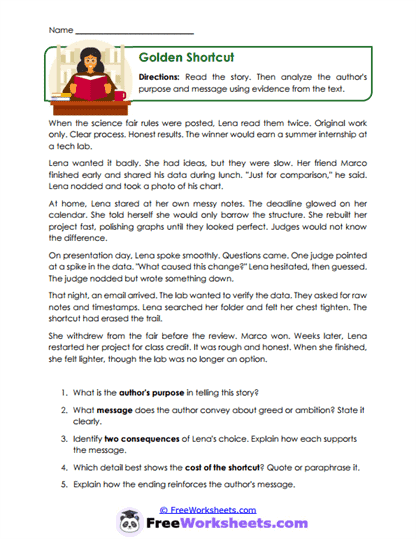
Golden Shortcut
- What Kids Do:
Students read about a character facing consequences after making a poor choice, then explain what lesson the story teaches. They connect specific events to a larger message about honesty and responsibility. - Target Skill:
Students build skills in identifying theme and author’s message, using evidence to explain how ideas develop. This connects to RL.9-10.2, focusing on theme development and meaning in literature.
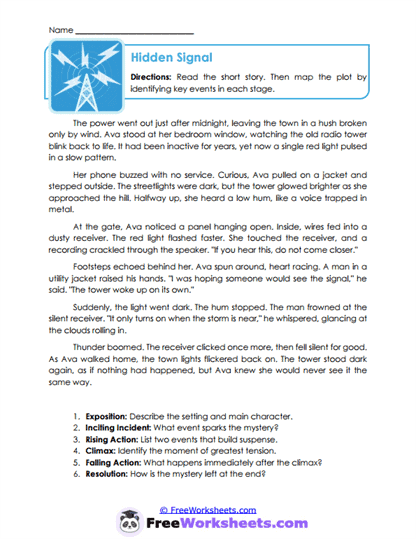
Hidden Signal
- What Kids Do:
Students break a suspenseful story into parts like exposition, rising action, climax, and resolution. They explain how each section builds tension and keeps the reader engaged. - Target Skill:
Students analyze plot structure and understand how events are organized to create meaning. This supports RL.9-10.3 by focusing on how plot elements interact and develop throughout a text.
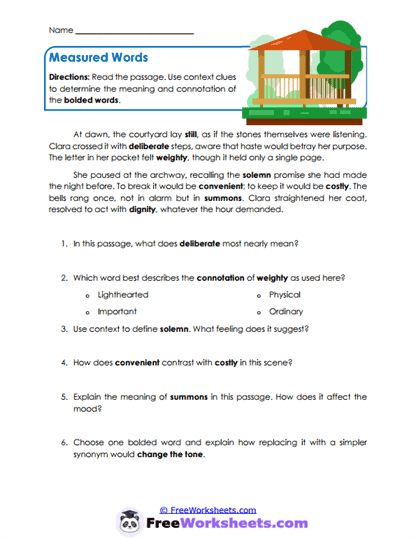
Measured Words
- What Kids Do:
Students use context clues to figure out the meaning of important words, then explore how those words feel and what tone they create. They compare similar words and explain subtle differences. - Target Skill:
Students deepen vocabulary and connotation skills by analyzing how word choice shapes meaning and mood. This aligns with RL.9-10.4, focusing on language, tone, and interpretation.
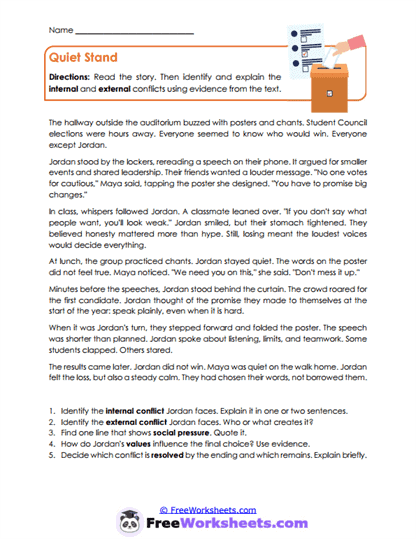
Quiet Stand
- What Kids Do:
Students identify both internal and external conflicts in a story about peer pressure. They explain how the character feels inside and what outside forces influence their decisions. - Target Skill:
Students analyze character response to conflict and how challenges drive decisions. This connects to RL.9-10.3, emphasizing character development and interaction with events.
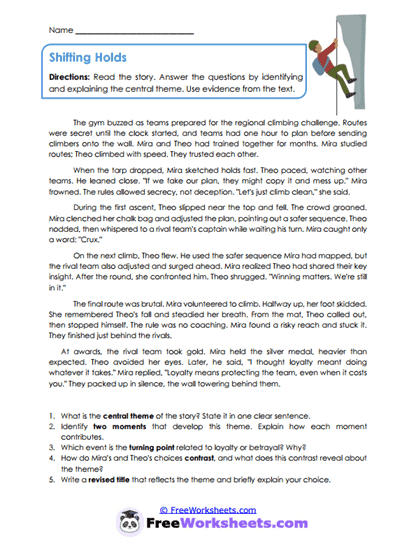
Shifting Holds
- What Kids Do:
Students read a story and identify the theme by examining key moments and character choices. They connect actions to deeper meaning and explain how the theme develops over time. - Target Skill:
Students strengthen their ability to determine and explain theme using evidence from the text. This aligns with RL.9-10.2, focusing on theme development and interpretation.
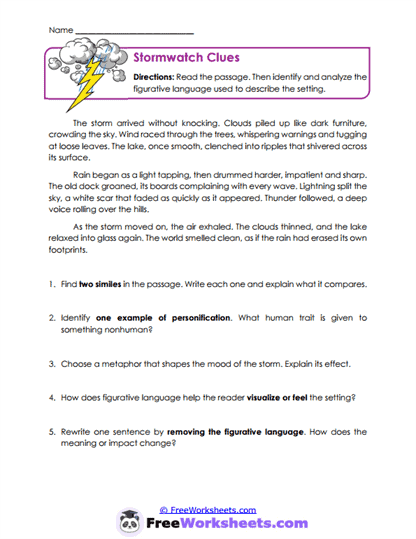
Stormwatch Clues
- What Kids Do:
Students find examples of similes and personification in a descriptive passage. They explain what each example means and how it helps create mood and imagery. - Target Skill:
Students analyze figurative language and its impact on tone and meaning. This supports RL.9-10.4, focusing on word choice, imagery, and literary devices.
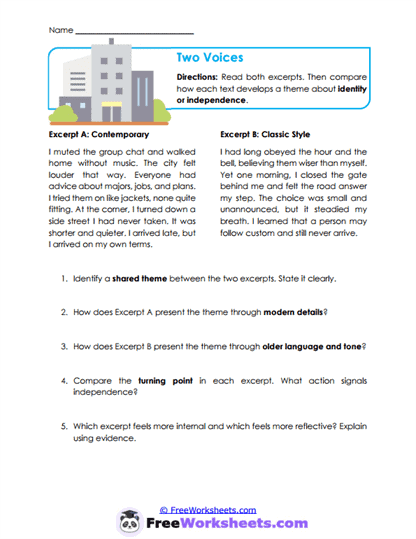
Two Voices
- What Kids Do:
Students read two passages with a shared theme and compare how each one presents the idea. They look at tone, style, and language to explain similarities and differences. - Target Skill:
Students develop comparison skills by analyzing how different texts treat similar themes. This aligns with RL.9-10.9, focusing on cross-text analysis and interpretation.
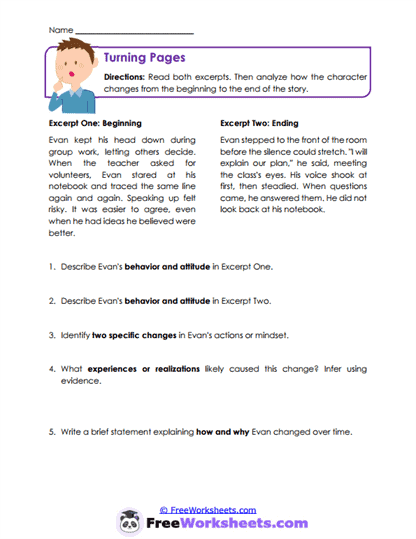
Turning Pages
- What Kids Do:
Students compare a character at the beginning and end of a story, identifying how their actions and mindset change. They explain what caused the growth and why it matters. - Target Skill:
Students analyze character development and how experiences shape change over time. This supports RL.9-10.3, focusing on character evolution and response to events.
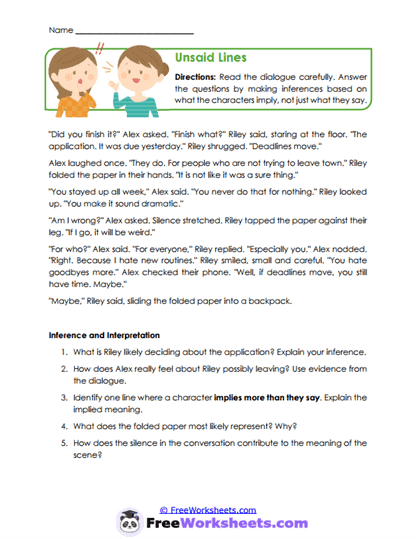
Unsaid Lines
- What Kids Do:
Students read dialogue and figure out what characters really mean beneath the words. They use clues like tone, pauses, and reactions to interpret hidden meaning. - Target Skill:
Students build inference skills by using evidence to interpret implied meaning. This aligns with RL.9-10.1, focusing on drawing conclusions and supporting ideas with text evidence.