
About This Worksheet
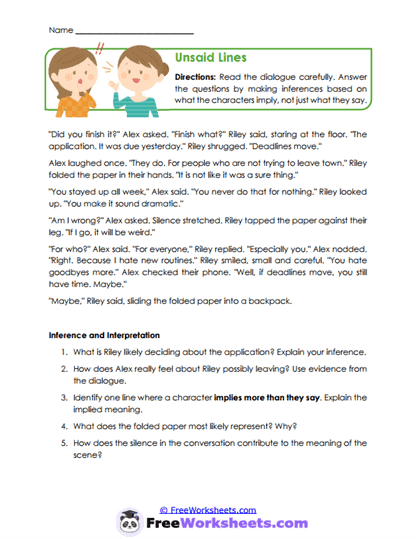
This worksheet is designed to help students understand inference, which means figuring out what a character means even when it is not said directly. In Grade 9, students need to move beyond just reading words and start reading between the lines. The dialogue in this story leaves a lot unsaid, which is exactly the point. For example, a pause or short response can suggest worry or doubt without stating it clearly. This teaches students that meaning is often hidden beneath the surface.
Curriculum and Grade Alignment
This worksheet aligns with CCSS.ELA-LITERACY.RL.9-10.1, which focuses on using evidence to make inferences. Students should already be able to understand basic dialogue before working on this. The next step is analyzing tone and subtext more deeply across texts. It also connects to TEKS §110.36(b)(6), which includes interpreting character interactions. These skills are important for understanding more complex writing.
Student Tasks
On this worksheet, students will read a conversation between characters and figure out what is really being said underneath the words. They will explain what characters are feeling and thinking based on clues in the dialogue. Students are also asked to find moments where a character implies more than they actually say. Some questions guide them to think about silence and body language. This helps them build stronger interpretation skills.
Common Challenges and Misconceptions
Many students focus only on the exact words and miss the hidden meaning. Others may guess without using evidence from the text. Some students also struggle with understanding how tone or silence adds meaning. These are very normal challenges at this level. Teachers can help by asking, “What is the character really trying to say here?”
Implementation Guidance
Teachers can use this worksheet during lessons on inference or dialogue analysis. It works well as a group discussion before independent work. At home, parents can read the dialogue with their child and ask simple follow-up questions. This keeps the thinking focused but not overwhelming. Over time, this builds stronger readers who think more deeply.
Details and Features
The worksheet includes a short dialogue that feels realistic and relatable for students. The questions are clearly written and guide students step by step. There is space for written responses, encouraging thoughtful answers. It is easy to print and use in both classroom and home settings. The layout supports careful reading and reflection.