
9th Grade Reading Passages Worksheets
These worksheets give students meaningful reading practice across fiction and nonfiction texts. These free, ready-to-print PDF worksheets are designed for immediate classroom use or simple at-home learning. Students build skills like making inferences, identifying main ideas, and analyzing text structure with confidence.
About This Collection of Worksheets
This collection includes a wide range of engaging reading passages designed to help students think more deeply about what they read. From short stories and historical texts to persuasive articles and informational passages, each worksheet gives students the chance to practice key comprehension strategies. Students are encouraged to move beyond basic understanding and begin analyzing meaning, purpose, and structure.
Each activity focuses on building strong habits like using evidence, making connections, and explaining ideas clearly. Students are often asked to support their answers with details from the text, helping them develop more thoughtful and accurate responses. These skills are essential for success in both academic reading and real-world situations.
The worksheets are carefully designed to support skill growth over time, starting with foundational comprehension and moving into deeper analysis. They align with Grade 9 standards and help prepare students for more advanced reading and writing tasks. Whether used in guided lessons or independent practice, these resources support strong and confident readers.

Paul’s Teacher Tip
When working with reading passages, encourage students to slow down and interact with the text instead of rushing through it. Modeling how to annotate-like underlining key ideas or writing notes in the margin-can make a big difference. Ask open-ended questions such as “What clues helped you figure that out?” to push deeper thinking. It’s also helpful to revisit the passage after answering questions to confirm understanding. Over time, students will become more independent and confident readers who can handle complex texts with ease.
Worksheet Collection Skill Spotlights
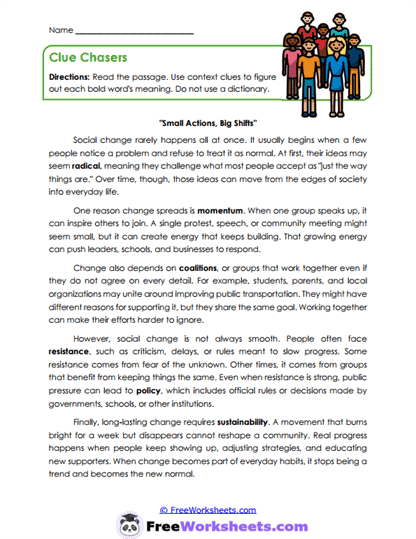
Clue Chasers
- What Kids Do:
Students read a passage about social change and focus on figuring out the meaning of challenging vocabulary words. They carefully use nearby sentences as clues to determine what each word means. This process helps them slow down, reread, and think more deeply about how words fit into the overall meaning of the text. - Target Skill:
Students strengthen their ability to use context clues to determine word meaning without relying on outside tools. They learn to analyze surrounding text and make logical decisions about vocabulary. This supports stronger comprehension and independence when reading complex material.
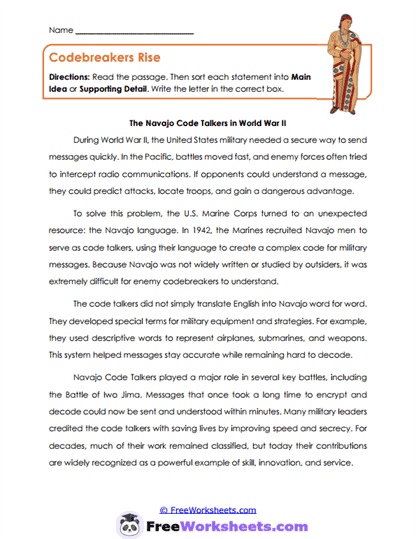
Codebreakers Rise
- What Kids Do:
Students read a historical passage about the Navajo Code Talkers and sort statements into main ideas and supporting details. They must carefully decide what information is most important and what simply adds explanation. This helps them organize what they read and avoid feeling overwhelmed by details. - Target Skill:
Students develop skills in identifying central ideas and distinguishing them from supporting details. They practice organizing information clearly and understanding how details support a larger point. This strengthens comprehension and prepares them for summarizing and analysis.
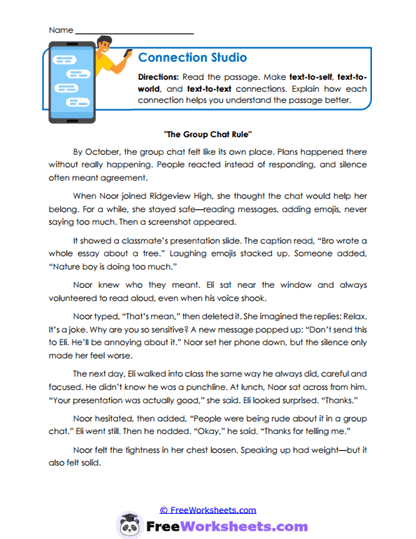
Connection Studio
- What Kids Do:
Students read a story about a group chat and make text-to-self, text-to-text, and text-to-world connections. They explain how these connections help them better understand the story and its message. This encourages deeper engagement with the text and personal reflection. - Target Skill:
Students build comprehension by making meaningful connections that deepen understanding of text. They learn to explain how their thinking relates to what they read. This supports critical thinking and stronger interpretation of both literary and informational texts.
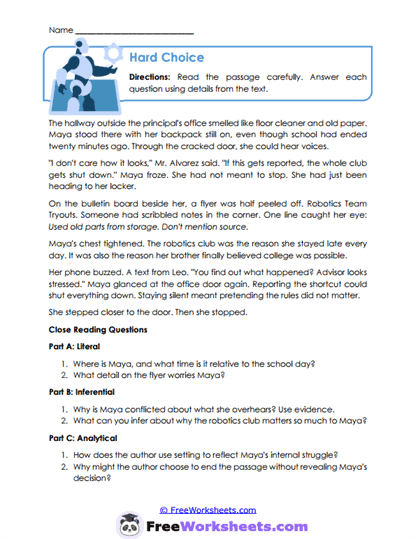
Hard Choice
- What Kids Do:
Students read a short story about a student facing a difficult decision and answer both literal and inferential questions. They use clues from the text to understand feelings and motivations. This helps them move beyond surface-level reading into deeper thinking. - Target Skill:
Students strengthen inference skills by using evidence to support ideas that are not directly stated. They learn to combine details and reasoning to form conclusions. This builds critical reading skills needed for analyzing complex texts.
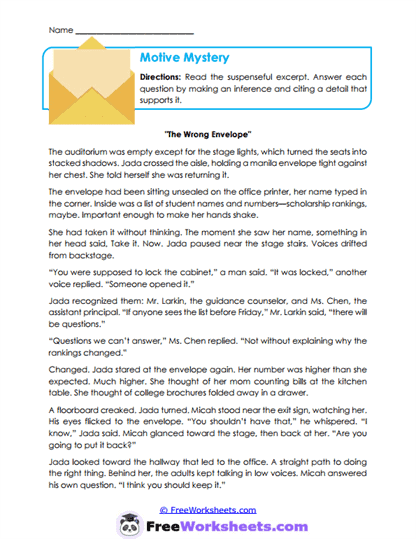
Motive Mystery
- What Kids Do:
Students read a suspenseful story about a mysterious situation and use clues to figure out what characters are thinking and why they act a certain way. They must support their ideas with evidence from the text. This encourages careful reading and thoughtful analysis. - Target Skill:
Students improve their ability to make inferences about character motives and actions. They practice using textual evidence to support their reasoning. This strengthens both comprehension and analytical thinking skills.
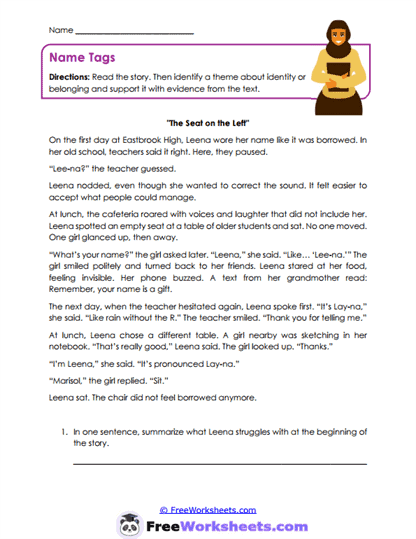
Name Tags
- What Kids Do:
Students read a story about identity and belonging, then think about the lesson the character learns. They identify the theme and support their answer with details from the story. This helps them see deeper meaning beyond the events. - Target Skill:
Students develop the ability to identify and explain theme in literary texts. They learn to connect specific details to a broader message or life lesson. This builds stronger interpretation and analysis skills.
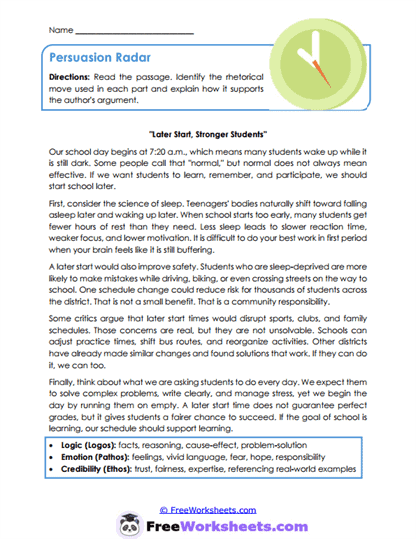
Persuasion Radar
- What Kids Do:
Students read an argument about school start times and identify examples of logical, emotional, and credibility-based appeals. They explain how each example helps persuade the reader. This builds awareness of how arguments are constructed. - Target Skill:
Students analyze rhetorical appeals and understand how different persuasive strategies work together. They practice identifying and explaining how arguments influence readers. This supports advanced comprehension and argument analysis.
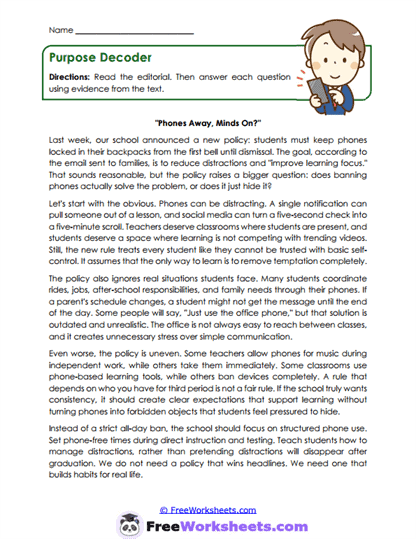
Purpose Decoder
- What Kids Do:
Students read an opinion passage about school phone rules and determine the author’s purpose. They look for clues that show whether the writer is informing, explaining, or persuading. This helps them understand the intent behind the text. - Target Skill:
Students strengthen their ability to identify author’s purpose using evidence from the text. They learn to distinguish between different types of writing goals. This builds critical thinking and comprehension skills.
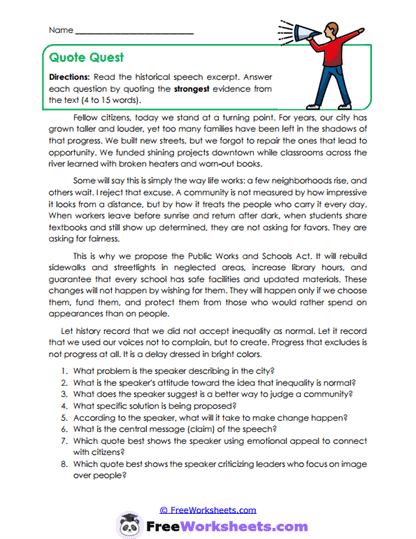
Quote Quest
- What Kids Do:
Students read a historical speech and answer questions by including direct quotes from the text. They carefully choose evidence that supports their answers and explain why it matters. This builds strong habits of supporting ideas clearly. - Target Skill:
Students develop skills in using text evidence to support answers. They learn how to select strong, relevant quotes and explain their importance. This supports both reading comprehension and writing development.
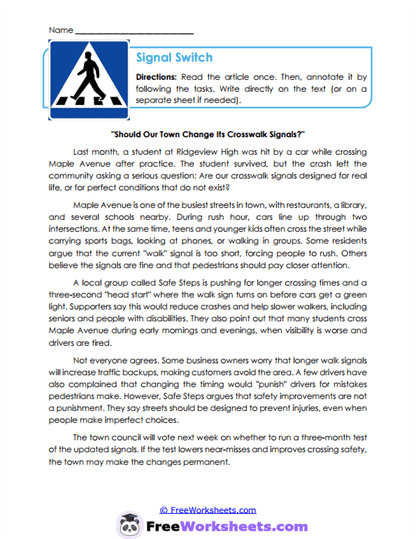
Signal Switch
- What Kids Do:
Students read an article about crosswalk safety and analyze different viewpoints presented in the text. They annotate key arguments and respond to questions about the issue. This helps them think critically about multiple perspectives. - Target Skill:
Students build skills in analyzing arguments and identifying multiple perspectives within informational texts. They learn to recognize claims and supporting details. This strengthens critical reading and reasoning abilities.
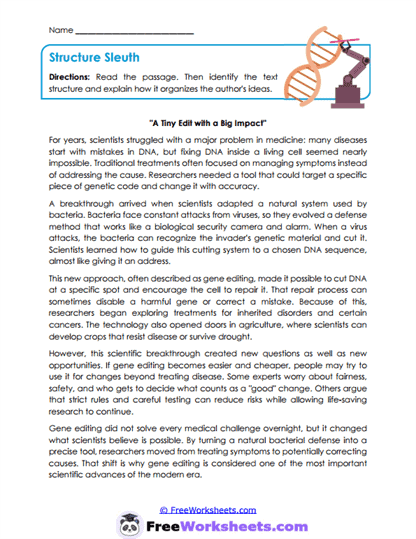
Structure Sleuth
- What Kids Do:
Students read a science passage about gene editing and identify how the information is organized. They explain whether the text uses cause and effect, problem and solution, or another structure. This helps them understand how ideas are connected. - Target Skill:
Students improve their ability to analyze text structure and explain how organization supports meaning. They learn to recognize patterns in informational writing. This supports deeper comprehension of complex texts.
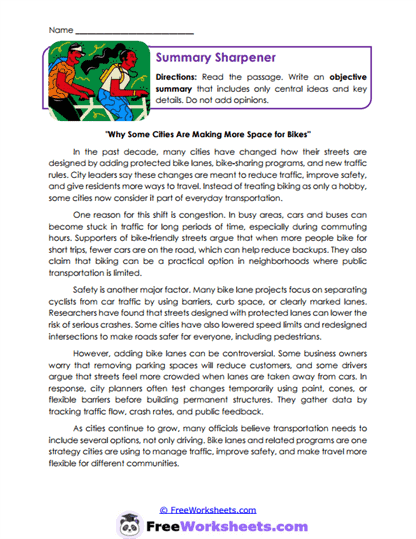
Summary Sharpener
- What Kids Do:
Students read an informational passage about city changes and write a clear, concise summary. They focus on including only the most important ideas and leaving out extra details. This helps them practice organizing information effectively. - Target Skill:
Students develop summarizing skills by identifying key ideas and expressing them clearly in their own words. They learn to avoid unnecessary details and opinions. This strengthens both reading comprehension and writing clarity.