
Business Documents Worksheets
These worksheets help students explore professional texts while building confidence and clarity. These free, ready-to-print PDF worksheets are designed for immediate classroom use or easy at-home learning. Students strengthen skills like analyzing tone, evaluating arguments, and understanding workplace communication.
About This Collection of Worksheets
This collection focuses on real-world business texts that students are likely to encounter in school, work, and everyday life. From emails and job postings to reports and proposals, each worksheet gives students a chance to practice reading with purpose. They learn how to break down complex information and understand how communication works in professional settings.
Students are encouraged to think critically about how information is presented, not just what is being said. Many activities ask them to revise writing, evaluate evidence, or compare different versions of the same message. This helps them see how tone, structure, and word choice can change meaning and impact. Over time, students become more confident readers and clearer communicators.
The worksheets are designed to build skills step-by-step, starting with understanding basic structure and moving toward analyzing persuasive techniques and data. They align with Grade 9 standards and prepare students for more advanced reading and writing tasks. Whether used in class discussions or independent work, these resources support practical and meaningful learning.
Paul’s Teacher Tip
When introducing business documents, start by connecting them to real life so students see the value right away. You might ask, “Where have you seen something like this before?” to spark discussion. Model how to read these texts slowly, pointing out headings, key phrases, and structure. Encourage students to annotate as they go, especially when identifying tone or important details. It also helps to have students rewrite small sections in their own words to check understanding. Over time, this builds both confidence and independence when reading complex materials.
Worksheet Collection Skill Spotlights
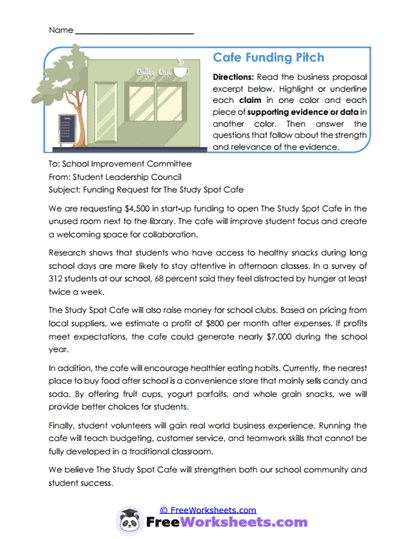
Cafe Funding Pitch
- What Kids Do:
Students read a business proposal for a school café and actively search for the main claim and supporting evidence. They highlight key ideas using different colors, then explain how the evidence strengthens the argument. As they work, they begin to notice how data and examples make ideas more convincing in real-world situations. - Target Skill:
Students build strong argument analysis skills by identifying claims and evaluating supporting evidence. They learn how to determine whether evidence is clear, relevant, and effective. This supports deeper reading comprehension and aligns with evaluating arguments in informational texts.
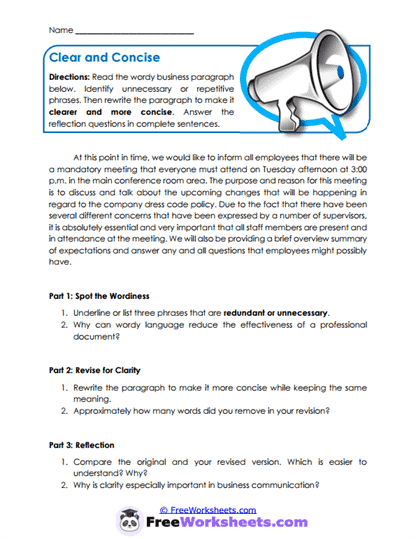
Clear and Concise
- What Kids Do:
Students read a long, wordy business paragraph and carefully identify phrases that are unnecessary or repetitive. They then rewrite the paragraph to make it shorter and easier to understand while keeping the same meaning. This hands-on editing practice helps them see how small changes can make writing much clearer. - Target Skill:
Students develop revision and editing skills by focusing on clarity and conciseness in writing. They learn to eliminate wordiness and choose stronger, more direct language. This supports effective communication and aligns with producing clear, coherent writing.
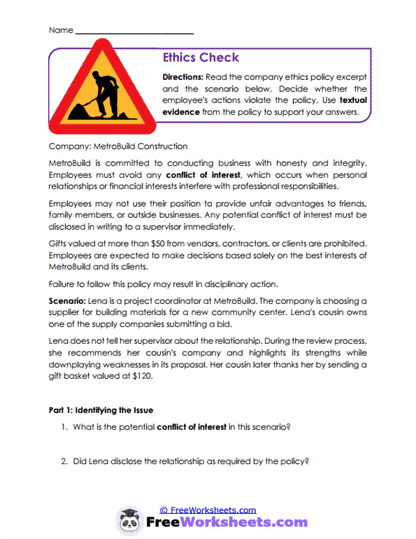
Ethics Check
- What Kids Do:
Students read a company ethics policy along with a real-world scenario involving a possible conflict of interest. They identify the issue and connect it back to specific rules in the policy. This encourages thoughtful decision-making and helps students see how rules guide real actions. - Target Skill:
Students strengthen their ability to analyze informational texts and apply rules to real-life situations. They practice using evidence to support decisions and explain reasoning clearly. This builds critical thinking and supports understanding of purpose and policy.
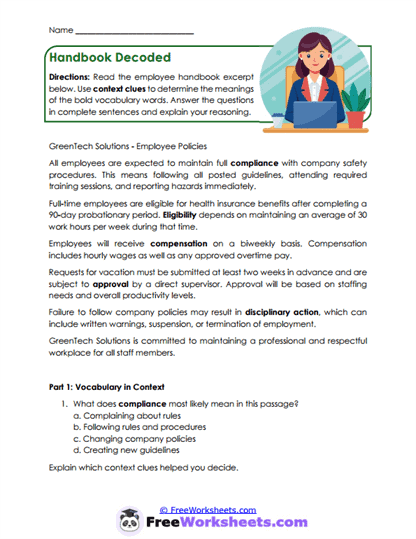
Handbook Decoded
- What Kids Do:
Students read a section of an employee handbook and focus on understanding unfamiliar vocabulary using context clues. They choose meanings for key terms and explain how the surrounding text helped them decide. This helps them become more confident when reading formal or technical language. - Target Skill:
Students build vocabulary skills by determining word meaning through context. They learn to rely on surrounding details instead of guessing or skipping difficult words. This strengthens comprehension and supports reading complex informational texts.
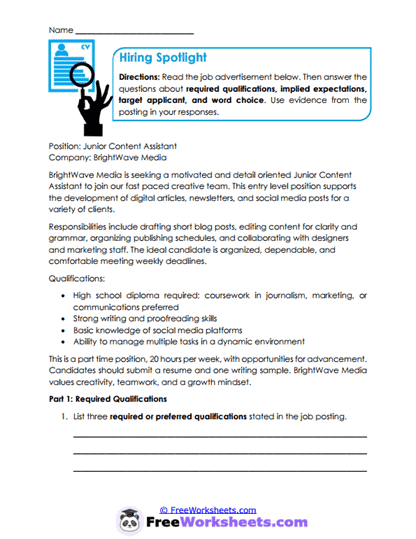
Hiring Spotlight
- What Kids Do:
Students read a job posting and identify required and preferred qualifications, along with clues about the ideal candidate. They organize information and reflect on what employers expect in real-world situations. This activity helps connect reading to future career readiness. - Target Skill:
Students develop the ability to analyze audience, purpose, and expectations within informational texts. They learn to identify key details that reveal what is required versus optional. This builds practical reading skills for real-world applications.
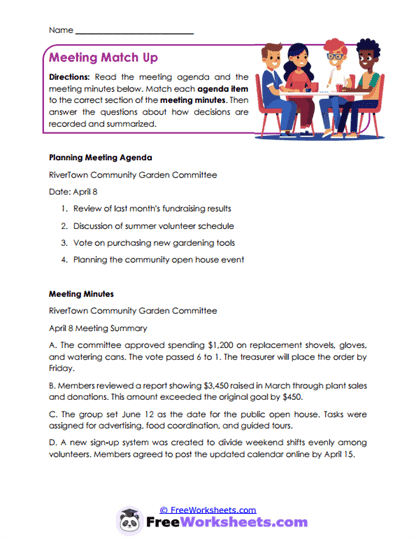
Meeting Match Up
- What Kids Do:
Students compare a meeting agenda with meeting minutes and match planned topics to actual outcomes. They carefully read both sections to find connections and explain decisions. This strengthens their ability to track information across multiple texts. - Target Skill:
Students improve their understanding of informational text structure and organization. They learn how ideas are planned, discussed, and recorded. This supports deeper comprehension of how structured communication works.
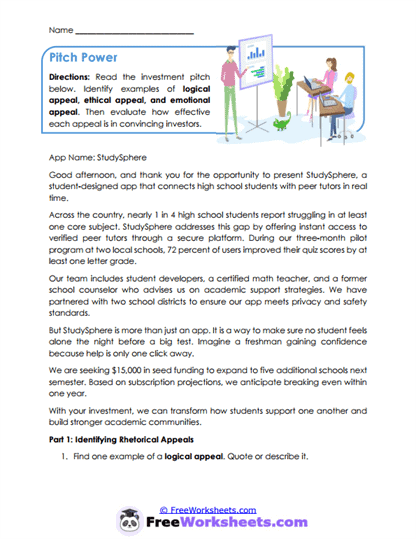
Pitch Power
- What Kids Do:
Students read an investment pitch and identify examples of logical, emotional, and ethical appeals. They explain how each appeal works to influence the audience and support their answers with evidence. This builds awareness of persuasive techniques in real-world writing. - Target Skill:
Students analyze rhetorical strategies and evaluate how different appeals strengthen an argument. They learn to recognize persuasion beyond surface-level meaning. This supports critical thinking and argument analysis skills.
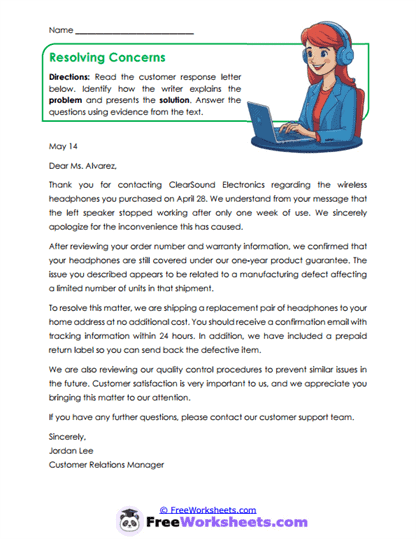
Resolving Concerns
- What Kids Do:
Students read a customer service response letter and identify both the problem and the solution presented. They use specific details to explain how the company addresses the issue. This helps them understand how communication is used to resolve real-world situations. - Target Skill:
Students develop skills in identifying problem-and-solution structure in informational texts. They learn to connect key ideas and explain how solutions address concerns. This strengthens comprehension and analytical thinking.
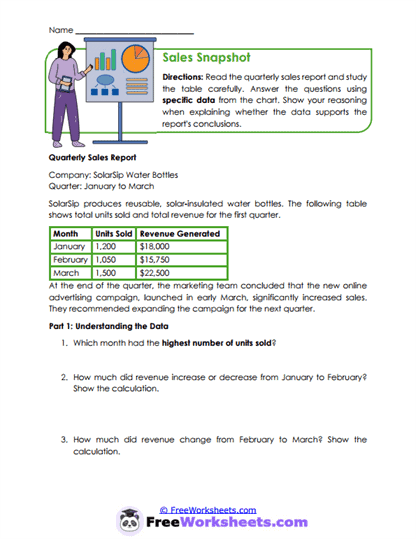
Sales Snapshot
- What Kids Do:
Students read a sales report and examine a data table to understand trends and changes. They answer questions about numbers and explain what the data shows. This combines reading and basic math skills in a meaningful, real-world context. - Target Skill:
Students build data literacy by interpreting charts and connecting numbers to conclusions. They learn to evaluate whether written claims are supported by data. This supports analysis of informational texts with visual elements.
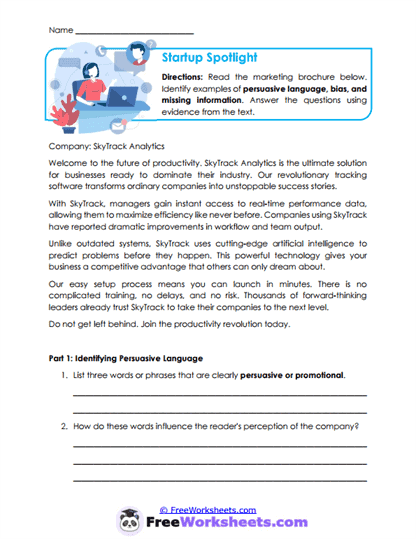
Startup Spotlight
- What Kids Do:
Students read a marketing brochure and identify persuasive language and possible bias. They think about how certain words influence the reader and what information might be missing. This helps them become more aware of how marketing works. - Target Skill:
Students strengthen their ability to analyze bias and persuasive techniques in informational texts. They learn to question what is included and what is left out. This builds critical reading and evaluation skills.
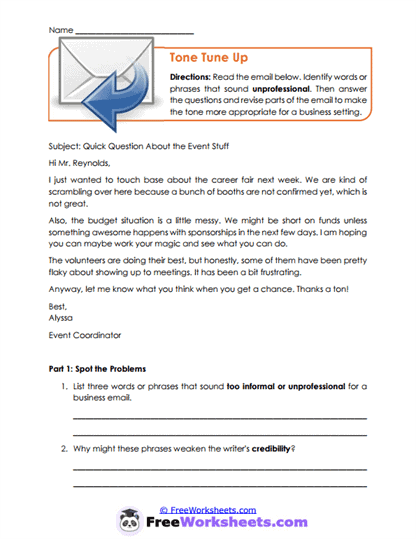
Tone Tune Up
- What Kids Do:
Students read an email that sounds too casual and identify language that needs improvement. They explain why certain words are unprofessional and revise the message to sound more appropriate. This helps them understand how tone affects communication. - Target Skill:
Students develop skills in adjusting tone for different audiences and purposes. They learn to recognize informal language and replace it with professional wording. This supports effective written communication.
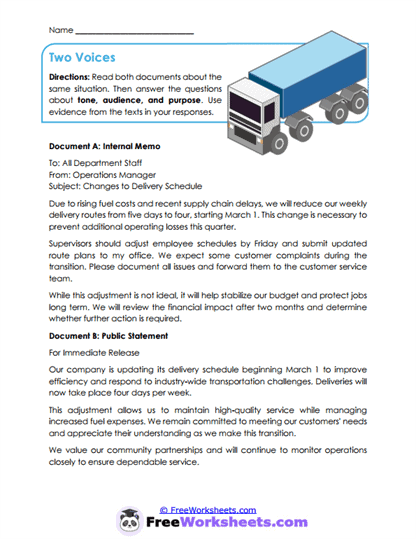
Two Voices
- What Kids Do:
Students read an internal memo and a public statement about the same situation, then compare how each is written. They analyze differences in tone, audience, and purpose while using evidence from both texts. This encourages deeper thinking about communication. - Target Skill:
Students build comparison and analysis skills by evaluating how the same message changes for different audiences. They learn how tone and purpose shift depending on context. This supports advanced comprehension of informational texts.