
9th Grade Reading Comprehension Worksheets
These worksheets help students transition into high school-level analysis by practicing close reading, evidence-based writing, and deeper interpretation of both informational and literary texts. These printable PDFs focus on skills students need for rigorous coursework: evaluating arguments, tracing central ideas, interpreting symbolism, analyzing point of view, and explaining how author choices shape meaning.
About This Collection of Worksheets
Ninth-grade readers are expected to do more than understand what a text says-they must explain how it works. That includes analyzing how an author develops an argument, how structure supports ideas, how word choice shapes tone, and how small details reveal character conflict or theme. Students also begin writing more formal analysis, including CER responses, objective summaries, and paragraph-level literary interpretation supported by precise evidence.
This collection is built to support those demands. Students practice distinguishing explicit vs. implicit meaning, making inferences from subtle narrative clues, and interpreting symbolism and suspense. Informational texts strengthen skills like central idea tracking, text structure analysis, and academic vocabulary using context clues. Several worksheets bridge reading and writing by requiring students to craft an evidence-based claim, evaluate author intent, or produce a concise objective summary.
Each worksheet is designed for classroom-ready instruction with clear directions, focused prompts, and space for complete responses. Use them for close-reading routines, argumentative writing units, test prep, small-group discussion, or independent practice.
Paul’s Teacher Tip
At this level, students benefit from slowing down their thinking, not speeding it up-build in time for rereading and annotation before answering. Encourage students to always point to a specific word, phrase, or detail when explaining their ideas to avoid vague responses. Model the difference between a “good answer” and a “strong answer with evidence” so expectations are clear. For struggling students, provide sentence frames that push analysis (e.g., “This detail matters because…”). To deepen learning, turn a few questions into short discussions where students compare interpretations and defend their reasoning.
Worksheet Collection Skill Spotlights
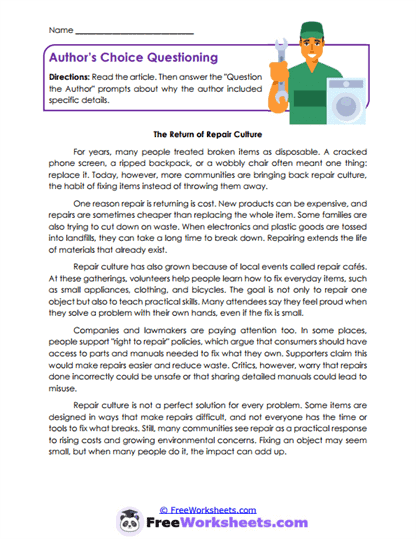
Author’s Choice Questioning
• What Kids Do – Students read an informational text and answer prompts explaining why the author includes specific details and examples.
• Target Skill – Builds analysis of author’s purpose and how details develop ideas.
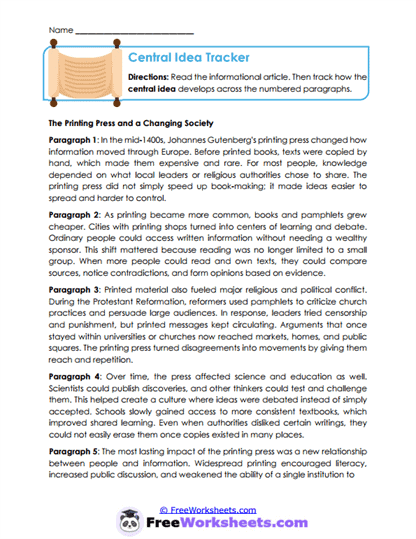
Central Idea Tracker
• What Kids Do – Students identify the central idea and track how each paragraph adds new information.
• Target Skill – Develops analysis of central idea development across a text.
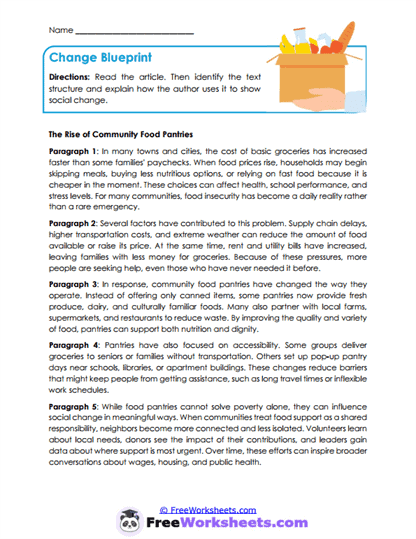
Change Blueprint
• What Kids Do – Students analyze a text’s structure and explain how cause-and-effect relationships are organized.
• Target Skill – Builds understanding of text structure and its role in meaning.
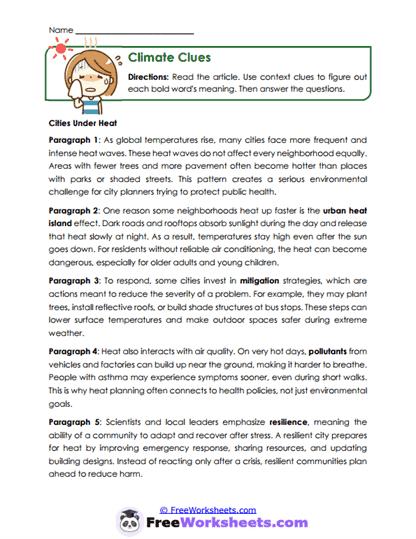
Climate Clues
• What Kids Do – Students use context clues to define domain-specific vocabulary and cite supporting phrases.
• Target Skill – Develops academic vocabulary and context-based word analysis.
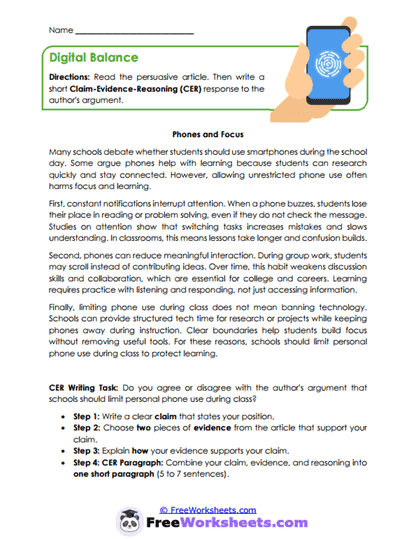
Digital Balance
• What Kids Do – Students read a persuasive text, form a claim, and write a CER response using evidence and reasoning.
• Target Skill – Builds argumentative writing and evidence-based reasoning.
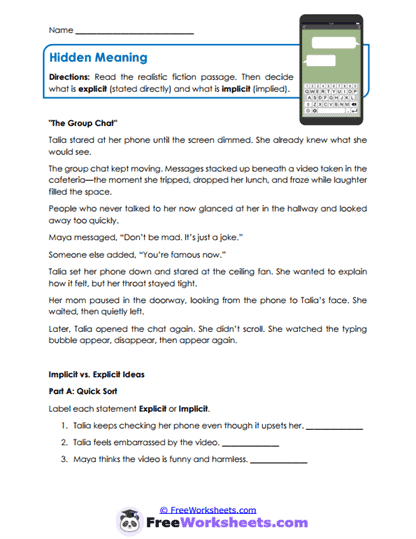
Hidden Meaning
• What Kids Do – Students read a passage and label statements as explicit or implicit, then justify their choices.
• Target Skill – Develops inference skills and distinction between stated and implied meaning.
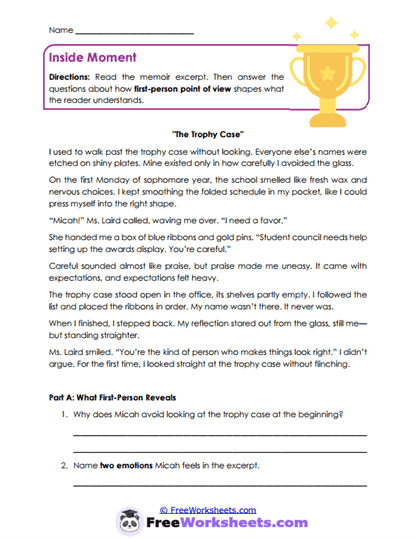
Inside Moment
• What Kids Do – Students analyze a first-person passage and explain how the narrator’s thoughts reveal character traits.
• Target Skill – Builds analysis of point of view and character development.
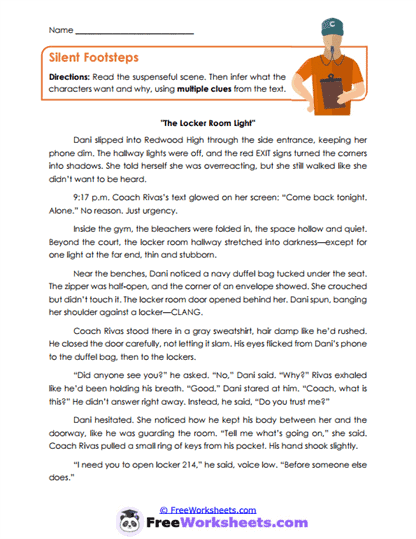
Silent Footsteps
• What Kids Do – Students examine a suspenseful scene and identify details that reveal motivation and build tension.
• Target Skill – Develops analysis of suspense and inference from subtle clues.
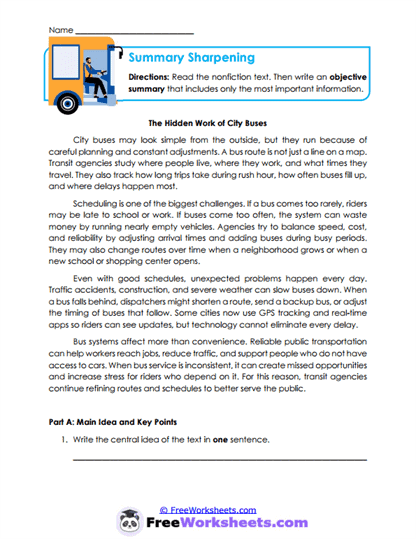
Summary Sharpening
• What Kids Do – Students identify key ideas in a text and write a one-sentence objective summary.
• Target Skill – Builds concise summary writing and focus on central ideas.
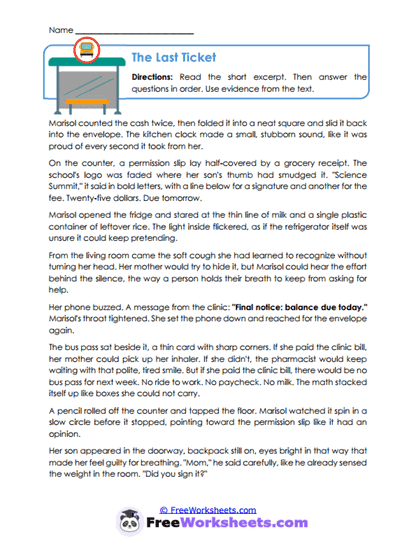
The Last Ticket
• What Kids Do – Students analyze a story and explain how objects and actions reveal conflict and theme.
• Target Skill – Develops interpretation of symbolism and internal conflict.
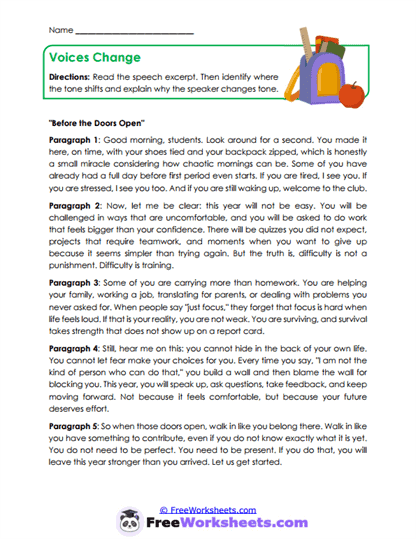
Voices Change
• What Kids Do – Students identify tone shifts in a speech and explain how they support the speaker’s message.
• Target Skill – Builds tone analysis and understanding of rhetorical impact.
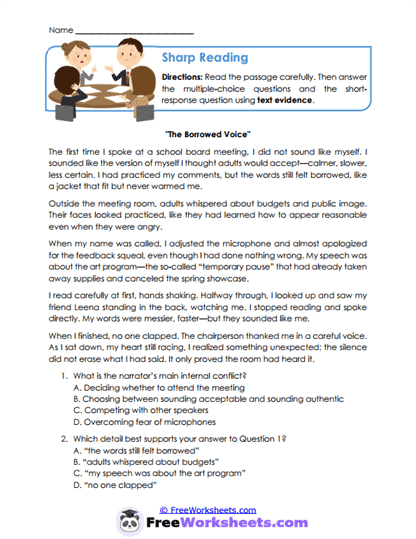
Sharp Reading
• What Kids Do – Students identify the main conflict, choose the best supporting evidence, and justify their answer.
• Target Skill – Develops evidence-based analysis and precise text support.