
Nonfiction Book Study Worksheets
These worksheets strengthen critical analysis, theme development, and evidence-based reasoning across complex texts. These free, ready-to-print PDF worksheets are designed for immediate classroom use and structured discussion. Students build skills in textual analysis, author’s purpose, rhetorical evaluation, synthesis, and objective writing.
About This Collection of Worksheets
Nonfiction analysis becomes increasingly rigorous in 9th Grade as students transition into deeper evaluation of central ideas, author perspective, structure, and rhetorical technique. At this level, learners are expected to move beyond summary and demonstrate clear understanding of how authors develop arguments, shape meaning, and support claims with evidence. This collection aligns with Common Core standards for grades 9-10, emphasizing analysis of central ideas, point of view, structure, word choice, and synthesis across literary nonfiction and memoir.
These worksheets support a wide range of instructional settings, including whole-class novel studies, small-group discussions, literacy centers, independent reading accountability, RTI intervention, and formative assessment checks. Teachers can use them as pre-reading reflections, guided analysis tools, structured discussion starters, or culminating synthesis activities. The variety of tasks encourages annotation, short analytical responses, vocabulary development, sequencing, rhetorical analysis, and objective summary writing.
Each printable PDF is designed with clarity and usability in mind, offering structured response space and ink-friendly layouts. The materials require minimal prep and are easy to distribute in both traditional and homeschool settings. Clear directions and focused prompts allow students to concentrate on higher-level thinking without unnecessary distractions.
Paul’s Teacher Tip
At this level, push students beyond “what happened” by consistently asking “how” and “why” questions during discussion. Model short analytical responses so students see what strong thinking looks like before they write independently. For differentiation, provide sentence stems for analysis (e.g., “The author structures this section to…”) to support struggling writers. Encourage students to annotate as they read, especially for tone, structure shifts, and rhetorical strategies. As a final step, have students compare two texts or authors to deepen synthesis and critical thinking.
Worksheet Collection Skill Spotlights
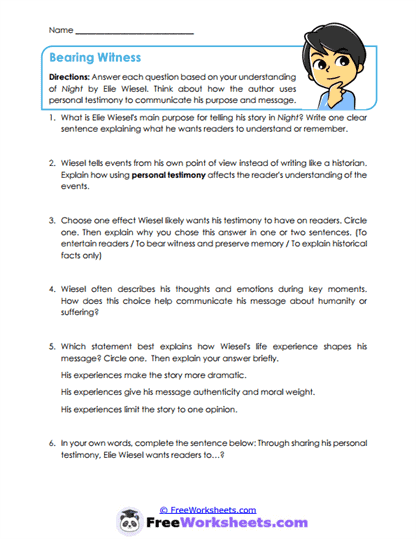
Bearing Witness
• What Kids Do – Students analyze excerpts from Night and explain how Wiesel’s firsthand narration shapes meaning and reader impact.
• Target Skill – Develops analysis of point of view and author purpose in nonfiction.
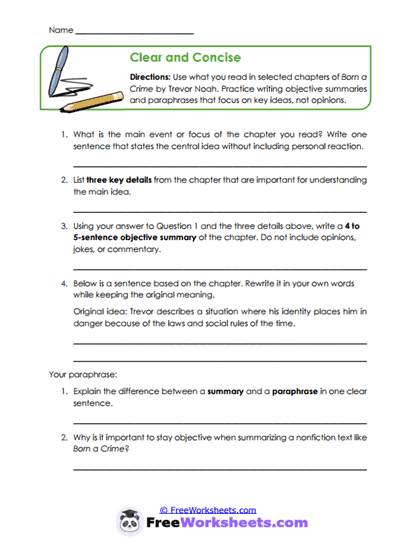
Clear and Concise
• What Kids Do – Students identify central ideas in Born a Crime, list key details, and write an objective summary with paraphrasing.
• Target Skill – Builds objective summary writing and paraphrasing accuracy.
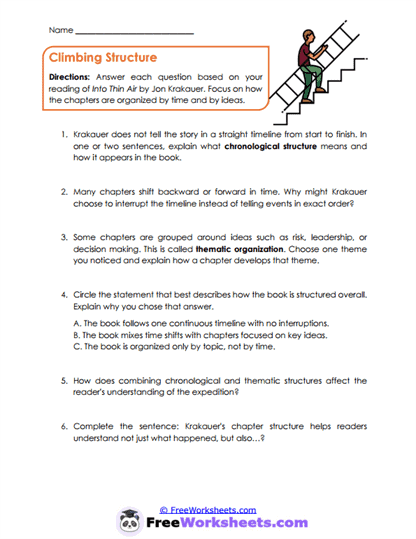
Climbing Structure
• What Kids Do – Students examine how Into Thin Air uses flashbacks and shifting timelines to organize events.
• Target Skill – Develops analysis of text structure and its effect on meaning.
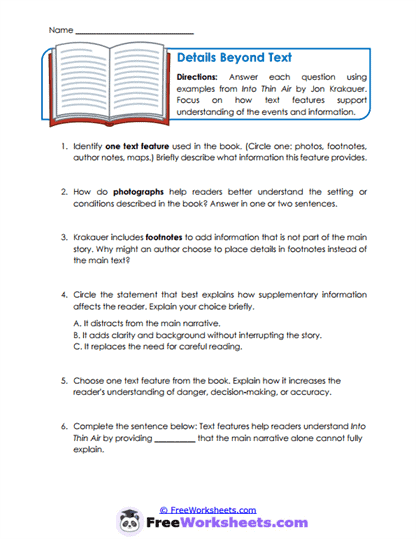
Details Beyond Text
• What Kids Do – Students analyze photos, maps, and notes in Into Thin Air and explain how they support understanding.
• Target Skill – Builds evaluation of text features in nonfiction.
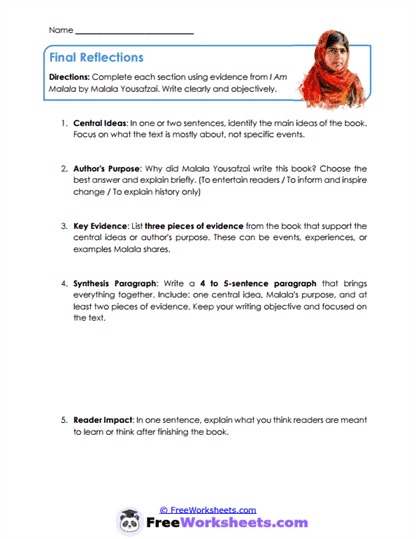
Final Reflections
• What Kids Do – Students identify central ideas in I Am Malala and write a paragraph combining purpose and supporting evidence.
• Target Skill – Develops synthesis of central ideas, purpose, and textual evidence.
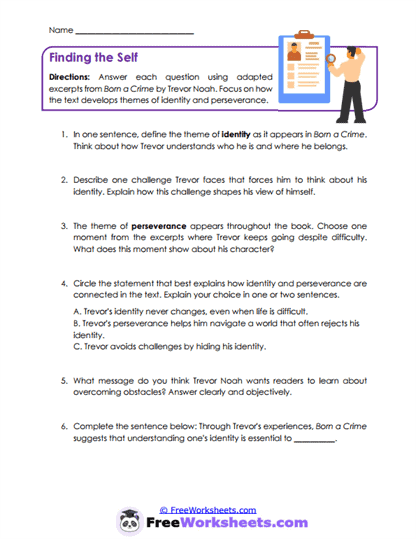
Finding the Self
• What Kids Do – Students analyze events in Born a Crime and explain how they shape themes like identity and perseverance.
• Target Skill – Builds theme analysis across a nonfiction text.
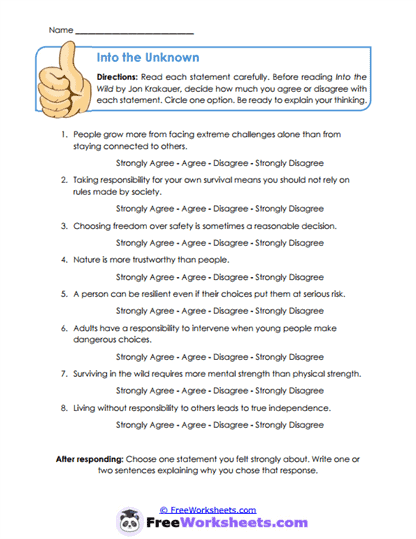
Into the Unknown
• What Kids Do – Students respond to opinion prompts about themes in Into the Wild and justify their thinking before discussion.
• Target Skill – Develops pre-reading analysis and evidence-based reasoning.
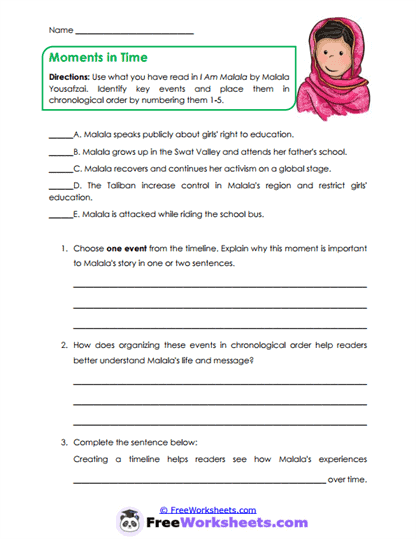
Moments in Time
• What Kids Do – Students sequence key events from I Am Malala and explain the importance of one moment.
• Target Skill – Builds understanding of chronological structure and its impact on theme.
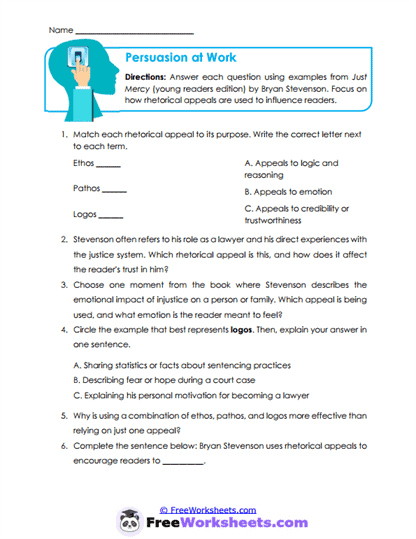
Persuasion at Work
• What Kids Do – Students identify ethos, pathos, and logos in Just Mercy and explain how each supports the argument.
• Target Skill – Develops rhetorical analysis and evaluation of persuasive techniques.
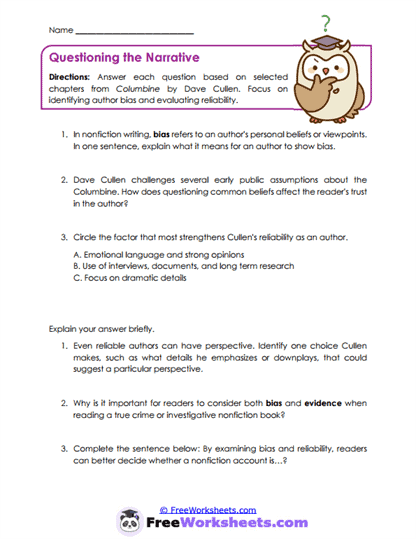
Questioning the Narrative
• What Kids Do – Students examine bias and evidence in Columbine and evaluate how research methods affect credibility.
• Target Skill – Builds critical analysis of bias and source reliability.
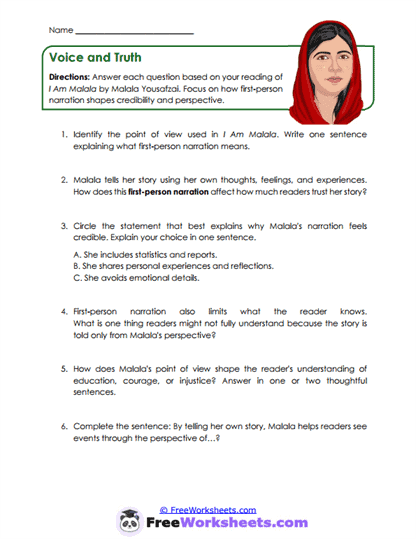
Voice and Truth
• What Kids Do – Students analyze how Malala’s first-person voice shapes trust, tone, and key themes in I Am Malala.
• Target Skill – Develops evaluation of narrative voice and credibility.
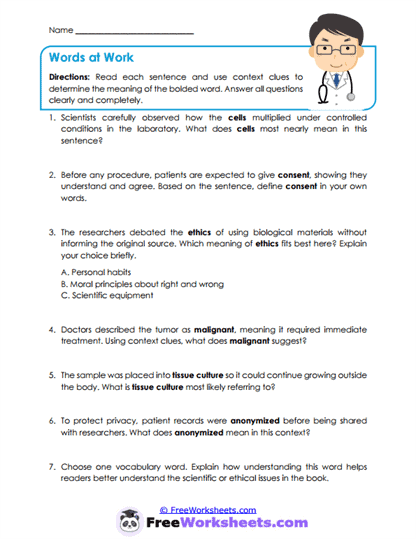
Words at Work
• What Kids Do – Students use context clues in The Immortal Life of Henrietta Lacks to define and explain key vocabulary.
• Target Skill – Builds context-based vocabulary analysis and academic word reasoning.